
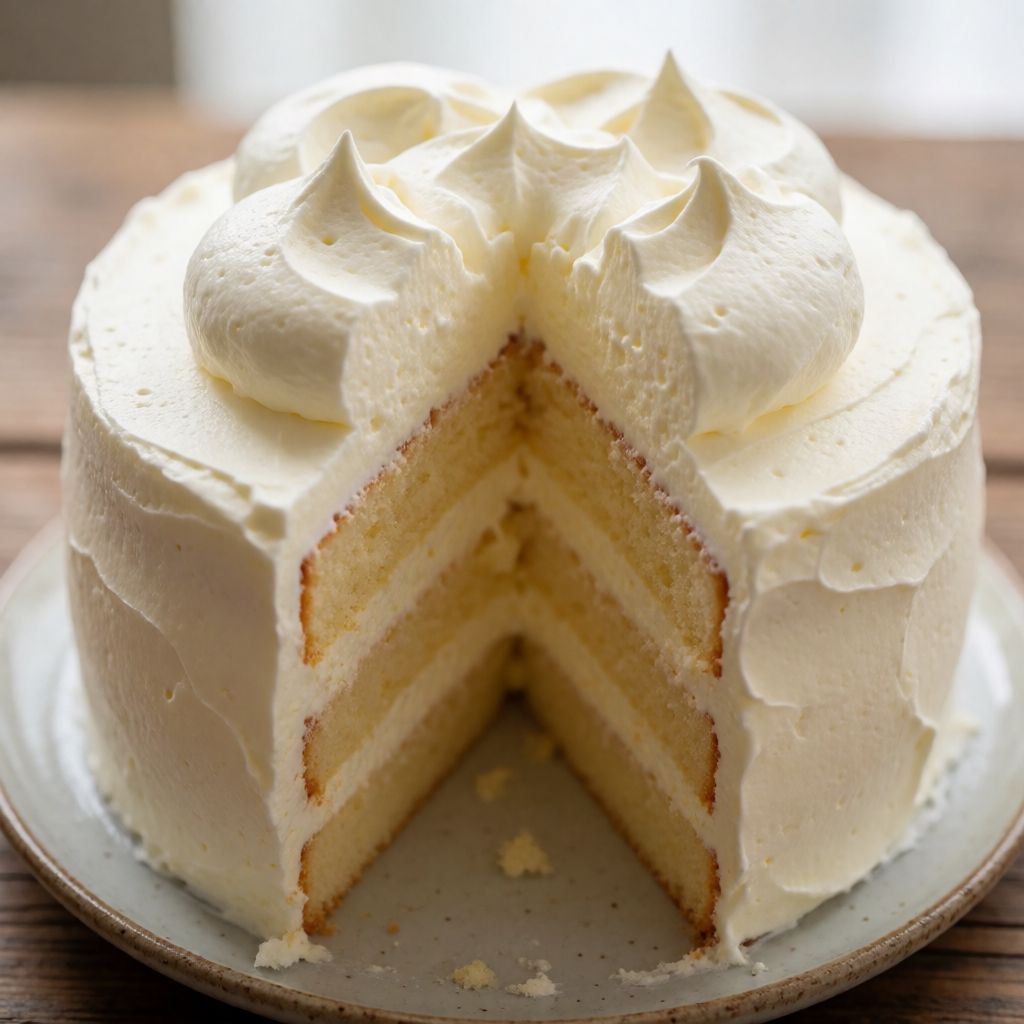
 AI photo
Chantilly Cake
A classic Chantilly cake: three layers of sponge filled with crème diplomate and finished with whipped cream.
Labels are worked out automatically from the ingredients and can be wrong. Check the packaging if it matters to you.
Ingredients
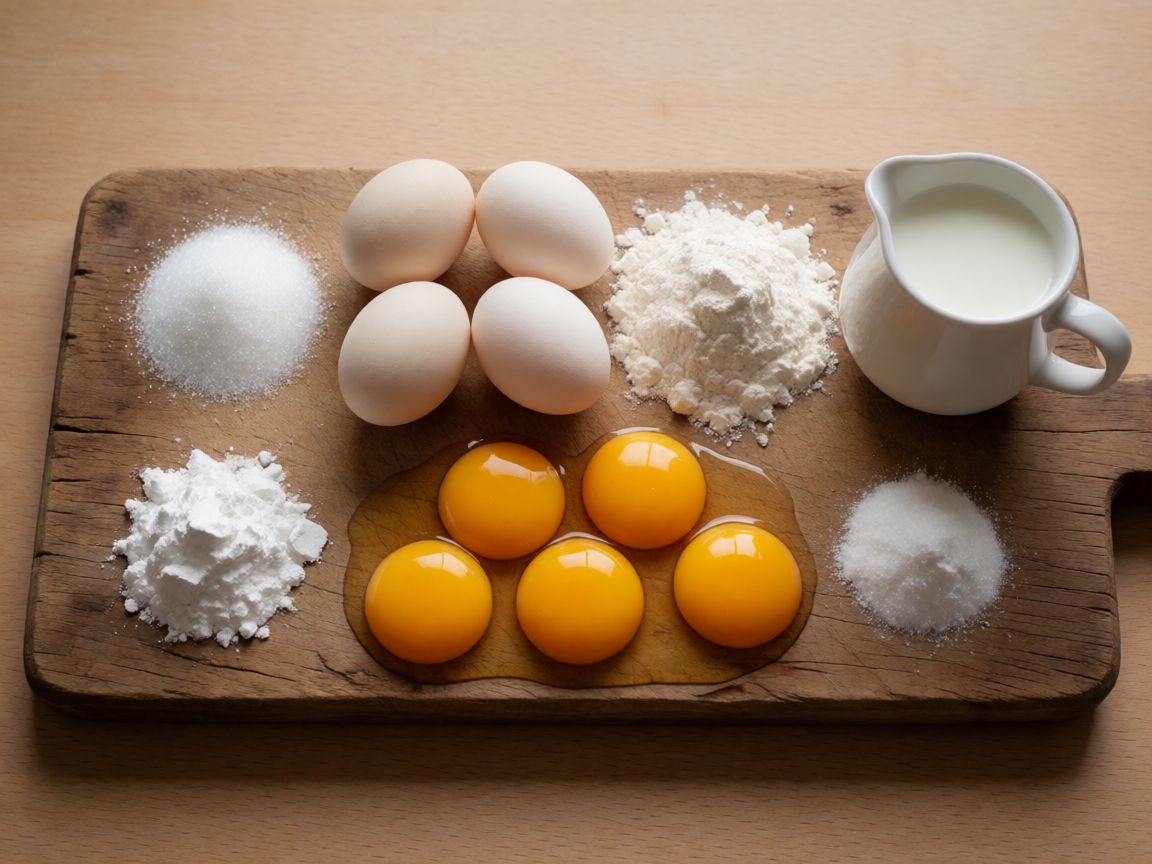
- 100 g Caster sugar
- 4 pcs Eggs
- 70 g Plain flour
- 70 g Potato starch
- 500 ml Milk
- 5 pcs Egg yolk
- 60 g Caster sugar
- 40 g Cornflour
- 1 pcs Vanilla pod
- 800 ml Double cream
- 100 g Caster sugar
- 1 tsp Vanilla extract
- Milk to taste








Steps
Whisk the whole eggs with the sugar using an electric mixer until the mixture is light and fluffy.
15 minFold in the sifted flour and potato starch gently with a spatula, working from the bottom up.
Butter and flour a 22 cm tin, then pour in the batter.
Bake in a preheated fan oven at 180°C.
28 minLeave the sponge to cool.
Pour the milk into a saucepan, add the vanilla pod and bring to the boil.
Separately mix the egg yolks with the sugar, then add the cornflour.
Pour the mixture into the boiling milk and, stirring constantly, cook the custard until it thickens.
Transfer the custard to a bowl, cover with cling film and leave to cool.
Whip the double cream with the sugar and vanilla extract.
Add a third of the whipped cream to half of the custard and gently fold together.
Using a serrated knife, slice the cooled sponge into three layers.
Place a spoonful of the cream on the serving plate, then the first sponge layer, and brush it with milk.
Spread the diplomate cream and cover with the second layer, then repeat with the remaining layers.
Coat the sides of the cake with the whipped cream and decorate the top to taste.
Chill the cake in the refrigerator until ready to serve.
Chantilly Cake is a génoise sandwiched three times with diplomate cream — which is just pastry cream lightened with whipped cream so it stays soft instead of setting like custard in a glass. Nothing here hides. The sponge is plain egg, sugar, flour, starch — no butter, no raising agent — so it rises on trapped air alone and falls on dropped air alone. That's the whole tension of the recipe: you spend ten minutes whisking air in, and the next hour being careful not to knock it out.
What decides whether it works is the whisking at the start and the folding straight after. Whole eggs and sugar whisked properly go pale, thick, almost mousse-like — "ribbon stage," where the batter dropped from the whisk sits on the surface for a couple of seconds before sinking in. That's not decoration, that's structure: those bubbles are the only thing lifting this cake, since there's no baking powder in it. Fold the flour in roughly, stirring in circles, and you tear that structure apart — the cake comes out flat and dense, and people will blame the oven for it, when the damage was done two minutes earlier at the bowl.
Potato starch alongside the flour isn't a whim. Flour alone gives you gluten, gluten gives you chew, and chew is exactly wrong in a sponge meant to be sliced thin and soaked. Starch dilutes the gluten, so the crumb stays tender and separates cleanly under a serrated knife instead of tearing into shreds — which matters later, because you're cutting one bake into three layers.
Ingredient by ingredient, start with the eggs — four whole, five yolks on their own later for the custard. Buy them at room temperature if you can, or let them sit out an hour; cold eggs trap air reluctantly, and you're relying entirely on air here. Caster sugar, not granulated, because its smaller crystals dissolve into the egg before the mixer's done its work — granulated can leave you with a faint grit in the crumb, not a catastrophe, but pointless when caster costs the same.
Flour and potato starch together, roughly equal weight. If you have no potato starch, cornflour does the same job — both are pure starch with no gluten to contribute, and the point is to cut the flour's gluten down, not to add flavour. Don't swap in self-raising flour thinking it'll help the rise: there's no benefit here, because the lift is coming from whisked air, and the extra raising agent will just make the crumb coarser and less able to hold its shape when sliced thin.
For the custard: whole milk, not semi-skimmed, because the fat is what gives the set body instead of a thin, watery sauce. A vanilla pod split into the milk while it heats pulls flavour out slowly as it steeps — vanilla extract works as a stand-in, stirred in once the custard's off the heat, but you lose the little black flecks that tell people, correctly, that someone used a real pod. Cornflour is the thickener; egg yolks alone would need far more of them and far gentler heat to set a custard this thick without scrambling, so the starch is doing the heavy lifting and protecting the yolks from themselves.
Double cream, whipped with sugar and vanilla to soft peaks, not stiff — stiff cream folded into custard turns grainy and starts weeping liquid by the next day, because you've already broken the fat structure before it ever met the custard. Folding a third of that cream into half the custard makes the diplomate — a cream with enough body to hold a layer but soft enough to still feel like custard in the mouth, not jelly. The remaining plain whipped cream coats the sides and top; some recipes call this "chantilly cream," which is where the cake gets its name — not a place, not a person, just a style of sweetened whipped cream that happens to be French.
Milk brushed onto each sponge layer before the cream goes on is the unglamorous fix for a real problem: a génoise with no syrup or liqueur soak dries out fast, especially the cut edges exposed to fridge air. A spoonful of milk, not cream, not syrup — just enough to put moisture back without adding sweetness you don't need, since the cream's already sweet.
On equipment: you don't need a kazan or anything exotic for this one, just an electric mixer with some patience behind it, a 22cm tin, and a serrated bread knife for the slicing — a chef's knife will drag and crush the crumb instead of cutting clean lines. Chilling at the end isn't optional waiting around; the cream layers need the fridge's cold to firm up enough that the cake holds its shape when you cut it, rather than slumping sideways on the plate. Give it the time. That's patience doing the work heat can't.