
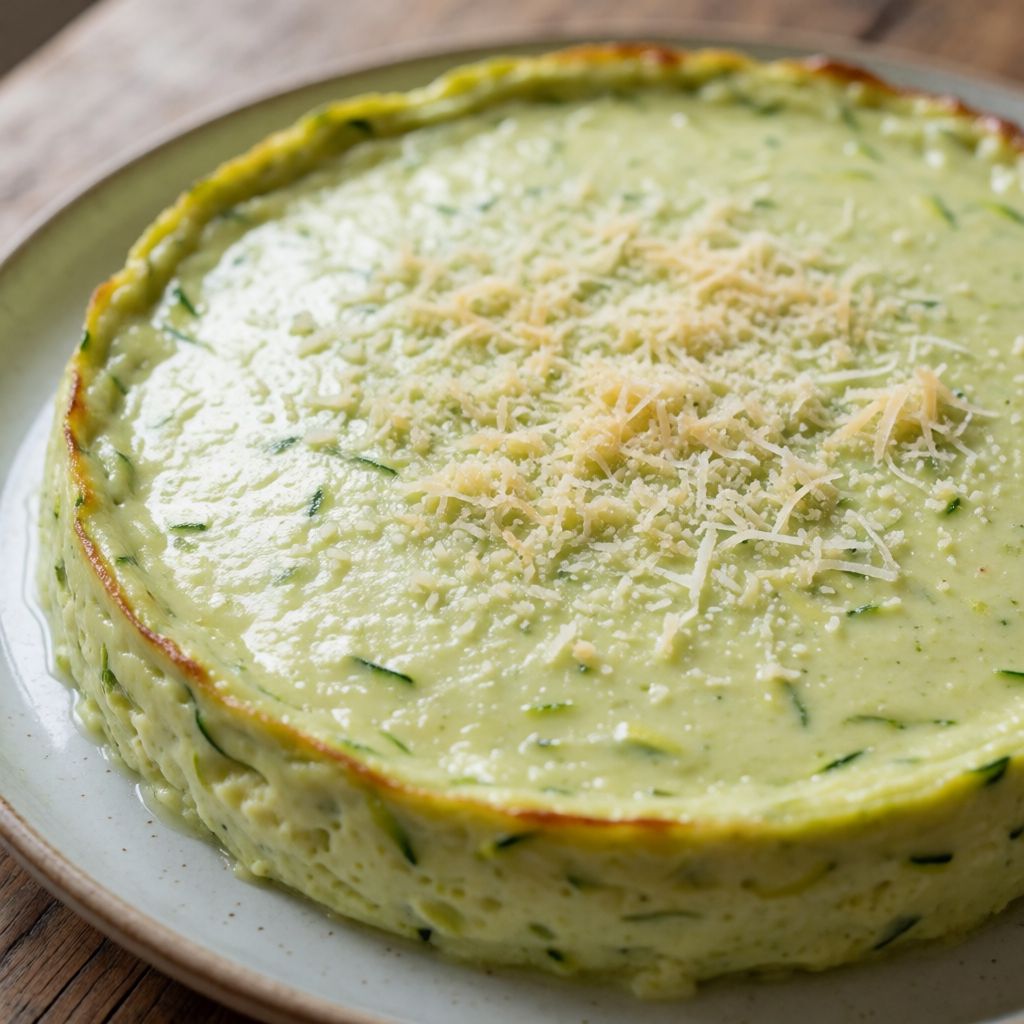
 AI photo
Courgette Flan
A light, creamy courgette flan baked in a water bath, finished with basil and parmesan.
Labels are worked out automatically from the ingredients and can be wrong. Check the packaging if it matters to you.
Ingredients
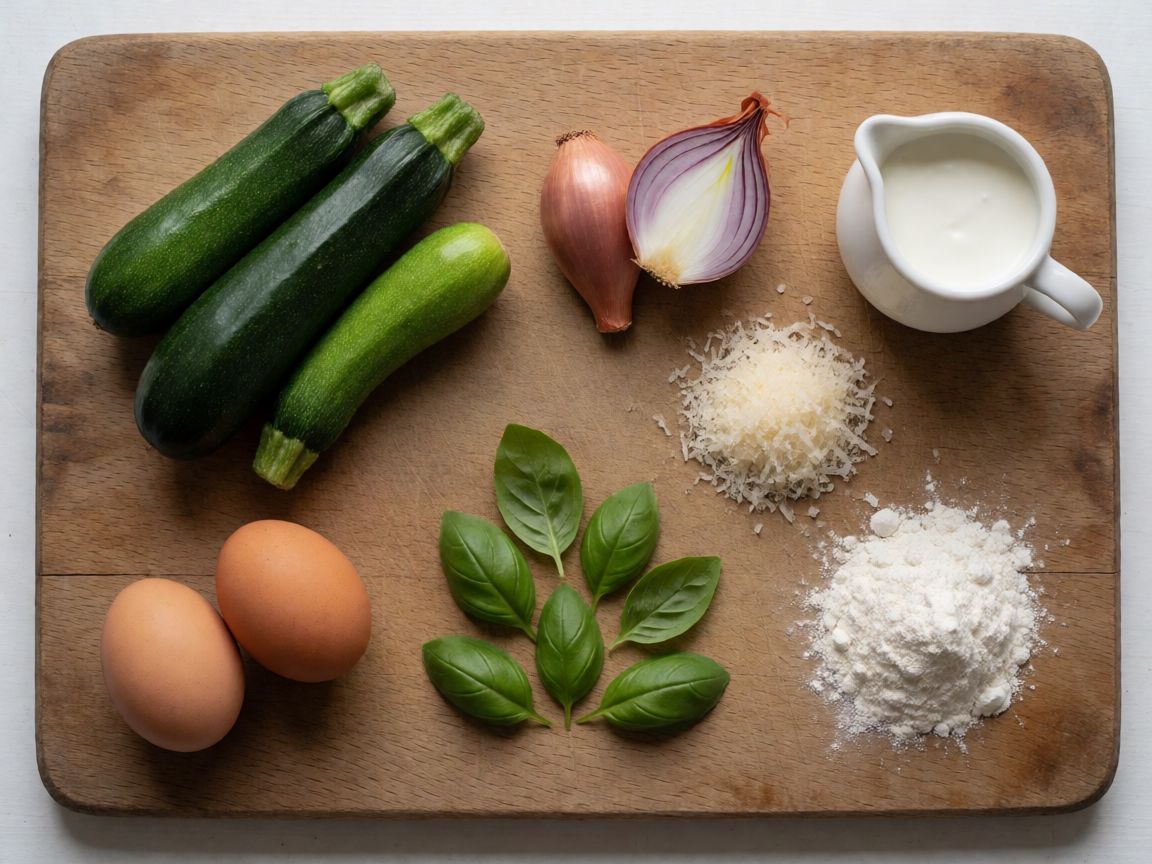
- 500 g Courgette
- 0.5 pcs Shallot
- 50 ml Double cream
- 90 g Parmesan
- 2 pcs Eggs
- 6 pcs Basil leaves
- Olive oil to taste
- Salt to taste
- Black pepper to taste
- Plain flour for dusting





Steps
Wash the courgettes and cut into rounds or cubes.
In a saucepan, fry the finely chopped shallot in a little olive oil for a few seconds.
Add the courgettes and cook covered until fully tender.
Let the courgettes cool, then transfer to a blender.
Add the double cream and blend well until smooth.
Add the basil and mix in.
Separate the egg yolks from the whites.
Add the yolks and parmesan to the courgette mixture and blend until smooth.
Separately, whisk the egg whites with an electric mixer to a stiff foam.
Gently fold the whisked egg whites into the courgette mixture, using an upward motion.
Divide the mixture among 4 individual moulds, greased with butter and dusted with flour.
Place the moulds in a baking tray and pour water into the tray.
Preheat the oven to 160°C.
Bake the flans in the water bath for about 60 minutes.
60 minLet the finished flans cool, turn out carefully from the moulds and serve.
A courgette flan isn't a bake, it's custard with vegetables standing in for the usual yolks-and-cream ratio. Everything about this dish hinges on one question: can the courgette water leave before the egg sets? Get that wrong and you have a wet, grainy pudding; get it right and you have something that slices clean, like a terrine, and wobbles slightly when you turn it out.
The courgette is almost all water — that's the whole problem of the dish and the whole point of step 3's "covered until fully tender." Covering it steams rather than fries, so the flesh collapses before it browns, releasing water into the pan rather than into your flan later. Cooling before blending matters for the same reason: hot vegetable purée loosens egg yolk's grip and you lose the set you're baking in for.
Some say you can skip the water bath and just bake the moulds straight on the tray. No — a flan is egg protein coagulating gently; direct oven heat above about 100°C scrambles the outside before the middle sets, giving you a rubbery skin round a liquid heart. The water bath caps the temperature the mould itself ever reaches near 100°C, however hot your oven runs, so the custard cooks evenly from edge to centre instead of from edge inward.
The whisked egg white isn't decoration, it's the texture mechanism: it's what turns a dense savoury custard into something with lift, closer to a soufflé than a terrine. Fold it in with an upward, cutting motion — not stirring — because stirring collapses the air pockets you just built, and a flat flan tastes heavier for no reason.
Courgette: 500 g buys you maybe 350-400 g once the water that cooking drives off is gone. Choose firm, small-to-medium ones — the big watery ones that look like they've been on the shelf a fortnight give you more water to cook away and less flavour for your trouble. No courgette to hand, use any marrow-family vegetable you'd steam rather than roast — but expect to adjust how long you cook it down, since the mechanism is "until it stops weeping," not a fixed clock.
Shallot, half a piece, cooked only "a few seconds" — this isn't meant to brown or sweeten deeply, just to lose its raw bite before it joins a purée that will never see direct heat again. If you've only got onion, a small piece will do the same job; onion's sharper, so use less.
Double cream carries fat, and fat is what makes a custard feel silky instead of merely set — it coats your tongue so the egg protein's slight rubberiness doesn't register. Don't reach for single cream or milk here as an economy; with less fat the custard sets firmer and drier, closer to a cheap quiche filling than this flan.
Parmesan at 90 g is doing two jobs: salt and savoury depth, and a little extra binding thanks to its own protein. A hard, dry grating cheese works the same way — pecorino, an aged Gouda — anything that grates to a fine dust rather than melts to a puddle. Pre-grated bagged parmesan dust from a supermarket tub tends to be cut with starch to stop it clumping; it won't melt the same way into the purée, so if that's what you've got, expect the texture to be slightly grainier.
The two eggs, split, are the actual engineering of this dish. Yolks set the base — they're what makes the purée go from sauce to sliceable once baked. Whites, whisked separately to a stiff foam, are air: fold them in last, upward strokes only, because any downward or circular stirring knocks the air straight back out, and the whole reason you separated the eggs in the first place was to get lift without adding more liquid egg.
Buttering and flouring the moulds is the same trick as flouring a cake tin — the flour gives the rising custard something to grip on its way up and something to let go of on its way out, so step 15's "turn out carefully" actually works instead of leaving half the flan behind. In a British kitchen, ramekins from the crème brûlée cupboard, or small pudding basins, do the job of "individual moulds" fine; there's no need to buy dariole moulds specially.
On patience: this isn't a dish you can rush by turning the oven up. 160°C and roughly 60 minutes in a water bath is a low, steady process — the custard needs that time to set through without curdling at the edges, and checking by eye (a gentle set, a slight dome, not liquid movement when you nudge the mould) matters more than watching the clock run out.