
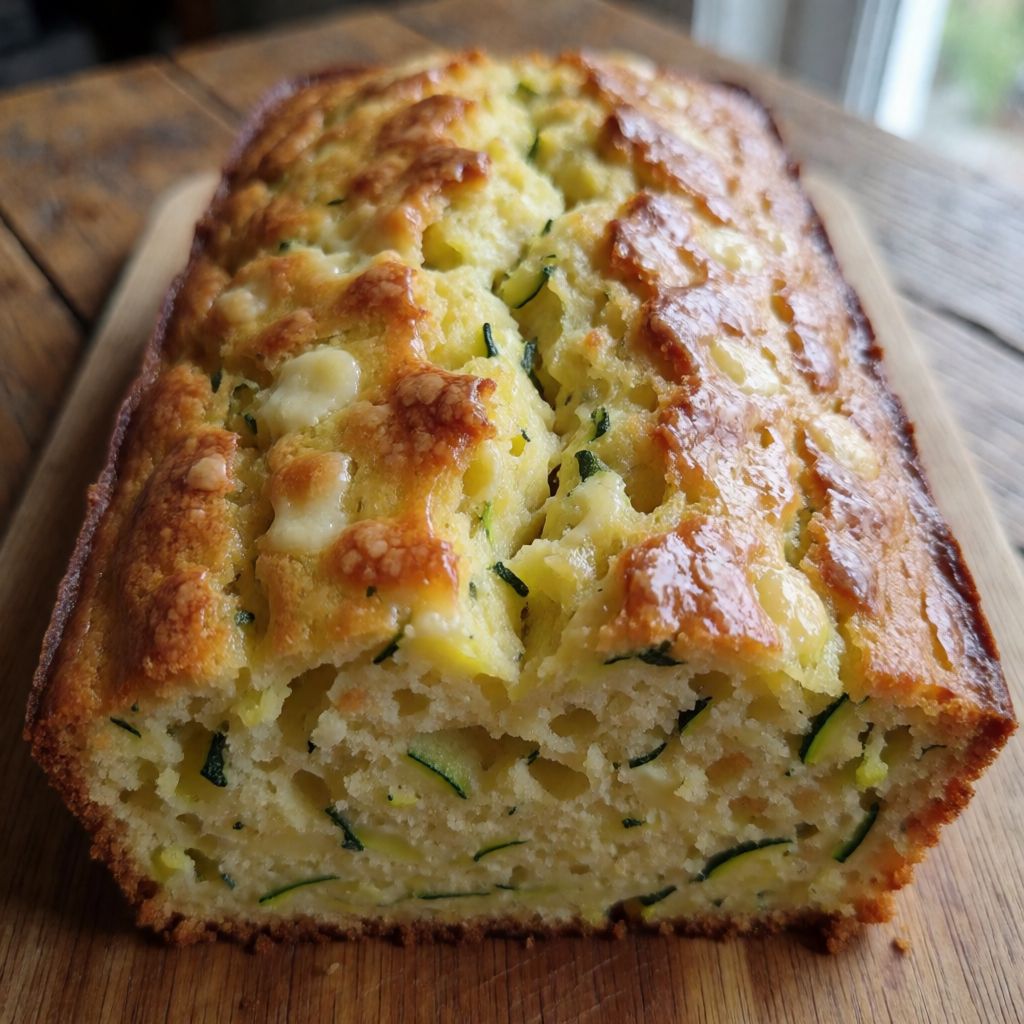
 AI photo
Courgette and Smoked Scamorza Savoury Cake
A savoury baked cake made with courgette, smoked scamorza, walnuts and almonds.
Labels are worked out automatically from the ingredients and can be wrong. Check the packaging if it matters to you.
Ingredients
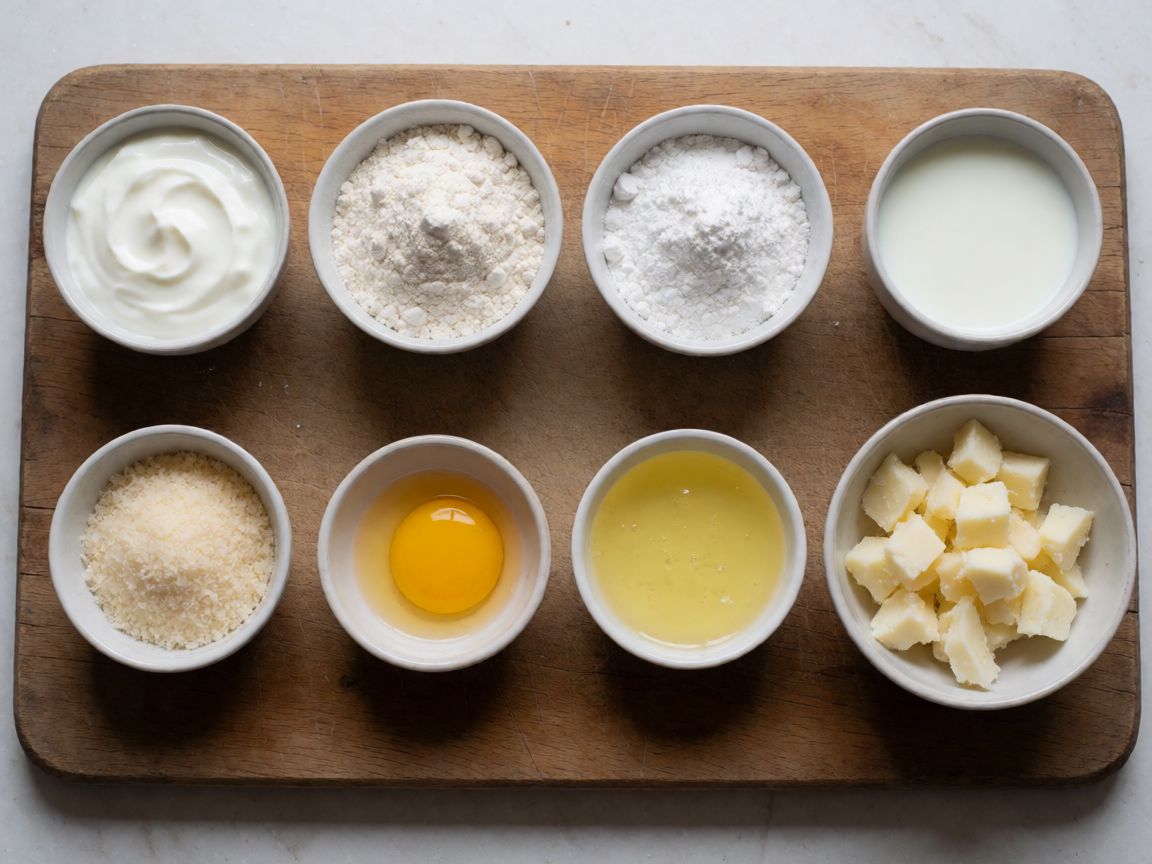
- 245 ml Yogurt
- 250 g Plain flour
- 130 g Potato starch
- 240 ml Milk
- 240 ml Olive oil
- 240 ml Parmesan grated
- 4 pcs Egg yolk
- 4 pcs Egg white
- Salt to taste
- Black pepper to taste
- 250 g Smoked scamorza
- 250 g Courgette
- 50 g Walnut
- 50 g Flaked almonds crushed
- 1 package Baking powder sachet
- Olive oil for greasing the tin
- Butter for greasing


Steps
In a large bowl combine the yogurt with the Parmesan and whisk, then add the egg yolks
Add the flour and olive oil, then the milk and potato starch, and mix
Add salt, pepper and baking powder and mix
Beat the egg whites separately to a thick foam, then gently fold into the mixture from the bottom up
Add the diced scamorza, finely diced courgette, walnuts and almonds, and mix
Grease the tin with butter and dust with flour, pour in the batter, and sprinkle with Parmesan
Bake in a fan oven preheated to 170°C
48 minLet the cake cool after baking
This is a cake only in shape. Nobody's eating it with tea — it's bread's savoury cousin, the kind of thing you slice at room temperature for a picnic, or put next to cold meats when you can't be bothered with a Sunday roast proper. Flour and potato starch stand in for yeast: no proving, no waiting for dough to think about rising, just baking powder doing the lifting while you get on with something else. That's the whole appeal — it behaves like bread but works like a muffin.
What decides whether it works is the egg white. You whip it separately, fold it in last, and that's not decoration — it's the only thing giving this heavy, oil-and-cheese-laden batter any lift at all. Potato starch and flour together make a dense, wet mix; without trapped air from the whites it would bake into something closer to a savoury flapjack, flat and tight-crumbed. Fold too hard, stir in circles instead of lifting from the bottom, and you knock that air straight back out — which is why the instruction says "bottom up": you're turning the mixture over itself, not beating it.
Some say a cake like this needs yeast to feel like real bread. No — yeast needs time, and time is the one thing this recipe refuses to spend. Baking powder reacts to heat, not to waiting, so the whole point is a bake you can start an hour before guests arrive, not the day before.
Scamorza, smoked and firm, holds its shape as cubes inside the crumb instead of melting into strings the way mozzarella would — that's deliberate, you want pockets of cheese, not a single molten layer.
Temperature: 170°C fan is not a random number — it's gentle enough that the outside doesn't set and colour before the inside, loaded as it is with oil and milk, has had its baking powder do its work. Push it hotter and you'll get a cake that looks done at the crust while the centre stays gluey round the courgette. Forty-eight minutes is where that stops being a guess — it's your lower bound, not your alarm. Test it the way you'd test any cake: a skewer or a clean knife in the thickest part, pulled out dry, no wet batter clinging. If it still looks pale and the top gives like a sponge should but your skewer comes out tacky, give it more — ovens lie, especially small domestic ones where the fan doesn't move air as evenly as the ones this recipe was probably developed in.
Yogurt and milk together aren't just liquid — they're acid and fat doing different jobs. The yogurt's slight acidity helps the baking powder react properly and keeps the crumb from tasting flat; the milk loosens everything to a pourable batter. If you've only got milk, use it, but expect a slightly blander result — a spoonful of lemon juice or vinegar in it gets you most of the way back.
Potato starch isn't there for flavour — it has none — it's there to keep the crumb tender rather than chewy, because wheat flour alone, with this much liquid and fat, would develop gluten and turn rubbery once baked. Any neutral starch works on the same logic: cornflour will do, in the same weight, if potato starch isn't in your cupboard. The flour itself should be plain, nothing self-raising — you're controlling the rise yourself with the sachet of baking powder, and two raising agents fighting each other just means an uneven crumb, holes in one place and density in another.
Parmesan, grated fine and worked into the batter itself rather than just sprinkled on top, is doing a savoury job cheddar can't quite replace — it's dry, salty, and doesn't melt into grease the way a wetter cheese would, so it seasons the whole loaf instead of pooling. Keep some back for the top: that final dusting before the oven is what gives you a crust with a bit of bite, almost a crackle, rather than a soft lid.
Courgette needs dicing small and genuinely needs no pre-salting here, which surprises people who've been taught every courgette dish starts with "salt it and let it weep." That rule exists to stop sogginess in dishes where the courgette sits exposed — in a batter this thick, surrounded by starch and oil, the little water it releases just gets absorbed, not pooled. Walnuts and crushed flaked almonds are for texture, not flavour really — a bit of crunch against all that softness — and you can swap one nut for the other, or drop whichever you're allergic to, without the structure caring at all.
Butter and flour for the tin matters more than it looks. Oil alone, in a cake this moist, tends to let the crumb stick in patches rather than release cleanly; the thin flour coating gives the batter something dry to grip as it sets, so when you turn it out the base comes away whole instead of staying behind in the tin. Let it cool properly before you cut it — warm, the cheese inside is still soft and the slice collapses rather than holds its edge; patience here isn't about taste, it's about getting a slice that looks like you meant it.