
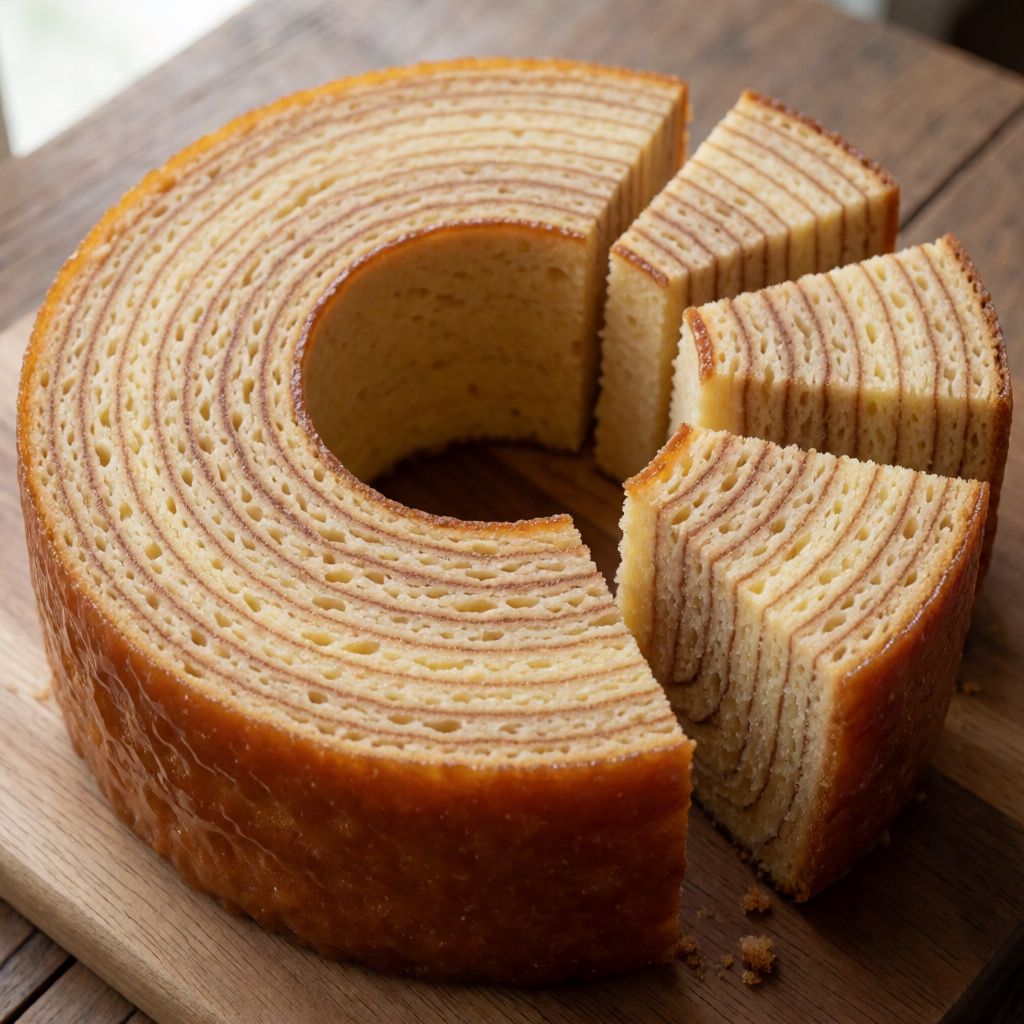
 AI photo
Baumkuchen
A classic German "tree cake" made of thin baked layers, finished with apricot jam and a chocolate glaze.
Labels are worked out automatically from the ingredients and can be wrong. Check the packaging if it matters to you.
Ingredients
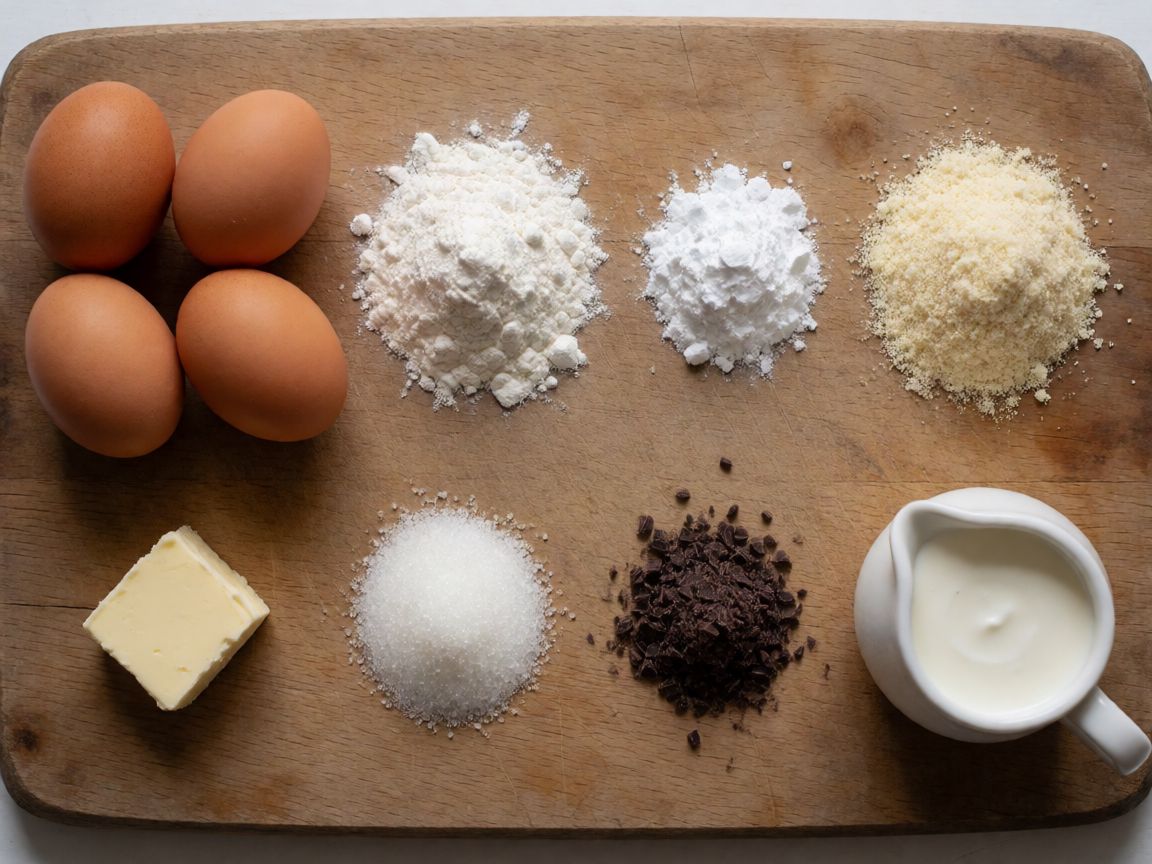
- 120 g Plain flour
- 90 g Potato starch
- 50 g Almond flour
- 4 pcs Eggs
- 170 g Butter
- 170 g Caster sugar
- 100 g Dark chocolate
- 100 g Double cream
- 100 g Apricot jam
- 1 pcs Lemon zest
- 2 g Baking powder
- 1 pcs Vanilla pod








Steps
Tip the sugar into a large bowl, add the cold butter cut into small pieces, and beat with a mixer until creamy and smooth.
Wash the lemon, dry it and zest it, then add the zest to the mixture along with four egg yolks, setting the whites aside separately.
Split the vanilla pod, scrape out the seeds with the tip of a knife and add them to the batter too.
Mix again, then gradually fold in the almond flour, potato starch and sifted plain flour.
Add the baking powder and beat the batter until completely smooth and even.
In a separate clean, dry bowl, whisk the egg whites to stiff, stable peaks, taking care no yolk gets in.
Gently fold the whisked egg whites into the batter with upward strokes, trying not to knock out the air.
Line a 22 cm springform tin or a ring tin with baking parchment.
Spread a thin layer of batter over the base with a spoon and bake under the grill in an oven preheated to 240°C.
3 minRemove the tin, spread the next thin layer of batter and bake for 3 minutes; repeat until the batter is used up.
The cake should have at least 15–20 thin layers.
Let the cake cool completely, then warm the apricot jam in the microwave for a few seconds.
Heat the double cream in a small saucepan; as soon as it comes to the boil, pour it in a thin stream over the dark chocolate pieces in a bowl.
Stir with a spoon until the mixture is smooth and even.
Cover the surface of the baumkuchen with a layer of apricot jam, then pour over the chocolate-cream glaze.
Put the cake in the fridge and wait until the chocolate has fully set.
Baumkuchen means "tree cake" in German, and the name tells you everything: cut it through and you get rings, like a trunk, because the whole thing is built not as one cake but as fifteen or twenty thin ones, stacked one on top of the other under a grill. That's the mechanism. There's no oven setting called "bake a striped cake" — you get the stripes by baking a spoonful at a time, letting each layer catch and colour before the next goes on. It is, frankly, a lot of standing in front of an open oven door, and that's the price of the pattern.
What decides whether it works isn't the batter — the batter is a fairly ordinary pound-cake mix, butter and sugar creamed, egg yolks and zest in, flour and starch folded through, whisked whites lifted in at the end for lightness. What decides it is your nerve with the grill and your patience with thin layers. Too thick a layer and you get cake with vague shadows in it, not rings. Too dark under the grill and the top layer tastes burnt before the next one goes on and buries it. You're aiming for each layer to go from pale to just gilded — the colour of a good scone top, not toast.
The flour trio does three different jobs, so don't swap one for a bigger pile of another. Plain flour gives structure — gluten, basically, enough to hold the layers together without turning chewy. Potato starch is there to cut that gluten, keeping the crumb fine and slightly short rather than bready; cornflour will do the same job if that's what's in the cupboard, the criterion is "a starch with no flavour of its own and no protein to toughen things." Almond flour adds fat and a faint sweetness and keeps the whole thing from drying out over twenty rounds under a hot grill — ground almonds from the baking aisle work exactly the same way, just sift out any coarse bits.
Butter and sugar creamed together isn't decoration, it's the rise. Cold butter beaten with sugar traps air in tiny pockets; that air is what lifts the cake along with the whisked whites, since this batter has no other raising beyond 2g of baking powder, which is really just insurance, not the main engine. If your butter's too soft or half-melted, the pockets collapse before they're made and you'll get a denser layer — so cold, cubed butter, beaten until it goes pale and fluffy, is doing real mechanical work, not just following tradition.
The egg whites, whisked separately to stiff peaks and folded in with upward strokes, are the other half of that lift — and here's where people lose it. Some say a trace of yolk in the whites doesn't matter — no, because fat coats the protein strands and stops them from forming the web that holds air; one drop of yolk and your peaks go soft and you lose the layer's lightness. A clean, dry bowl isn't fussiness, it's the one condition that makes the whisking work at all.
Dark chocolate and cream poured over it hot is a ganache, and the ratio here — roughly equal weight of each — gives you a glaze that sets to a firm, snappable shell rather than staying soft, because cream this heavy is mostly fat and water in balance with the chocolate's cocoa butter; too little cream and it seizes grainy, too much and it never sets at room temperature, only in the fridge, which is exactly why the recipe sends it to chill. Any dark chocolate with a reasonable cocoa percentage will do — you're not after a prestige bar, you're after something that sets hard enough to crack under a knife.
The apricot jam under the glaze isn't flavour, mainly — it's a seal. Warmed until runny and brushed over the cooled cake, it fills the tiny pores on the surface so the chocolate glazes evenly instead of sinking in patches and looking blotchy; any smooth, not-too-chunky jam does the same job, apricot just has a flavour that doesn't fight the chocolate.
On patience: this isn't a cake you bake and walk away from. It's a cake you babysit, spoonful by spoonful, for the better part of two hours, and that time is the actual ingredient that makes the rings — there's no shortcut that gives you the pattern without the standing-and-watching. Six people, one 22cm cake, cut thin because it's rich and the rings deserve to be seen, not gulped. With tea and milk after, if that's how your Sunday runs.