
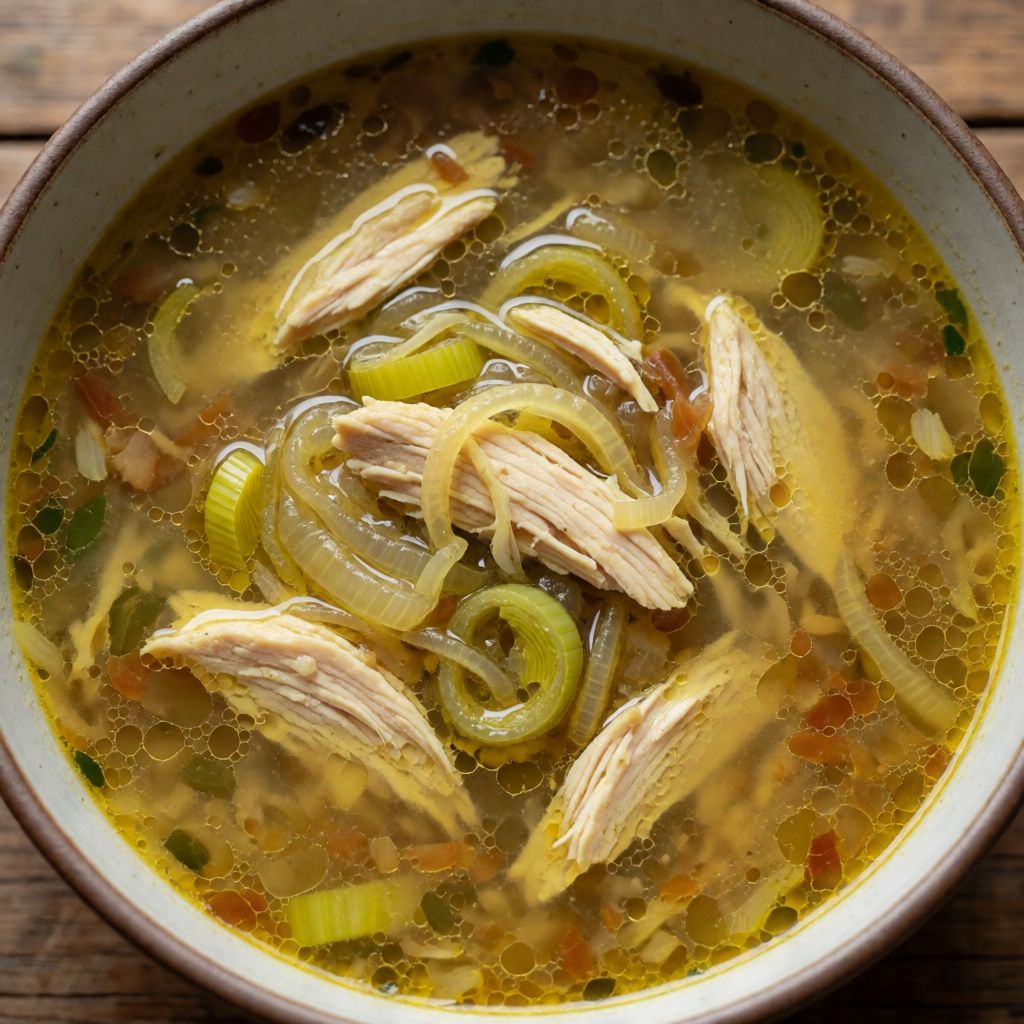
 AI photo
Hearty Chicken Soup
A thick, warming chicken soup with curry, leek and tomatoes, finished with cream.
Labels are worked out automatically from the ingredients and can be wrong. Check the packaging if it matters to you.
Ingredients
- 2 tsp Curry powder medium hot
- 1 tsp Cumin ground
- 1 pcs Onion finely chopped
- 2 clove Garlic finely chopped
- 2 pcs Leek thinly sliced into rings
- 500 g Chicken breast cut into cubes
- 800 ml Stock
- 2 tsp Dried thyme
- 2 pcs Tomato cut into wedges
- 1 pcs Bell pepper cut into cubes
- 200 ml Double cream
- 2 tbsp Cornflour mixed with a little water
- 2 tbsp Olive oil
- Salt
- Black pepper freshly ground
- 1 bunch Parsley flat-leaf, roughly chopped
- 300 ml Basmati rice cooked according to packet instructions















Steps
Heat a pot and toast the curry powder and cumin, stirring, until fragrant.
Add the oil, onion, garlic and leek, and fry in the curry until the onion softens.
Add the chicken breast, brown on all sides, then pour in the stock and add the thyme.
Cover and simmer gently for 20 minutes until the chicken is tender; meanwhile cook the rice according to the packet instructions.
20 minAdd the tomatoes and bell pepper, and season with salt and black pepper.
Lightly thicken the soup with the cornflour mixed with cold water, stirring.
Bring to the boil, stir in the cream and serve sprinkled with chopped parsley, with rice on the side if liked.
This is a chicken soup built on a technique borrowed from curry houses, not from the stockpot tradition: you toast the spice before anything else touches the pan. Dry curry powder and cumin, thrown onto hot metal with no fat yet, bloom differently than they would in oil — the heat drives off the raw, dusty edge and wakes up the oils that carry flavour. Do this for seconds, not minutes; you're watching for the smell to change, not for colour, because ground spice burns fast and bitter the moment it goes from fragrant to scorched. That's the one irreversible mistake in the whole recipe, and it happens in the first thirty seconds.
What decides whether the soup works after that is restraint with the chicken. Chicken breast toughens the instant it's pushed past done — there's no connective tissue in it to melt and rescue you the way there is in thigh or shin. So it's browned hard and fast on the outside for flavour, then simmered gently, lid on, just until it gives rather than resists when you press a cube with a spoon. Twenty minutes is the floor here, not the finish line; a slightly thinner cut, a slightly fuller pot, and you need longer.
The second thing worth watching is the vegetables going in late. Tomato and bell pepper go in near the end, after the chicken is already tender, because they don't need the long simmer — they need to soften without collapsing into mush and losing their own character. Add them at the start with everything else and by the time the chicken's ready they're grey, seedy debris instead of something you can still identify on the plate.
Curry powder here is doing a job, not a flavour — it's "medium hot" because this isn't meant to read as a curry, it's meant to read as a chicken soup with warmth and depth underneath. If you've only got a hotter blend in the cupboard, halve it and taste; if you've only got mild, you can go a touch over the 2 tsp. What you're choosing for is balance against the cream at the end, which will mute heat considerably — a soup that tastes right before the cream goes in will taste flat afterwards, so season with that dilution in mind rather than chasing perfect balance at every stage.
The onion, garlic and leek are fried in the toasted spice rather than before it, which is the opposite of how most soups start. Frying aromatics first and adding spice after is the usual order because it's gentler — spice sitting in fat at a lower, steadier heat is forgiving. Here the spice is toasted bare and hot first precisely because that dry, direct heat is what develops it; the onion and oil go in straight after to stop the pan running any hotter and to catch the spice in fat before it has the chance to burn on bare metal. Some say onions should always go in before spice "to build the base" — no, because that rule exists for recipes where the spice is meant to mellow in fat from the start, not where it's meant to be bloomed dry first. Different mechanism, different order.
Chicken breast is the lean, quick-cooking choice — four people, thirty minutes total, no long braise. If you want more forgiveness in the timing, thigh fillet works the same way but tolerates a few extra minutes without turning stringy, because it carries more fat and a little connective tissue. Either way, cube it evenly; uneven pieces mean some are done and tightening up while others are still raw in the middle, and you end up overcooking the small ones to catch up the big ones.
Stock is the other place not to improvise lazily. 800ml for 500g of chicken and a modest vegetable load means the stock is carrying real flavour weight — a cube-and-water stock will taste thin once it's stretched by cream and rice. A proper stock, even a decent bought fresh one from a UK supermarket chiller rather than a cube, earns its place here; you're not simmering bones for hours in this recipe, so the stock has to arrive already doing its job.
Double cream is specified rather than single or crème fraîche for a reason tied to fat content: double cream, sitting north of 48% fat, holds together under heat far better than single cream (around 18%), which is far more prone to splitting when it meets a hot, slightly acidic broth — and there's tomato in this pot, which adds exactly that acidity. If double cream isn't to hand, crème fraîche is the better stand-in over single cream, precisely because its fat and slight thickness protect it the same way. Any lower-fat cream needs to go in off the heat, stirred through rather than boiled, or you'll be looking at little flecks of curdled dairy floating in your soup rather than a smooth finish.
Cornflour mixed with cold water first, not added as powder straight into the hot pot, is the standard trick for a reason worth stating plainly: starch granules dropped directly into hot liquid clump and gel on the outside before the inside ever hydrates, leaving you with lumps that never fully dissolve. Mixing it into cold water first separates the granules so they can swell evenly once they hit the heat.
Rice is cooked separately and served alongside rather than in the pot, which keeps this a soup with rice on the side rather than a porridge — rice simmered directly in the broth keeps drinking liquid and swelling even after it's "done," by the time it's reheated for seconds the next day. Basmati specifically for its long, separate grain and the way it stays distinct rather than turning starchy and sticky, which matters more here than usual because it's sitting in a creamy liquid that would otherwise make a short-grain rice feel like risotto by accident. Parsley at the very end is there for the same reason it always is — raw brightness and a bit of green against a rich, heavy bowl, and it has no business near the heat or it just wilts into the same colour as everything else.