
 AI photo
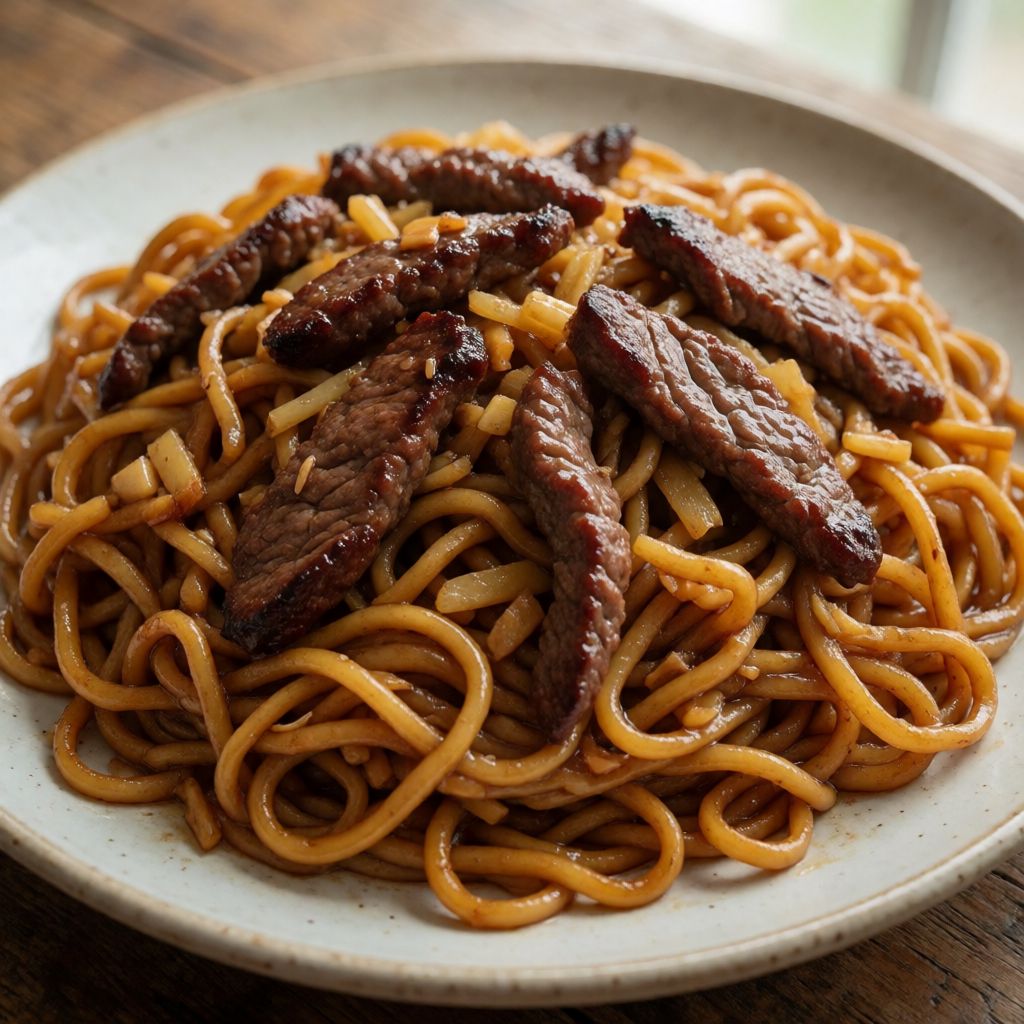
Beef Wok Noodles
Thin strips of beef, crunchy vegetables and noodles tossed together in a hot wok with a zingy lime dressing.
Labels are worked out automatically from the ingredients and can be wrong. Check the packaging if it matters to you.
Ingredients
- 400 g Beef Steak cut into thin strips
- 1 tbsp Soy Sauce
- 1 tbsp Sugar
- 1 tbsp Fish Sauce
- 4 clove Garlic finely chopped
- 1 tbsp Ginger grated
- 20 g Sesame Seeds
- 1 tbsp Sesame Oil
- 1 pcs Lime organic, zest and juice
- 1 tbsp Fish Sauce
- 1 tsp Sugar
- 0.5 pcs Red Chilli finely chopped
- 100 g Broccoli in small florets
- 2 pcs Carrot cut into thin strips
- 0.5 pcs Pointed Cabbage thinly sliced
- 100 g Spinach
- 200 g Ramen Noodles
- 20 g Peanut salted, roughly chopped
- 3 bunch Spring Onion thinly sliced
- 1 bunch Coriander fresh
- 1 pcs Lime organic, cut into wedges
















Steps
Put the beef in a bowl. Mix the marinade in another bowl and pour it over the meat, massaging the strips a little.
15 minMix the dressing and season it well.
2 minCook the noodles according to the packet instructions and drain in a sieve.
9 minHeat a wok over a high heat and quickly stir-fry the beef strips — they should only just catch the heat for a moment.
3 minRemove from the heat and quickly add the carrot, broccoli, pointed cabbage and spinach, stir-frying for one minute.
1 minAdd the noodles, toss and tip into the large bowl with the beef. Add the dressing and sprinkle over the salted peanuts, spring onion and fresh coriander.
1 minServe with lime wedges to squeeze over.
This is a wok dish held together by one piece of discipline: the beef goes in for seconds, not minutes, and everything else goes in after the heat has already done its damage. Get that sequence wrong and you don't get noodles with beef — you get grey, chewy beef with noodles stuck to the bottom of the pan.
The whole dish is really two separate jobs pretending to be one. Job one is a flash-fry: thin strips of beef hit a pan that's almost too hot to look at, and they're out before they've had time to seize up. Job two is a toss: noodles, raw-ish vegetables and a sharp dressing come together off the heat, barely cooked at all, so they keep their crunch and their colour. Most of what makes this dish work or fail happens in the ten seconds between those two jobs — whether you let the pan cool, whether you let the beef sit, whether you panic and leave it in too long because it "doesn't look done yet."
Some say you need a roaring gas ring and a carbon-steel wok to do this properly, and that a domestic electric hob can't manage it — no, because the actual requirement isn't flame, it's a hot, dry, nearly empty pan and meat cut thin enough to cook through before it toughens. A wide frying pan on your hottest ring, used in batches so the meat never sits in its own liquid, does the same job. What kills people on a home hob isn't lack of power, it's overcrowding: too much beef at once drops the pan's heat, the meat starts stewing in its own juice instead of searing, and you get the dry, stringy result people blame on "not having a proper wok."
Buy the beef in a single piece if you can, rather than pre-cut "stir-fry strips" from a tray — a single steak lets you choose the cut and control the thickness yourself. You want something lean but not working muscle: rump or sirloin, cut across the grain into strips about the width of a pencil. Cutting across the grain shortens the muscle fibres, which is the actual reason thin-sliced beef stays tender in a flash-fry instead of turning into elastic bands — it's got nothing to do with the cut being "premium."
The marinade (soy, sugar, fish sauce, garlic, ginger) is doing chemistry, not just flavour. Sugar and salt together draw moisture to the surface of the meat and help it brown rather than steam when it hits the pan — fifteen minutes is enough for that, longer doesn't hurt but doesn't transform anything either. Fish sauce brings savoury depth that soy alone can't; if you don't have it or don't want the smell in the flat, use a touch more soy and accept the dish will be gentler, not worse.
The dressing — lime zest and juice, fish sauce, sugar, chilli — is the thing that stops this reading as "beef and cabbage" and starts reading as the dish it's meant to be. It goes on cold, at the end, after the heat, so its acidity and heat stay sharp instead of cooking off. Any substitution here should meet the same brief: something sour, something salty-savoury, something with heat, something sweet to round the edges. Rice vinegar for lime, soy for fish sauce, any fresh chilli for red chilli — the exact items matter less than the balance of those four jobs.
Sesame oil is for smell, not cooking — it has a low smoke point and scorches into bitterness if you fry in it, so it belongs stirred through at the end, or in the dressing, never in the hot pan. If you don't have it, any oil with no smell of its own does the actual frying — a neutral vegetable or sunflower oil — and you simply go without the sesame note, rather than faking it with toasted sesame seeds alone.
The vegetables are chosen for a shared cooking speed as much as for contrast: broccoli in small florets cooks at roughly the same rate as fine carrot strips and shredded pointed cabbage, so they can all go in together for that one short minute. Spinach is the odd one — it collapses almost instantly from residual heat, which is exactly why it goes in last and barely gets stirred. If you swap vegetables, keep that logic: thin-cut, quick-cooking, and similar enough in density that one minute suits them all.
Noodles cooked separately and drained well matter more than people think — wet noodles dilute the dressing and stop anything browning, which is the quiet cause of a wok dish tasting watery rather than seasoned. Shake the sieve, don't just tip it. And have everything — meat marinated, vegetables cut, dressing mixed, noodles drained — sitting ready before the pan goes on the heat. That's not fussiness, that's the only way the actual cooking stays as fast as it needs to be; once the pan's hot, there's no time left to be chopping ginger.