
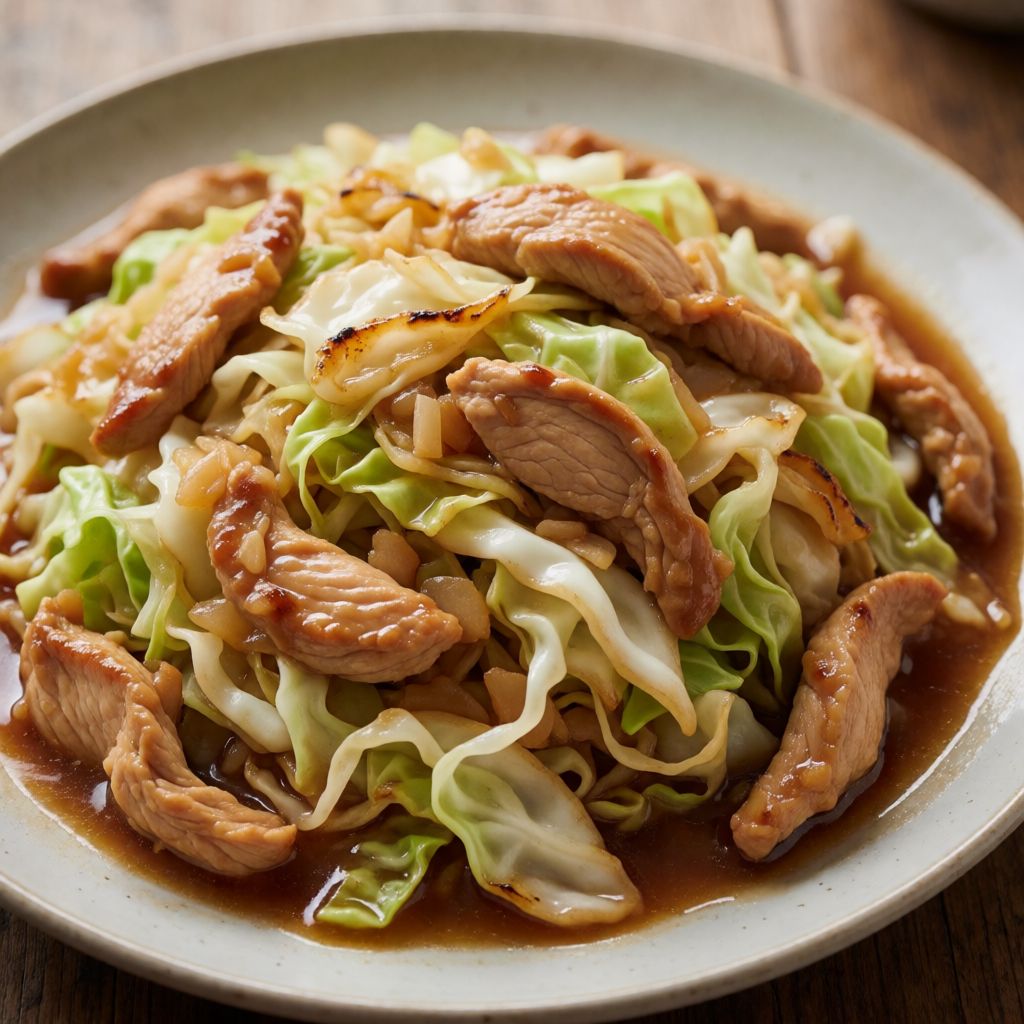
 AI photo
Chicken and Cabbage Stir-Fry
A quick wok dish of chicken, cabbage and carrot in a sweet-savoury sauce, finished with cashews and sesame seeds.
Labels are worked out automatically from the ingredients and can be wrong. Check the packaging if it matters to you.
Ingredients
- 2 tbsp Soy sauce
- 4 tbsp Hoisin sauce
- 3 tbsp Sesame oil
- 2 tbsp Honey
- ½ pcs Lime juiced
- 2 clove Garlic crushed
- 1 tsp Ginger finely grated
- 400 g Chicken breast cubed
- 400 g Pointed cabbage finely shredded
- 100 g Red cabbage finely shredded
- 300 g Carrot julienned
- 2 tbsp Sesame oil
- pinch Black pepper freshly ground
- 30 g Cashews
- 2 pcs Spring onion finely sliced
- 25 g Sesame seeds













Steps
Mix together the sauce for the wok.
Heat a wok or large frying pan with oil and quickly stir-fry the chicken over high heat, stirring constantly.
Add the cabbage and carrot to the pan and stir-fry for about a minute, stirring often.
1 minPour in the sauce and mix well. Reduce the heat and simmer for 4-5 minutes.
5 minSeason with freshly ground black pepper and, if you like, add a little more soy sauce and lime juice.
Serve on plates or in bowls, sprinkled with cashews, spring onion and sesame seeds.
This is a wok dish dressed up in a British kitchen as a "stir-fry," which is fine, but let's be honest about what's actually happening: you're searing meat hard and fast, then wilting vegetables just enough that they keep their bite. The whole thing lives or dies on heat and timing, not on the sauce, which is really just a glaze you add at the end to coat, not to cook in.
What decides whether this works is whether your chicken browns or stews. A domestic hob doesn't throw the BTU output of a commercial wok burner — some say "any pan will do if it's hot enough," no, because a crowded pan drops its temperature the moment chicken hits it, and wet meat on a cool-ish pan just sweats and goes grey and rubbery instead of catching colour. So you work in batches if your pan is small, or accept a flatter result if you don't.
The cabbage and carrot go in raw-crisp and come out barely softened — a minute of contact, not a cooking time so much as a "does it still snap" check. Then the sauce goes in and you simmer briefly: this is not braising the vegetables tender, it's reducing the sauce enough that it clings instead of pooling. If you let it run long "to make sure it's cooked," you lose the crunch that's the entire point of julienning the carrot and shredding the cabbage so finely in the first place.
Garnish last, and not as decoration: cashews for crunch, spring onion for a raw green bite, sesame seeds for a toasty note the sesame oil alone can't give you. Skip them and you still have dinner; skip the hot pan and you don't.
Soy sauce and hoisin are doing different jobs, not duplicating each other. Soy gives salt and the savoury depth (umami, if you want the word) that water and salt alone can't. Hoisin is thicker, sweeter, built from fermented soybean paste with sugar and spice worked in — it's what gives the glaze body so it clings to chicken instead of running off like water. If you've only got soy, add a bit more honey to compensate for hoisin's sweetness, but the sauce will be thinner — don't fight it, just reduce it a little longer once it's in the pan.
Sesame oil appears twice for a reason: the smaller amount goes into the sauce for flavour — toasted sesame oil smells of itself, which is exactly why you want a little and not a lot, it overpowers fast. The larger amount is for the actual stir-frying, and here plain untoasted sesame oil or any neutral oil with a high smoke point does the job — groundnut, sunflower, whatever's in the cupboard. Any oil with no smell of its own and a tolerance for high heat will stand in. Don't use your good cold-pressed olive oil here; it'll smoke and turn bitter before the chicken even colours.
Honey and lime are balance, not flourish. Honey rounds off the salt of the soy; lime cuts the sweetness of hoisin and honey together. Taste before you plate — step 5 isn't an afterthought, it's the actual seasoning moment, because sauces reduce unevenly depending on your pan and your heat, and what tasted balanced in the jug can turn too sweet or too flat once it's clung to hot chicken and cabbage for a few minutes.
Garlic and ginger are aromatics, and they're meant to perfume the sauce, not fry alone in the pan first — crushed garlic burns in seconds on a hot wok and turns bitter, so here it rides safely in the liquid sauce instead of hitting bare metal. Grate the ginger fine for the same reason you shred the cabbage fine: smaller surface means it releases flavour fast without needing long cooking.
Pointed cabbage and red cabbage aren't interchangeable for colour alone — pointed cabbage is softer and sweeter, wilts quickly; red cabbage is denser, holds its crunch longer and brings a sharper, almost peppery edge along with the colour. Shredding finely matters here more than most recipes admit: thick-cut cabbage needs real cooking time to soften, which means your chicken either overcooks waiting for it, or the cabbage stays raw-tough. Fine shredding lets both finish together in that one brisk minute.
Chicken breast cubed small cooks fast and evenly — that's the whole appeal for a stir-fry, where "fast" is the operating principle, not a shortcut. If you'd rather use thigh, it forgives a slightly longer sear without drying out, which on a domestic hob that struggles to get properly hot is sometimes the safer bet.
Serves four as a main, with rice or noodles on the side if you want it to stretch further — the dish itself is lean on carbohydrate, which is worth knowing if you're planning the rest of the meal around it. And patience, oddly, is still an ingredient here even though everything moves fast: the patience is in not crowding the pan, not rushing to add vegetables before the chicken's actually browned, not simmering the sauce down to nothing just because five minutes felt arbitrary. Watch the pan, not the clock.