
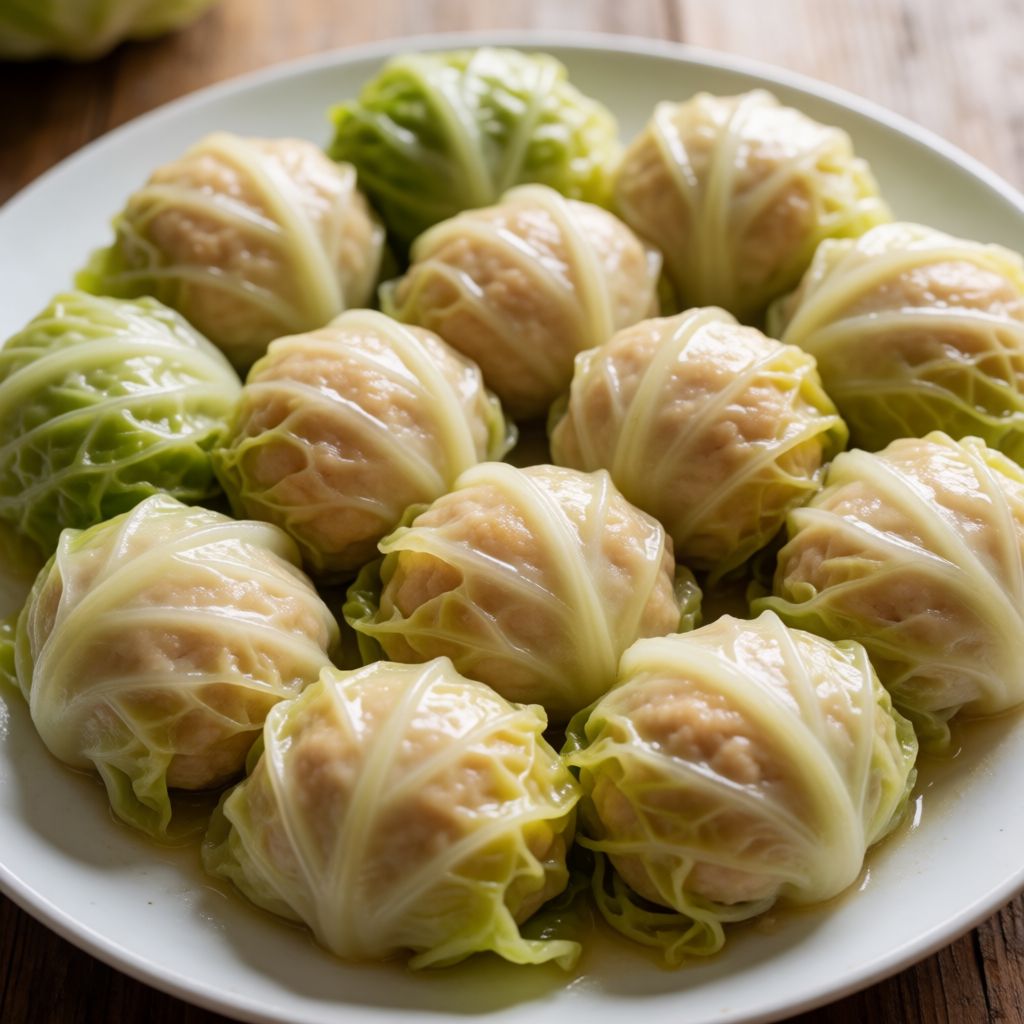
 AI photo
Juicy Chicken Meatballs in Cabbage Wraps
Juicy chicken meatballs wrapped in crisp cabbage leaves with cucumber, salad leaves and a dill dressing.
Labels are worked out automatically from the ingredients and can be wrong. Check the packaging if it matters to you.
Ingredients
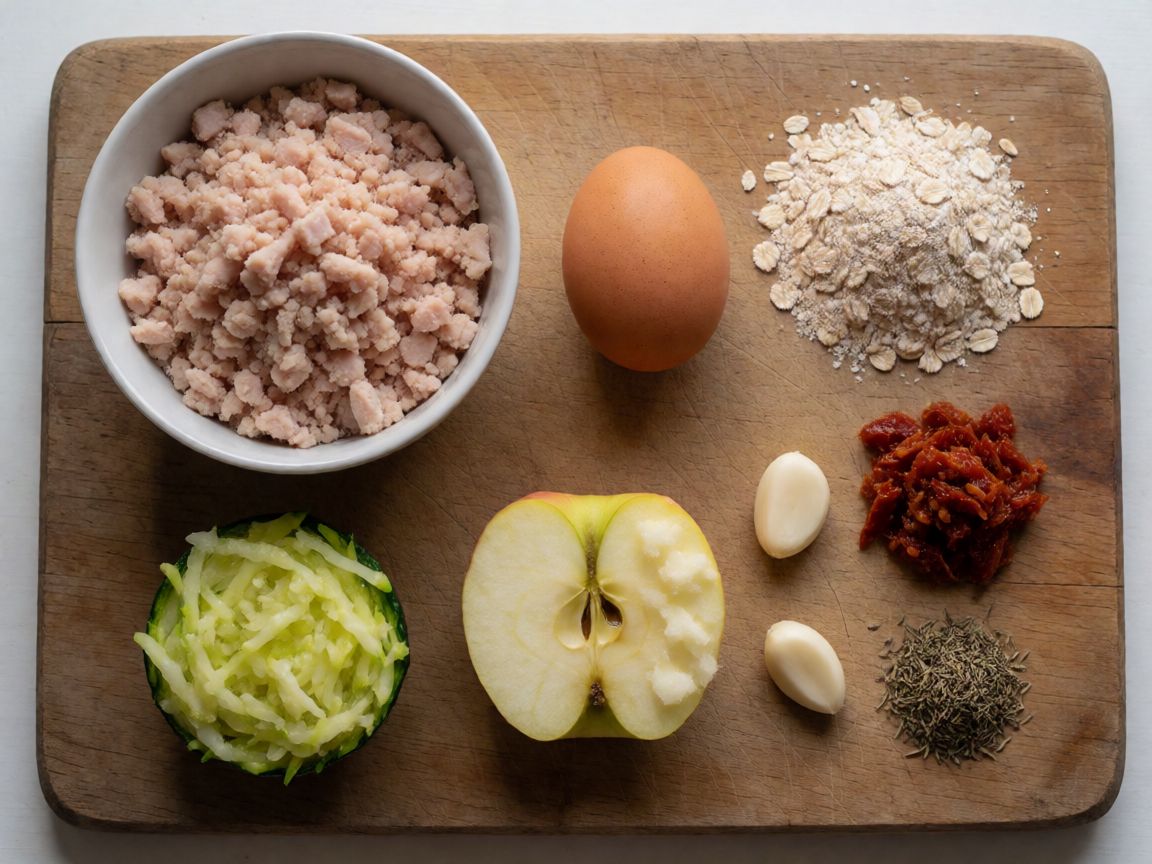
- 400 g Minced chicken
- 1 pcs Egg
- 50 ml Porridge oats
- ½ pcs Courgette coarsely grated
- 1 pcs Apple coarsely grated
- 2 clove Garlic crushed
- 1 tbsp Sun-dried tomatoes finely chopped
- 1 tsp Dried thyme
- 1 tsp Salt
- 1 tsp Pointed cabbage
- 2 pcs Cabbage leaves per person
- 75 g Lamb's lettuce
- ½ pcs Cucumber diced
- 1 pcs Red onion cut into thin half-moons
- 1 bunch Fresh herbs
- 100 ml Crème fraîche
- Salt
- Black pepper
- 1 bunch Dill finely chopped
- ½ tsp Dijon mustard



















Steps
Mix all the meatball ingredients well in a bowl and chill in the fridge for half an hour (30 minutes).
30 minShape the meatballs and fry them in a pan in oil and butter for about 5 minutes on each side, until cooked through.
10 minThe meatballs can also be baked in the oven: brush them lightly with oil and turn them a few times while baking.
Bake for about 20 minutes in a preheated fan oven at 180°C.
20 minFill the pointed cabbage leaves with the salad leaves, chicken meatballs, cucumber and herbs.
Finish by drizzling with the dill dressing.
This is a chicken meatball that's been engineered to stay juicy without you babysitting it, then handed over raw-wrapped in a cabbage leaf instead of bread. Two different mechanisms are doing the work here, and if you understand them you stop needing the recipe at all.
The juiciness problem with minced chicken is simple: it's nearly fat-free, so once the proteins tighten up on heat, there's nothing left to carry moisture. Beef meatballs forgive you because fat renders slowly and bastes the inside as it cooks. Chicken has no such safety net — overcook it by even a minute and you get dry crumbs held together by hope. So this recipe stuffs moisture in mechanically: grated courgette and apple are mostly water locked in cell walls, oats swell and hold liquid like a sponge, egg binds it all so the water doesn't just weep out into the pan. None of this is about flavour first — it's structural. The apple's sweetness and the sun-dried tomato's punch are a bonus on top of an engineering fix.
What decides whether it works is restraint at the pan. You want the surface to seize and colour — that's what gives you a meatball instead of a chicken meatball-shaped puddle — but you do not want to chase "done" by pressing or cutting into it repeatedly, because every cut lets juice run out exactly where you were trying to keep it in. Fry until a crust forms and the meatball releases cleanly from the pan on its own — it will stick while raw and let go when the surface protein sets. That's your first cue, not a stopwatch.
Start with the mince itself. 400g chicken for four people is a modest portion per head — about four to five small meatballs each, not the fist-sized ones you'd do with beef, because dense chicken meatballs cook unevenly in the middle before the outside is done. Keep them on the small side; it's not a serving-size instruction, it's a cooking-time one.
The egg is the binder, full stop — not for richness, for structure. Skip it and the meatballs fall apart in the pan the moment you try to turn them, because there's nothing holding the grated vegetables and oats to the mince once the fat renders out from under them.
Oats here aren't a filler to stretch the meat — that's the old panade myth, "bulk out the mince to save money." No: this is about absorption. Oats take up the water released by the grated courgette and apple as they cook, so that water ends up suspended through the meatball instead of pooling and turning your frying oil into a shallow braise. If you're out of oats, any starch that swells in liquid does the same job — a slice of bread soaked and squeezed, or breadcrumbs, work, though oats hold more water for their volume, which is why less is needed.
Courgette and apple: grate them coarsely, not finely, and don't squeeze the liquid out — that's the opposite of what you want. The coarse grate keeps some bite and stops the mixture turning to paste; the retained liquid is the entire point. If you haven't got courgette, any high-water, low-flavour vegetable works — grated carrot or even raw potato, though potato brings its own starch and you'd cut the oats back a touch. The apple's job is partly the same moisture trick, partly a counterpoint of sweetness against the garlic and sun-dried tomato, which are doing savoury work — crushed garlic for sharpness that mellows as it cooks, sun-dried tomato for the concentrated, almost umami hit that fresh tomato can't give you because fresh tomato is mostly water and would undo your careful moisture balance rather than add seasoning.
On a British hob, fry in a mix of oil and butter — the oil for a higher smoke point so the butter doesn't burn before the meatball's surface has coloured, and the butter for the flavour oil alone won't give you. Any neutral oil with no smell of its own does the oil's job — sunflower, vegetable, groundnut; olive oil is fine too but it will bring its own taste into a dish that doesn't need it. Five minutes a side is your lower bound, not your answer — the real tell is a meatball that releases from the pan without a fight and feels firm, not springy-soft, when you press the side of it with a spoon. If you're baking instead — sensible if you're already using the oven for something else and don't want to stand at the hob — 180°C fan for about 20 minutes, turning so no one side sits in its own fat and goes pale and steamed rather than browned; the oil brush matters because chicken mince alone won't baste itself in an oven the way it would sitting in shallow fat in a pan.
The dressing is crème fraîche loosened with dill and sharpened with Dijon mustard — this is the French-countryside logic of using soured cream to carry fat and acidity together without needing an emulsified vinaigrette, which would split against the fresh herbs. If crème fraîche isn't in your fridge, use full-fat natural yoghurt and expect it slightly sharper, or soured cream for something closer in texture. Chop the dill fine and fold it in right before serving — dill goes dull and bitter if it sits dressed for long, which is the real reason to dress at the table rather than in advance, not some rule about freshness for its own sake.
Last thing: the half hour of chilling in step one isn't optional padding before you "get to the real cooking." It's the mixture settling — the oats finishing their absorption, the egg and mince binding properly so the meatballs hold their shape in a hot pan instead of spreading into flat patties. Skip it if you're in a rush and you'll lose some meatballs to the pan. That thirty minutes is doing real work; call it patience, because that's what it is.