
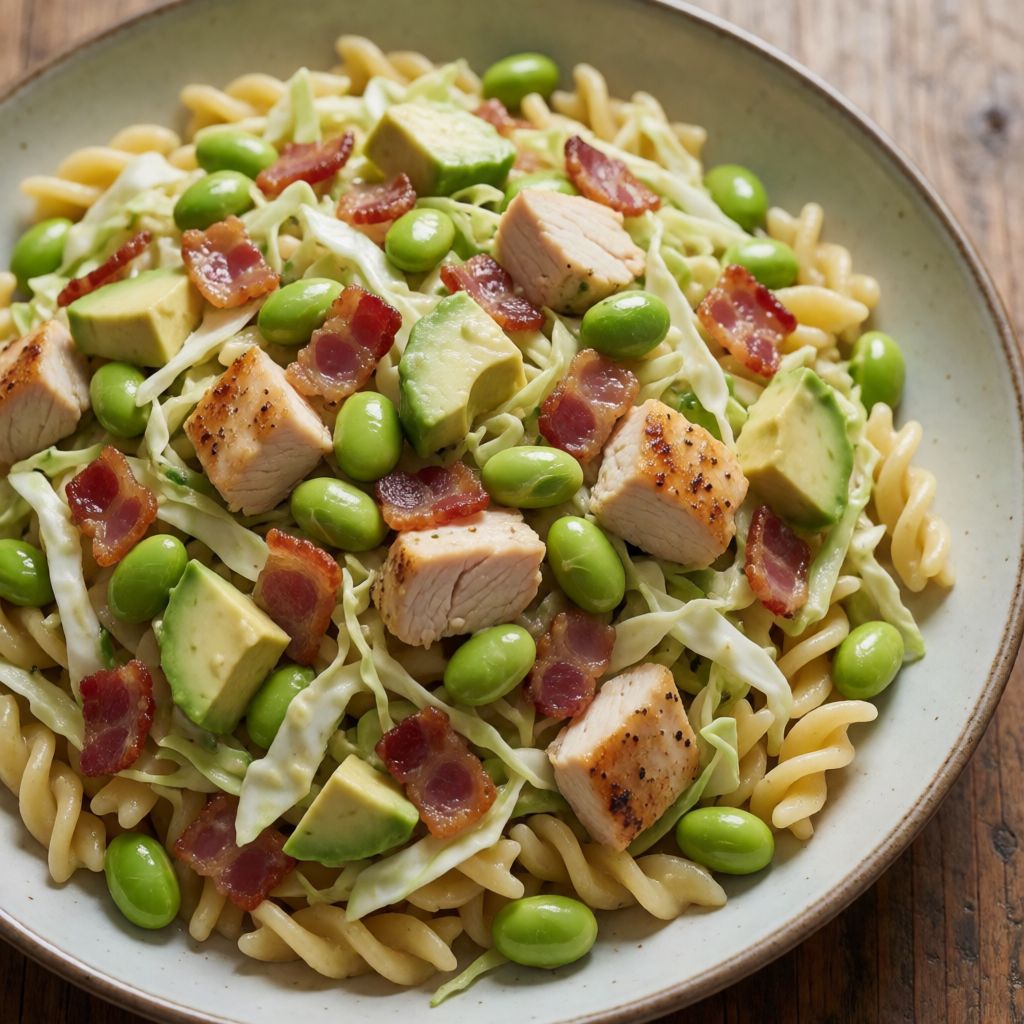
 AI photo
Pasta Salad with Chicken
A hearty pasta salad with chicken, bacon, edamame and crisp vegetables in a creamy curry dressing.
Labels are worked out automatically from the ingredients and can be wrong. Check the packaging if it matters to you.
Ingredients
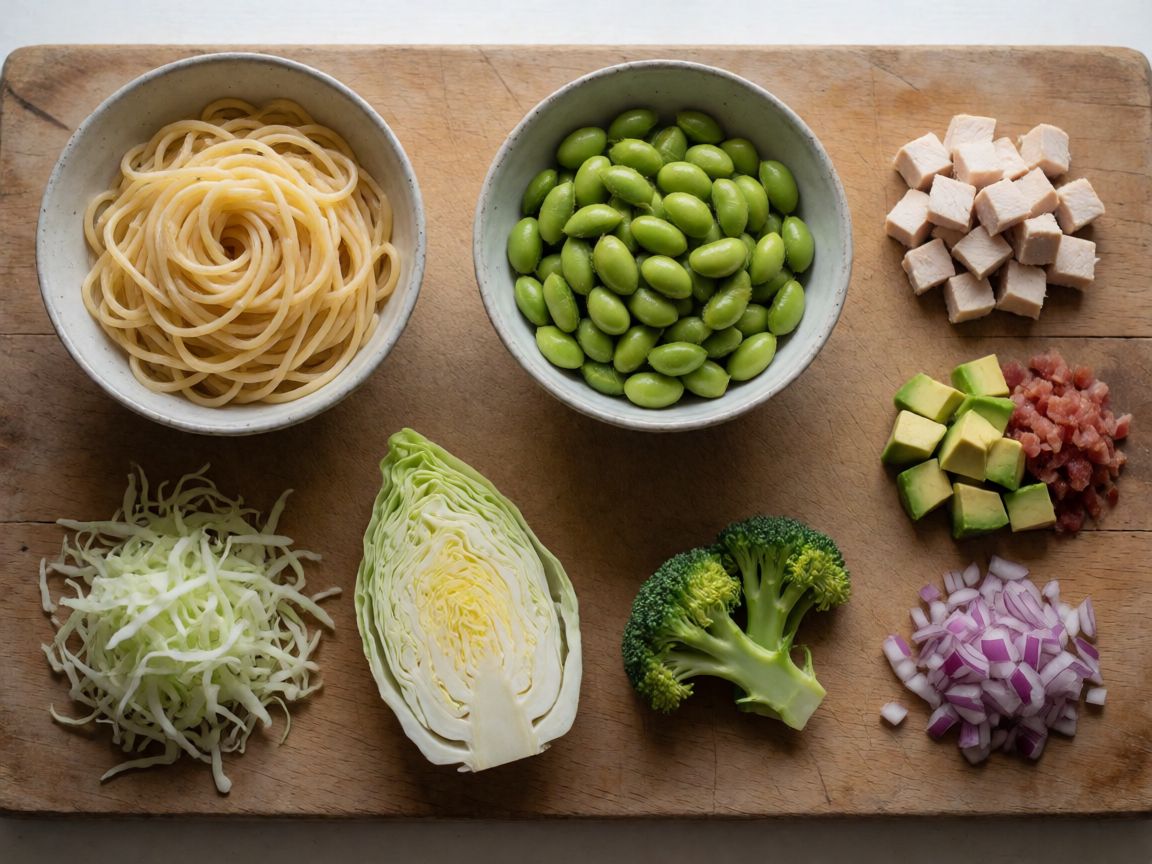
- 400 g Pasta
- 150 g Edamame
- 400 g Chicken breast
- 75 g Bacon
- 1 pcs Avocado diced
- 1 pcs Pointed cabbage half, finely shredded
- 1 pcs Broccoli half, broken into small florets
- 1 pcs Red onion finely chopped







For the dressing
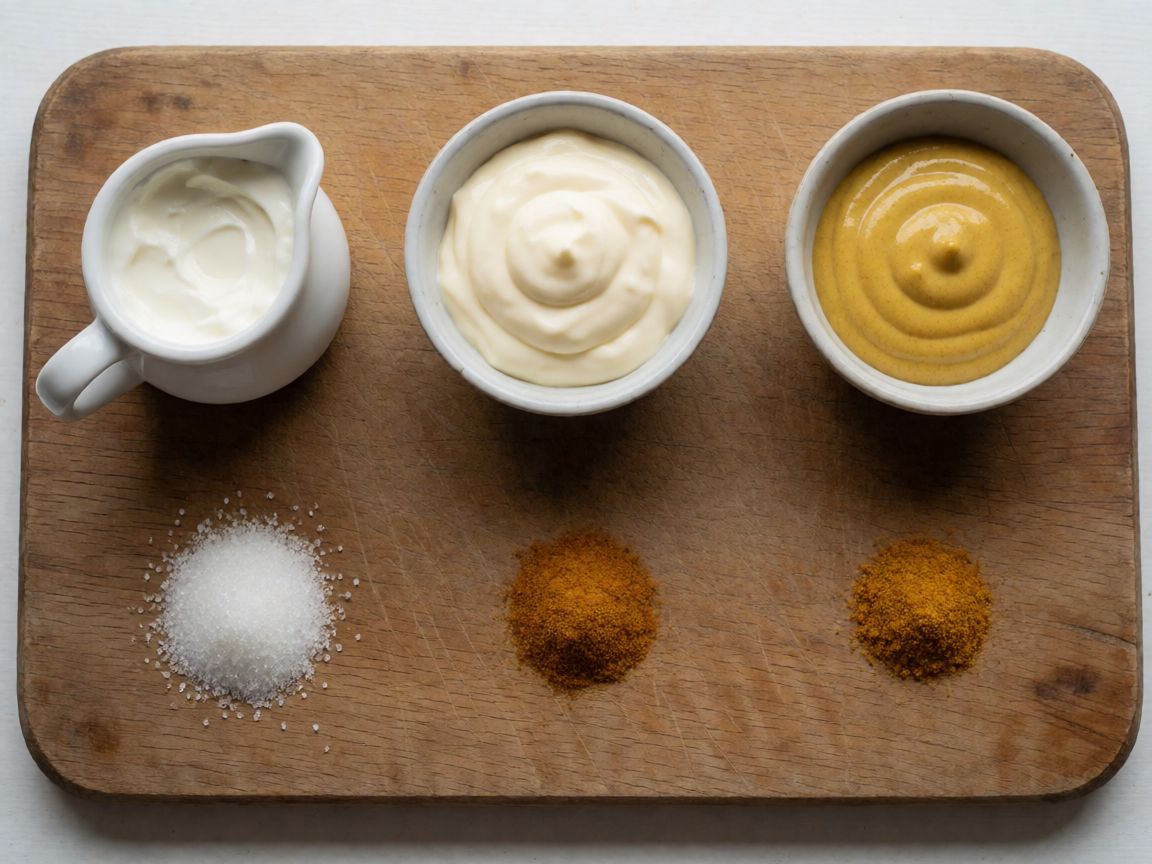
- 200 ml Crème fraîche
- 1 tbsp Mayonnaise
- 1 tsp Dijon mustard
- 1 tsp Sugar
- 2 tsp Curry powder
- Salt
- Black pepper freshly ground







Steps
Cook the pasta according to the pack instructions. Add the frozen edamame to the boiling water with the pasta just as the pasta finishes cooking, then drain immediately.
Fry the bacon in a pan until crisp, then set aside on paper towel.
Place the chicken breast in the pan and fry on all sides over medium-high heat, seasoning with salt and pepper.
6 minCook the chicken for 6-8 minutes on each side until fully cooked through.
7 minDice the chicken and bacon and mix well with the pasta and edamame.
Mix all the dressing ingredients in a bowl and adjust to taste.
Thoroughly mix the pasta salad with all the vegetables and the dressing.
This is a cold mixed salad built on the logic of leftovers-that-never-were: pasta and edamame cooked once, chicken and bacon fried separately, then everything bound together with a curried crème fraîche dressing. What decides whether it works isn't any single step — it's temperature management. You're combining hot-cooked things that must cool before they meet raw vegetables and a dairy dressing, or you'll wilt the cabbage and split the crème fraîche.
The structure is simple once you see it: a starch base (pasta plus edamame, both boiled together), a protein layer (chicken and bacon, both pan-fried, both rested before cutting), a raw-vegetable layer (cabbage, broccoli, onion, avocado — none of them cooked, all of them kept crunchy on purpose), and a dressing that's really a curry mayonnaise loosened with crème fraîche. Mix in that order, cold ingredients last, and the dish holds its texture for hours. Mix it hot, and the cabbage goes limp and the avocado turns to paste.
Some say chicken breast is bland and needs marinating overnight — no, because the actual problem with chicken breast is almost always overcooking, not under-seasoning. Salt it properly before it hits the pan, fry it hot enough that it browns rather than steams, and rest it before cutting: the juice that would otherwise run out onto your board stays inside the meat instead. That's the whole trick, no marinade required.
Pasta: use a short shape with some surface texture — fusilli, penne, conchiglie — because a salad depends on the dressing clinging to ridges, not sliding off a smooth tube. After draining, don't rinse under cold water out of habit to "stop it cooking" — some say you must, no, because rinsing washes off the starch that helps the dressing grip, and the pasta cools fine just sitting in a colander for ten minutes while you deal with the chicken.
Edamame goes into the same pot right at the end because it only needs blanching, not full cooking — frozen beans are already blanched before freezing, so you're reheating and softening the pod-free beans, not cooking them from raw. Dropping them in with the pasta saves you a second pan and a second wash-up, which in a one-hob flat matters more than the recipe admits.
Chicken breast: buy it as even a thickness as you can, because an uneven breast cooks unevenly — the thin end is dry by the time the thick end is safe. "Fully cooked through" means the centre has gone from pink-translucent to opaque white and firm to the press of a finger, not a clock reading. If you're nervous, cut one piece open: the juice should run clear, not pink. Any boneless poultry cut works as a substitute, but breast is standard here because it dices cleanly and doesn't throw off fat into the salad the way thigh would.
Bacon: streaky or back both work, but you want the fat to render out and crisp the meat, which is why it's fried before the chicken and before the pan is wiped — the leftover bacon fat is a free flavour boost if you fry the chicken in the same residue rather than scrubbing the pan clean first.
Crème fraîche is the backbone of the dressing because it's cultured and already thick and slightly sour — it won't curdle the way double cream might if the dressing sits near warm meat, and it carries the curry powder's fat-soluble flavour better than a thin yoghurt would. Mayonnaise adds body and a set richness; Dijon mustard is there as an emulsifier as much as a flavour, helping the oil-based mayonnaise and the dairy crème fraîche hold together rather than separate into a puddle. Sugar balances the mustard's sharpness and the curry's bitterness — don't skip it thinking it's optional sweetness; it's doing structural work on the taste, not decoration.
Curry powder: any blend works, but the strength differs enormously between a mild supermarket own-brand and something hotter, so two teaspoons is a starting point, not a destination — taste the dressing on a bit of pasta before you commit the whole bowl to it. Vegetables — cabbage, broccoli, onion, avocado — stay raw and go in last, dressed just before serving if you can manage it, because avocado browns and cabbage sweats liquid the longer it sits in salt and acid. If you're making this ahead for a packed lunch, keep the avocado separate and fold it in at the table — a soft brown avocado is the one thing in this bowl you can't rescue.