
 AI photo
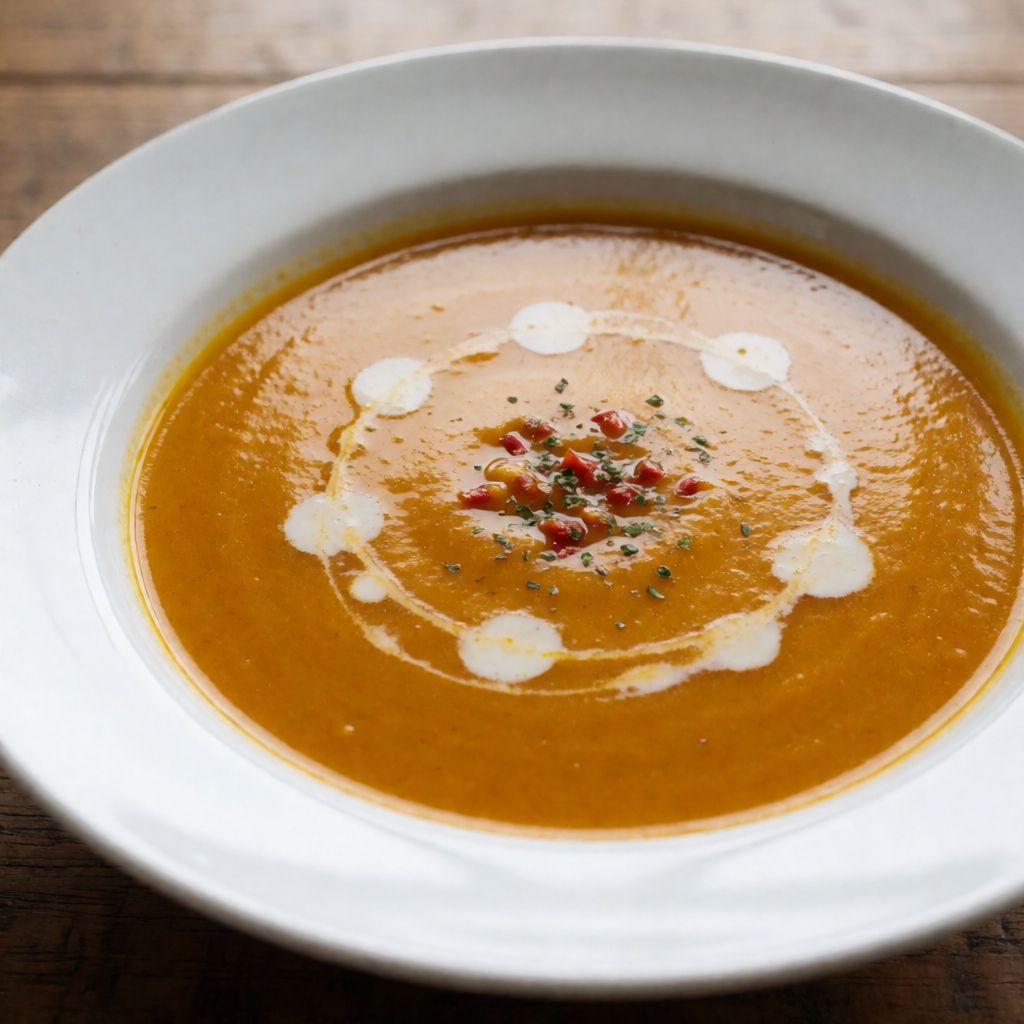
Hokkaido Pumpkin Soup
A warming Hokkaido pumpkin soup with a hint of spice and ginger, finished with pumpkin seeds and apple.
Labels are worked out automatically from the ingredients and can be wrong. Check the packaging if it matters to you.
Ingredients
- 1 pcs Hokkaido pumpkin
- 1 pcs Onion roughly chopped
- 4 clove Garlic finely chopped
- 2 pcs Carrot diced
- 4 pcs Potato diced
- ½ tsp Red chilli finely chopped
- ½ tsp Cumin ground
- 1 tsp Ginger finely grated
- 1 l Stock
- 150 ml Double cream
- 1 tbsp Olive oil
- ½ pcs Lemon juiced
- Salt
- Black pepper freshly ground












For the topping
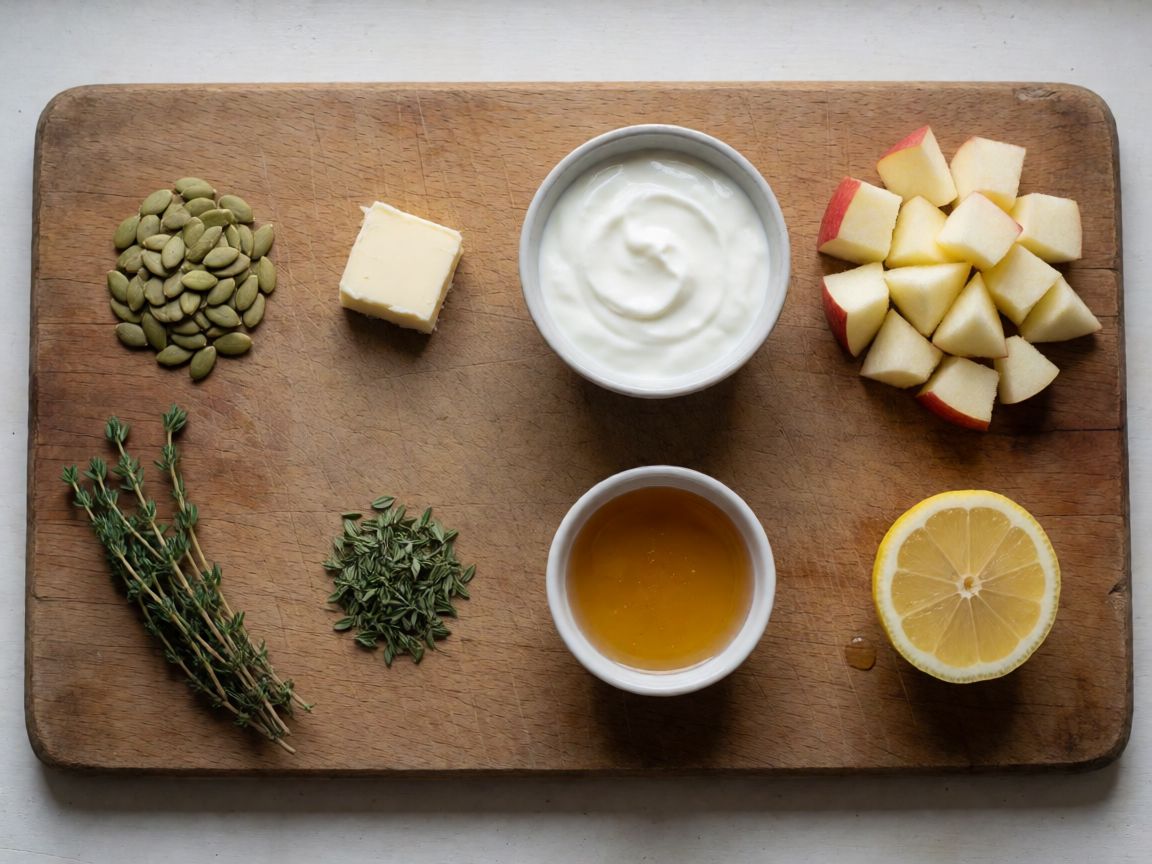
- 100 ml Pumpkin seeds
- 1 tsp Butter
- 100 ml Greek yogurt
- 1 pcs Apple finely diced
- 1 tbsp Thyme fresh leaves
- ½ tsp Honey
- ½ pcs Lemon juiced






Steps
Wash and thoroughly scrub the Hokkaido pumpkin, cut it in half, scoop out the seeds and cut into large cubes with the skin on.
8 minHeat the oil in a pot and sauté the vegetables, chilli, cumin and ginger over medium heat for 1–2 minutes.
2 minPour in the stock so it covers about 2/3 of the vegetables — a little less is better than more, as you can always add more if the soup turns out too thick.
Cover with a lid and simmer for about 15–18 minutes.
16 minBlend the soup until completely smooth and creamy, add the lemon juice and cream, blend again, and season with salt and pepper to taste.
3 minToast the pumpkin seeds with butter in a pan over medium heat, stirring, until they start to pop. Remove from heat and sprinkle with salt.
4 minDice the apple finely, mix the honey with lemon juice and combine with the apple.
2 minGarnish the soup with pumpkin seeds, thyme, diced apple, Greek yogurt and a little freshly ground pepper.
1 min
Hokkaido pumpkin soup is really a lesson in not peeling a pumpkin, which is the whole point of choosing this variety over a butternut. Hokkaido skin goes soft enough to blend once it's been simmered through, so you save fifteen minutes of fighting a peeler and you don't lose the orange-grey layer just under the skin, which carries a good share of the flavour and all of the pectin that gives the soup its body. Some say you must always peel squash for soup — no, not this one, because its skin isn't the tough armour of a butternut; it's thin enough to disappear into the blend.
What decides whether this works is the ratio of liquid to vegetable, and the recipe is honest about it: cover two-thirds, not all, of the vegetables with stock. Too much stock and you get a thin vegetable tea no amount of cream will fix — cream enriches, it doesn't thicken. Too little and the pumpkin at the top steams rather than simmers and goes stringy instead of collapsing. You can always add stock after blending; you can't easily take it back out.
The second decision point is doneness of the vegetables before blending, and here the carrot is your witness, not the pumpkin — pumpkin cooks fast and will lie to you about being done. Push a knife into the carrot and potato; if there's any crunch left, the soup will come out of the blender gritty no matter how long you run the machine, because a blender shreds fibre, it doesn't dissolve starch. Give it the full simmer, lid on, so the steam that would otherwise escape goes back into cooking the vegetables instead of condensing on your kitchen window.
On the pumpkin itself: Hokkaido (sometimes called red kuri in shops here) is worth seeking out specifically for the skin and the dry, chestnutty flesh — it holds less water than a butternut, so the soup won't need as much reducing to get body. If you can't find one, butternut works, but peel it; its skin stays tough even after a long simmer and will leave flecks in the finished soup. A domestic hob won't caramelise the vegetables the way a wide, hot kazan would in two minutes flat — don't chase colour here, this isn't that kind of soup. Medium heat in step two just means hot enough that the garlic smells fragrant rather than bitter within a minute or two; if it browns, it's gone too far and will taste sour later.
Onion, carrot, potato are the backbone, and each does a different job: onion for sweetness, carrot for the orange depth that backs up the pumpkin, potato for starch that thickens the soup from the inside without you needing flour or extra cream. Dice them roughly the same size as the pumpkin cubes so they finish cooking together — uneven pieces mean you're always waiting on the slowest one.
Chilli, cumin, ginger are there to stop the soup tasting purely sweet, which is the real risk with any squash soup. Ground cumin especially needs that minute of frying in oil before the stock goes in — it's not very soluble in water alone, and a minute in hot fat releases it properly instead of leaving it tasting raw and dusty. Fresh ginger over ground, if you have a choice — it brings a cleaner heat that lemon at the end can sharpen further.
Stock should taste of something on its own before it goes anywhere near the pot — vegetable or chicken, your choice, but weak stock makes a soup that no amount of cream or seasoning rescues, because you're diluting flavour with more flavourlessness. Double cream is for richness and a silkier finish on the tongue; if you want it lighter, use single cream or even full-fat milk, but add it gently off the heat so it doesn't catch and separate.
The garnishes are where the texture argument of this soup is won — a completely smooth blended soup needs something to bite on, or it eats like baby food. Pumpkin seeds toasted in butter until they pop give you that crunch; butter rather than oil because it browns and carries a nutty smell the seeds pick up, oil would just make them greasy. The honey-lemon apple is a small sharp contrast against all that smooth sweetness, and the yogurt on top does what the cream inside can't — it stays cool and slightly sour against a hot bowl, so each spoonful isn't uniformly warm and rich. Patience is the real ingredient in all of this: rushing the simmer is the one mistake you can't fix at the blender.