
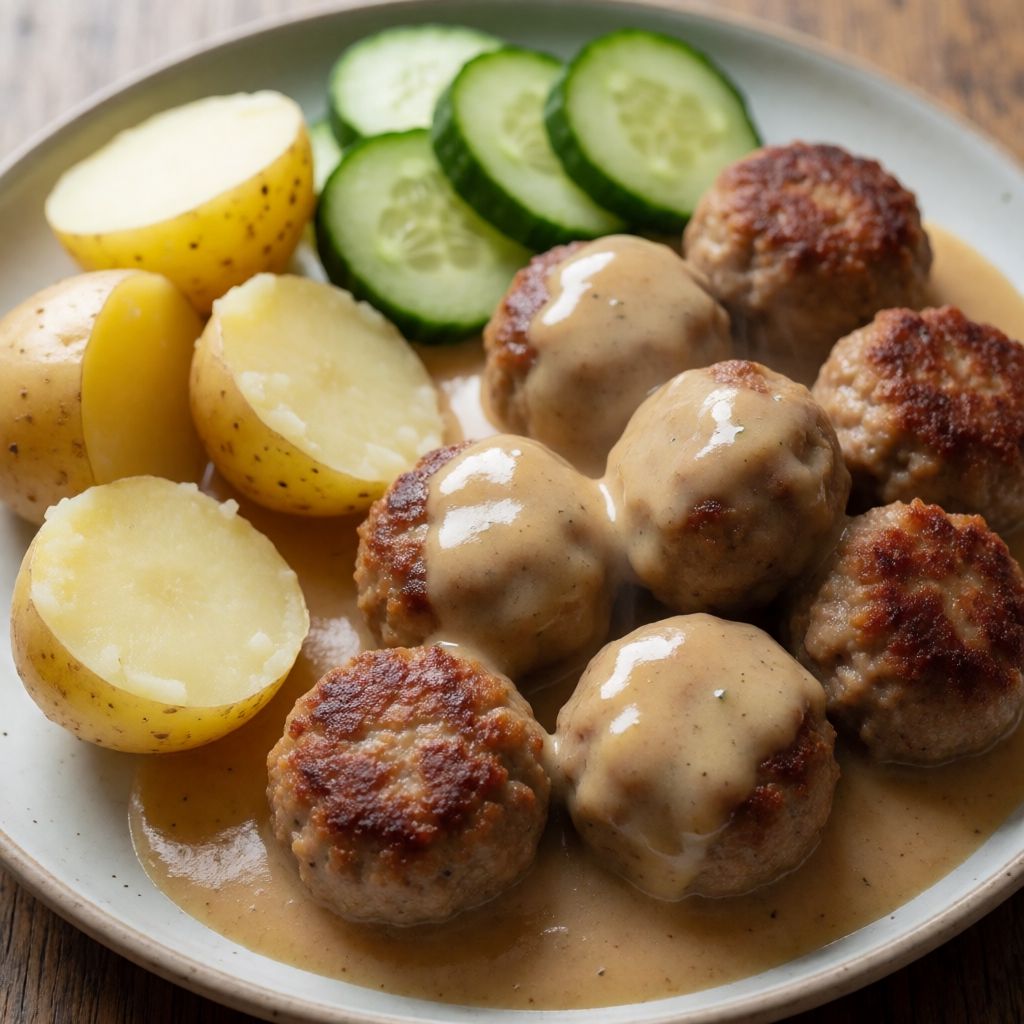
 AI photo
Meatballs with Gravy, Cucumber and Potatoes
Pork meatballs in a creamy gravy, served with pickled cucumber, buttery potatoes and a quick cabbage salad.
Labels are worked out automatically from the ingredients and can be wrong. Check the packaging if it matters to you.
Ingredients
- 400 g Minced pork
- 25 g Porridge oats
- 20 g Plain flour
- 100 ml Milk
- 2 pcs Eggs
- 1 pcs Onion finely chopped
- 1 tsp Dried thyme
- 1 pinch Salt to taste
- 1 pinch Black pepper freshly ground, to taste
- 3 tbsp Olive oil for frying
- 1 tbsp Butter for frying
- 100 ml Stock
- 200 ml Potato water reserved from boiling the potatoes
- 100 ml Double cream
- 2 tbsp Cornflour
- 2 ml Gravy browning optional, for colour
- 1 pcs Cucumber
- 200 ml Apple cider vinegar
- 75 g Caster sugar
- 100 ml Water
- 1 tsp Dried dill
- 1 kg Potatoes
- 1 pcs Pointed cabbage finely shredded




















Steps
For the pickled cucumber, stir the sugar and salt into a bowl of boiling water. Once the sugar has dissolved and the water has cooled slightly, add the vinegar, peppercorns and any flavourings you like, such as dill.
5 minCut the cucumber into very thin slices, put them in a clean, scalded jar and pour over the vinegar brine.
Leave to infuse for at least 20 minutes, longer if you have time.
20 minMix all the meatball ingredients with a hand mixer for 2-3 minutes.
3 minLet the mixture rest in the fridge for at least half an hour (30 minutes).
30 minMeanwhile, put the potatoes on to boil in a pan of lightly salted water for 16-20 minutes, depending on their size.
18 minOnce the potatoes are soft, drain them (keep a little potato water for the gravy) and keep them warm in the pan, covered, until serving.
Shape the meatballs and fry them in a pan with butter and oil over medium heat for about 5 minutes on each side, until cooked through.
10 minFor the gravy, leave the fat and bits from the meatballs in the pan, add the stock and potato water. Scrape up all the bits with a wooden spatula and stir so they dissolve into the liquid.
2 minStir the cornflour into the double cream and use this to thicken the gravy. Season well with salt and pepper and, if needed, adjust the colour with a few drops of gravy browning. Simmer the gravy well for a few minutes.
Put the shredded pointed cabbage in a bowl with 1-2 tbsp of the pickling brine and massage for about a minute until softened. Season with salt and pepper.
Serve the meatballs with hot potatoes, gravy, cucumber salad and cabbage.
This is a Sunday-dinner dish dressed up as something lighter — meatballs instead of a joint, but the same logic: starch, meat, gravy, something sharp to cut the fat. What decides whether it works isn't the frying, it's the fridge. The mince mix goes in wet and loose — oats, milk, egg — and it needs thirty minutes cold before it becomes something you can shape without it falling apart in the pan. Skip that rest and you're not making meatballs, you're making mince that happens to be round for about ninety seconds.
The gravy is the other hinge. It isn't a sauce you add — it's the pan talking. Everything that stuck and browned while the meatballs fried is flavour, not mess, and the stock plus potato water exists specifically to argue it back off the metal. Wipe that pan clean before deglazing and you've thrown away half the dish.
And the pickle is doing a job the rest of the plate can't: cutting fat and salt with something sour and cold, the way a Sunday roast leans on horseradish or mint sauce for the same reason. It's economics as much as taste — vinegar, sugar, water and a cucumber keep for weeks, cost nothing, and turn a heavy plate into one you can actually finish.
Start with the mince itself. Pork alone fries dry and tight because it's leaner than you think once it's in small balls with a lot of surface area — so the oats and milk aren't filler, they're a sponge: they hold liquid inside the meat so the middle stays moist while the outside browns. Some say breadcrumbs are "the proper way" — no, because what you need is something absorbent, not something specifically made of bread. Oats, a stale crust, even cold mashed potato all do the same job; it's a category, not a single ingredient.
The egg binds, not thickens — it's protein that sets when it hits heat and holds the shape together, which is exactly why the mixture needs the cold rest before shaping. Warm, loose mince plus raw egg is a paste; thirty minutes in the fridge lets the fat firm up and the oats finish drinking in the milk, so what you roll in your hands actually keeps its shape instead of smearing. That rest is the ingredient nobody lists, and it's the one that decides whether your meatballs are round or just vaguely meatball-shaped.
Fry in butter and oil together, not one or the other, and here's the actual reason: butter alone burns before the meat is coloured because its milk solids catch early; oil alone browns the surface but gives you none of butter's flavour. Mixing them lets you get the colour you want without the burnt-milk bitterness — any neutral oil with no smell of its own works for the oil half; sunflower, rapeseed, whatever's in the cupboard. On a domestic hob you won't get the fierce, even heat of a kazan or a professional flat-top, so don't chase hard colour in ninety seconds — let the meatballs sit a beat before turning each side, listen for the pan to quiet down once juice stops hissing out, and judge by a deep gold crust, not a stopwatch.
Potato water in the gravy is the quiet trick that turns stock into something with body. Starch washed out of boiling potatoes thickens liquid the same way cornflour does, just gently — so by the time you add the actual cornflour-and-cream slurry, you're not fighting a thin, watery base, you're finishing one that's already halfway there. That's also why you keep a little back rather than tipping the whole pan down the sink the moment the potatoes are soft — it's not an optional garnish ingredient, it's doing structural work.
On the cucumber: boiling water to dissolve the sugar and salt isn't about safety, it's about speed — sugar crystals won't fully let go into cold vinegar within twenty minutes, and you'd end up with gritty brine and underseasoned slices. Thin cutting matters for the same reason — thin slices pickle through in the time you have; a fat spear stays raw in the middle no matter how long it sits in a jar on the counter, and "longer if you have time" is doing real work in that sentence, because an hour gives you something properly cured, not just rinsed in vinegar.
Massaging the cabbage with a spoonful of that same brine instead of dressing it separately is just not wasting flavour you've already built — it softens the ribs of the cabbage the way salt draws water out of any raw vegetable, and it means you're not running two separate acid systems on one plate. If you've no pointed cabbage, any cabbage that shreds thin and doesn't fight back when massaged will do; white cabbage just wants a little longer under your hands before it gives in.