
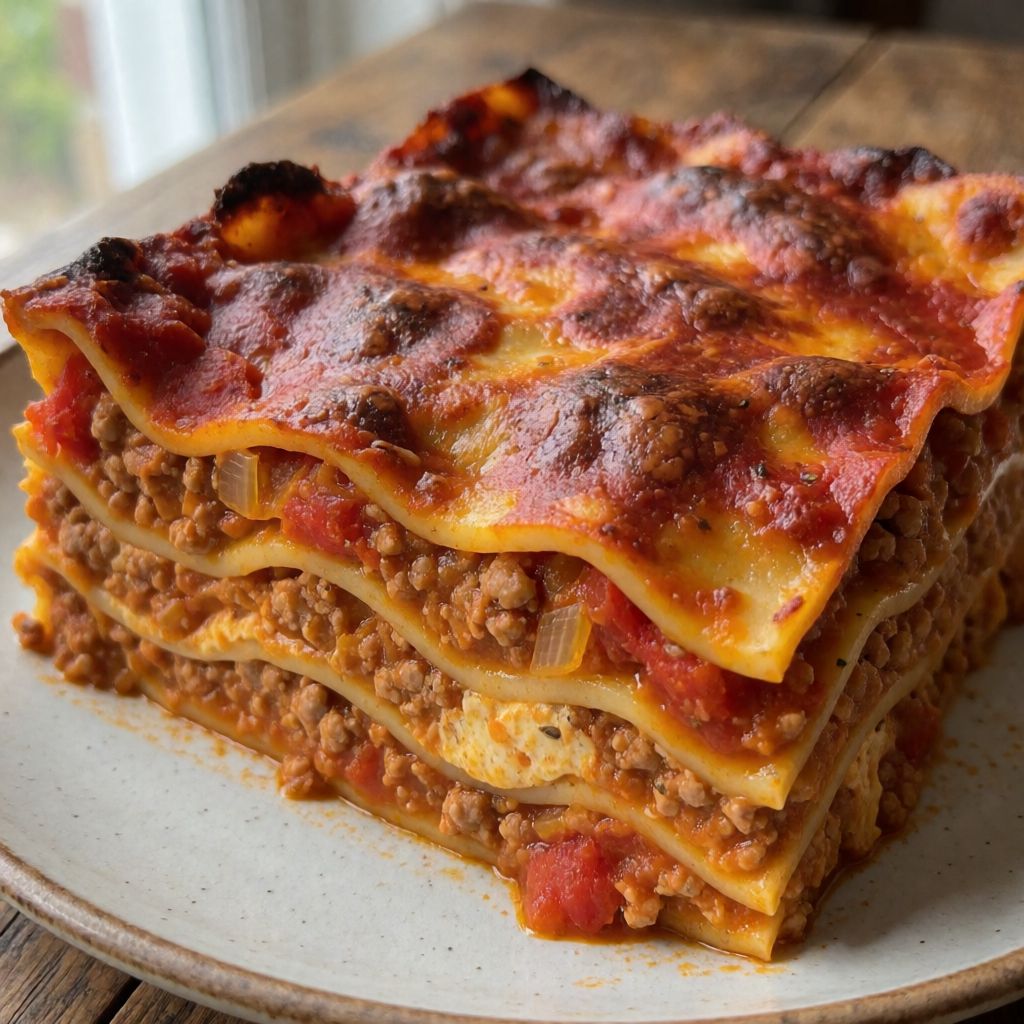
 AI photo
Mexican Lasagne
A spiced Mexican-style beef lasagne layered with lasagne sheets, cheddar and a smoky bean and corn sauce.
Labels are worked out automatically from the ingredients and can be wrong. Check the packaging if it matters to you.
Ingredients
- 2 tsp Cumin
- 0.5 tsp Chilli flakes
- 1 tsp Ground coriander
- 1 tsp Paprika
- 1 tsp Smoked paprika
- 2 pcs Onion sliced
- 2 clove Garlic finely chopped
- 50 g Sun-dried tomatoes
- 400 g Beef mince
- 2 tsp Oregano
- 3 pcs Celery coarsely grated
- 1 pcs Courgette coarsely grated
- 800 g Canned chopped tomatoes
- 200 ml Stock
- 1 can Kidney beans rinsed and drained
- 15 g Jalapeño finely chopped
- 300 g Sweetcorn
- 125 g Lasagne sheets
- 200 g Mature cheddar freshly grated, keep a little back for serving
- 2 tbsp Olive oil for frying
- Salt
- Black pepper






















to serve
- 25 g Jalapeño
- 1 pcs Avocado sliced
- 1 pcs Lime cut into wedges
- 125 g Tortilla chips
- 1 bunch Coriander roughly chopped



Steps
Heat a dry pan with the cumin, chilli flakes and ground coriander, stirring the spices until fragrant.
2 minLower the heat and add the paprika, smoked paprika, onion, garlic and olive oil; fry the onion over medium heat until soft.
4 minAdd the sun-dried tomatoes and beef mince and brown well over high heat.
5 minLower the heat and add the oregano, celery, courgette, chopped tomatoes, stock, salt and pepper.
30 minCover the pan and let the sauce simmer for 30 minutes.
30 minTaste the sauce and add the kidney beans, jalapeño and half of the sweetcorn.
1 minAssemble the Mexican lasagne in a greased ovenproof dish, layering the sauce, lasagne sheets and freshly grated cheddar.
3 minFinish with the sweetcorn and cheddar.
1 minBake in a preheated oven at 175°C fan for 30 minutes, or until the lasagne sheets are tender.
30 minServe with freshly grated cheddar, tortilla chips, avocado, lime and jalapeño.
This isn't really a lasagne that went on holiday to Mexico — it's a chilli con carne that borrowed a Italian housing arrangement. The sauce is the whole dish; the pasta sheets are just scaffolding that lets you cut it into squares instead of spooning it from a bowl. Get the sauce wrong and no amount of cheddar on top will save you.
What decides whether it works is restraint in two places: how long you toast the spices before anything wet touches them, and how patient you are with the simmer afterwards. Rush either one and you get a dish that tastes of raw spice dust or thin tomato water with mince floating in it — edible, but not this.
The grated celery and courgette are doing a job most people miss: they're not there for flavour, they're there to thicken and bulk the sauce without you needing more mince or more tomatoes. Some say vegetables in a chilli are padding, a cheat — no, because without them you'd need double the beef to get the same body, and that's not virtue, that's just a different grocery bill.
Start with the dry spices in a bare pan, no oil. Cumin, chilli flakes, ground coriander — these are seeds and barks, not leaves, and they carry their flavour in oils that are locked up tight until heat cracks them open. You're not cooking them, you're waking them. The cue is smell, not a clock: when the kitchen suddenly smells like a spice shop rather than a spice jar, stop — another thirty seconds and that same heat turns fragrance into bitterness, because the sugars in the spice start to scorch before the oil fully opens. A domestic hob runs hotter in the centre of the pan than at the edges, so keep the pan moving.
Paprika and smoked paprika go in after you lower the heat, with the onion and oil — because paprika burns fast and turns acrid, while cumin needs the dry heat to open up. This is also where the onion decides the dish's backbone: fry it till it goes soft and translucent, not browned — you want sweetness, not caramelisation, because caramelised onion would fight the smoky paprika instead of carrying it.
The sun-dried tomatoes go in with the raw mince, and this is deliberate — their concentrated sweetness and acidity season the meat from inside as it browns, rather than sitting as a garnish on top later. Brown the mince properly, on real heat, enough that it's taken on colour and lost its grey. Some say browning mince is pointless, it all ends up stewed anyway — no, because that colour is flavour: sugars and proteins reacting on contact with a hot pan, something that simply cannot happen once the mince is drowned in tomato and stock. Skip it and the sauce tastes flat no matter how long you simmer it.
Then the lid goes on and everything slows down. Thirty minutes isn't a rule, it's a lower bound — what you're actually waiting for is the celery losing its raw crunch and the courgette dissolving almost entirely into the sauce, thickening it by releasing its water and starch rather than you reducing it dry over high heat. A pan lid at home rarely seals as well as a kazan's — expect a bit more evaporation, and top up with a splash of stock if it looks like it's catching.
Beans, jalapeño and half the sweetcorn go in at the end, off a long simmer, because beans only need warming through — further cooking just breaks their skins and turns them mealy. For the beef, any coarsely ground meat with reasonable fat works — lamb mince, or a plant-based mince if you're veering that way, the method doesn't change. For the lasagne sheets, any flat pasta that can sit in liquid and soften without you pre-boiling it will do; dried "no-boil" sheets are built for exactly this job, so don't bother cooking them first — that's one more pot to wash for no gain. The cheddar wants to be a cheese that melts and browns rather than one that just goes stringy — a strong cheddar gives you both the savoury hit and a crust; a milder cheese will melt fine but leave the top pale and a bit dull. Bake until you can see the top properly blistered and the edges bubbling, not just until the timer says so — ovens lie, your eyes don't.