
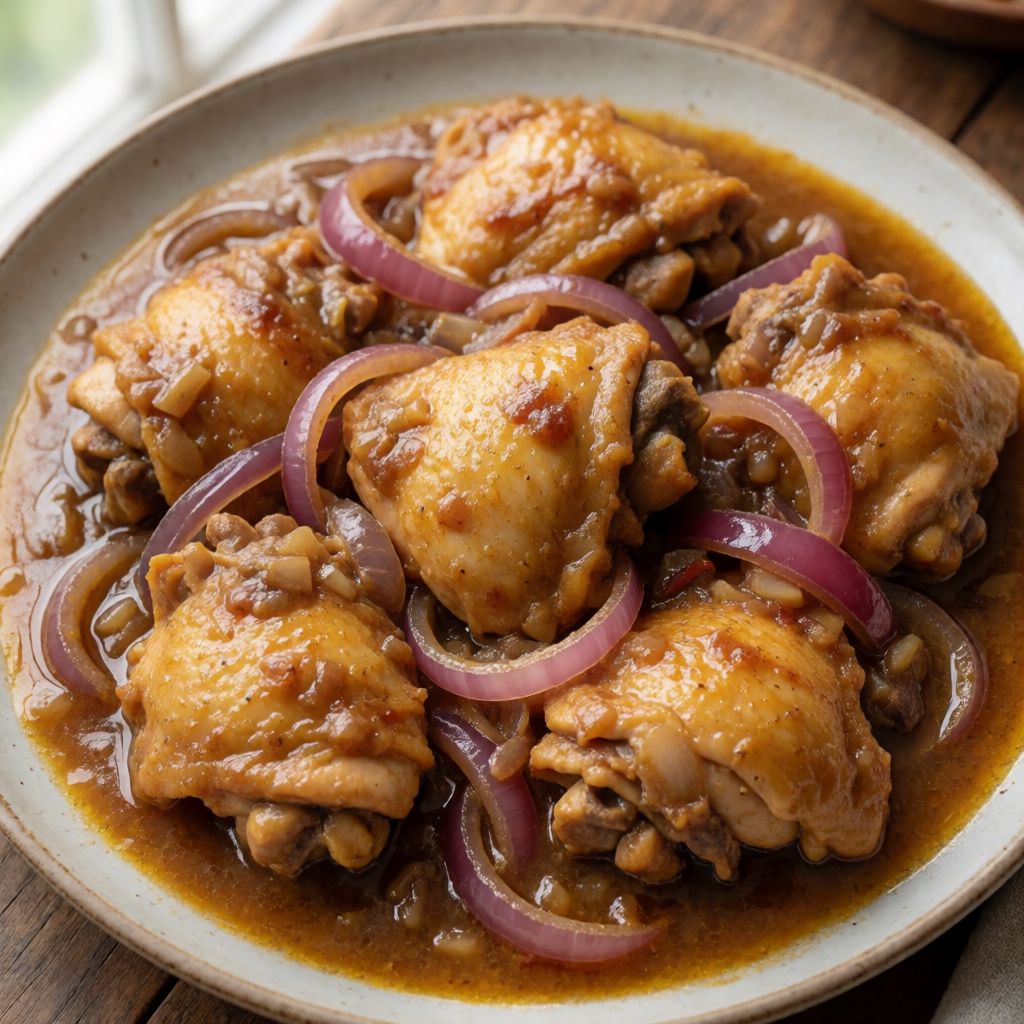
 AI photo
Moroccan Chicken Stew
A warmly spiced Moroccan-style chicken stew with apricots, dates and chickpeas, served with rice.
Labels are worked out automatically from the ingredients and can be wrong. Check the packaging if it matters to you.
Ingredients
- 4 pcs Chicken thighs or another cut, e.g. a whole chicken, cut into pieces
- 2 pcs Red onion finely chopped
- 3 tbsp Olive oil
- 3 clove Garlic finely chopped
- 2 tbsp Plain flour
- Salt to taste
- Black pepper to taste, freshly ground
- 1 pinch Saffron
- 1 tsp Ground coriander
- 1 tsp Cinnamon
- 1 pinch Cloves
- 1 tsp Cumin
- 40 g Dried apricots finely chopped
- 30 g Dates finely chopped
- 400 g Canned chopped tomatoes
- 200 ml Stock
- 0.5 pcs Lemon juice and a little zest
- 50 g Almonds finely chopped
- 1 can Chickpeas drained and rinsed
- 1 bunch Coriander fresh
- 1 bunch Mint fresh
- 300 ml Basmati rice cooked according to pack instructions




















Steps
Fry the red onion and garlic over medium heat until soft.
Mix all the spices with the flour, salt and pepper, and toss the chicken pieces in half of the mixture.
Brown the chicken pieces in the pot until golden, then transfer to a plate.
Add the canned chopped tomatoes, stock, dates, dried apricots and the second half of the flour-spice mixture to the pot, and stir.
Return the chicken pieces to the pot, skin side up.
Add the finely chopped almonds, chickpeas, finely grated lemon zest and lemon juice.
Cover with a lid and place the pot in a cold oven, setting it to 150°C.
Braise the dish in the oven for 2 hours.
Season the sauce to taste with salt and pepper, and serve the fragrant chicken dish with rice and a sprinkle of fresh herbs.
This is a tagine without a tagine — a chicken and chickpea stew built on the idea that sweet and savoury aren't enemies, they just need a mediator. Dates, apricots, cinnamon and cumin sit next to tomatoes and stock, and the thing that stops it tasting like a fruit salad is time and heat low enough that nothing scorches and everything softens into agreement.
What decides whether it works isn't the spice list, it's the browning. Those few minutes where the chicken skin goes from pale to properly gold in the hot fat — that's where most of the flavour in the whole pot gets built. Skip it because you're hungry and in a rush, and you get a stew that tastes of tinned tomato and regret. The flour dusted on the chicken does two jobs at once: it helps that browning along, and it's your thickener for later, so you're not whisking in a separate roux at the end.
Some say a stew like this needs a kazan or a clay tagine to taste "right". No — it needs a pot with a lid that seals and low, even heat for a long stretch. A heavy casserole with a tight lid does the job on any domestic hob or in any oven. The shape of the vessel is folklore; the slowness is the actual mechanism.
Chicken thighs, not breast, and this isn't nostalgia — it's fat and connective tissue. Breast dries out over two hours of gentle heat; thigh has the collagen to melt into silkiness and the fat to carry the spice. If you've only got a whole chicken, jointing it works fine, just know the breast pieces will finish earlier and you may want to pull them out before the legs.
The spice mix — cumin, coriander, cinnamon, cloves, saffron — isn't decoration, it's two different jobs wearing one coat. Cumin and coriander are savoury, earthy, they ground the dish. Cinnamon and cloves lean toward dessert territory, and that's deliberate: this is a North African habit of using "sweet" spices in meat cookery, built on centuries of trade routes bringing cinnamon and cloves through Morocco long before they ever reached a British trifle. Saffron is there for colour and a particular honeyed bitterness — real saffron, a pinch of threads, not the yellow powder sold as "turmeric substitute for saffron," which is a different spice doing a different job badly.
Dried apricots and dates do the same sweetening work as the spices but with texture and body, and they also thicken the sauce as they break down — that's not a side effect, it's half the reason they're in there. No dates in the cupboard? Any soft dried fruit with real sugar in it — raisins, dried figs — will do the same job, just adjust by taste since sweetness varies hugely between brands and types.
The flour needs a mention twice because it's doing double duty, but don't overdo it — too much and the sauce goes gluey instead of silky, the kind of thickness that coats your tongue instead of the chicken. Two tablespoons split in half is about right for keeping it glossy, not pasty.
Olive oil here just needs to be something without a strong personality of its own that can take the heat of browning — any neutral or mild oil works if that's what's in your cupboard, you don't need your best finishing oil for this job, save that for drizzling at the end if you like.
This feeds four, with rice alongside, and it's better the next day — the spices settle and marry overnight instead of sitting next to each other politely. If you've got time, make it a day ahead. Patience isn't just a virtue here, it's the actual seasoning.