
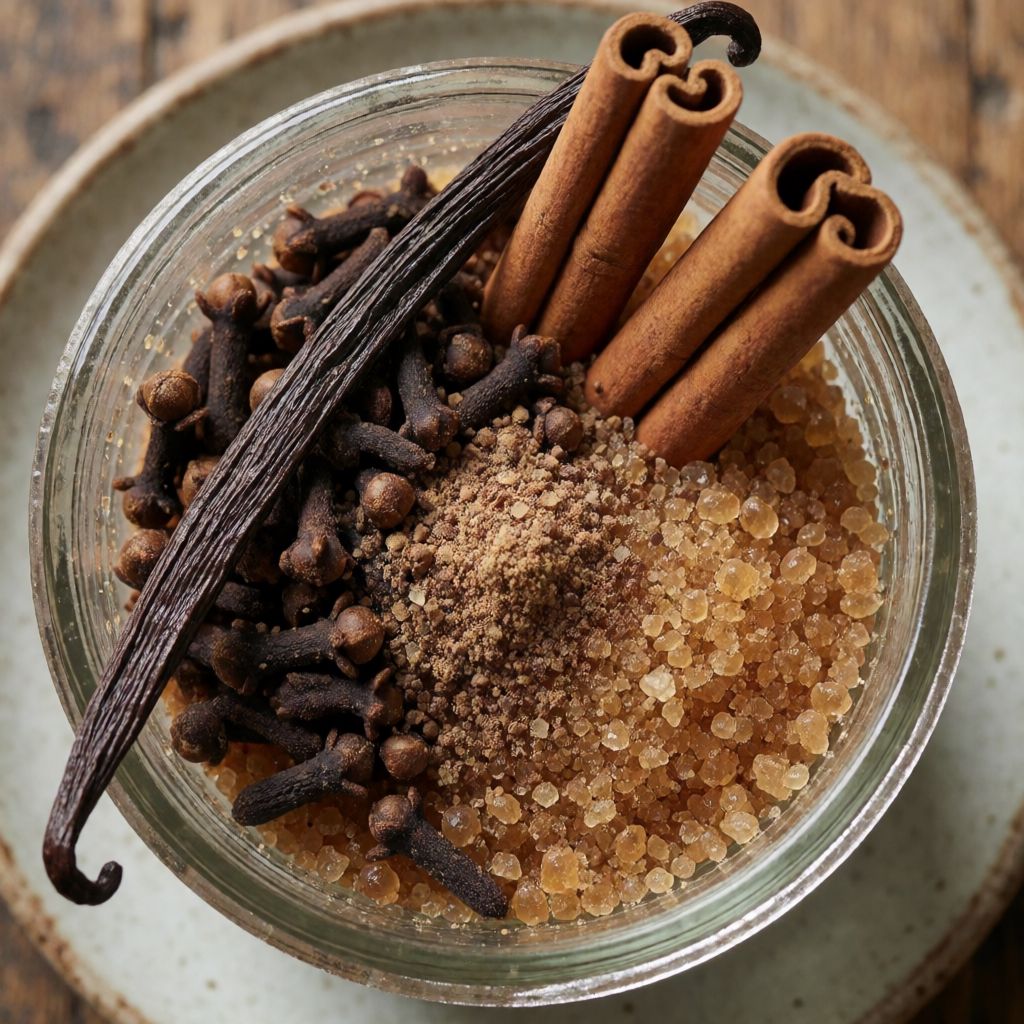
 AI photo
Spiced Mulled Wine Mix
A warming spiced extract to stir into red wine for mulled wine, perfect for cold evenings.
Labels are worked out automatically from the ingredients and can be wrong. Check the packaging if it matters to you.
Ingredients
- 1 pcs Vanilla pod
- 200 g Sugar
- 200 g Muscovado sugar
- 0.5 tsp Nutmeg finely grated
- 20 pcs Cloves
- 4 pcs Cinnamon sticks
- 10 pcs Cardamom pods seeds only
- 10 pcs Black peppercorns
- 1 tsp Allspice
- 5 pcs Star anise
- 1 pcs Liquorice root optional, or add more if you like liquorice
- 25 g Ginger cut into thin strips
- 300 ml Orange juice freshly squeezed
- 1 pcs Lemon sliced with peel on
- 2 pcs Orange sliced with peel on
- 100 ml Schnapps optional
- 150 ml Rum
- 600 ml Port wine
- 200 ml Red wine per glass, for serving
- 50 ml Mulled wine extract the spiced extract made in this recipe, per 200 ml of wine, for serving
- 2 tbsp Almonds chopped, for serving
- 3 tbsp Raisins soaked in rum, for serving

















Steps
Split the vanilla pod lengthways and scrape out the seeds. Mix the vanilla seeds with the sugar and the other dry spices in a pan with the orange juice.
5 minStir well and heat slowly to a boil, until the sugar has dissolved.
10 minBoil for 5 minutes.
5 minRemove the pan from the heat.
Pour the spiced mixture with the citrus slices, schnapps, rum and port wine into large sterilised glass jars with lids, and leave to infuse in a cool room.
5 minLeave to infuse for 1–3 weeks, tasting and stirring occasionally if you like.
Strain the mulled wine extract first through a fine sieve, then through a clean cloth, to get a fully clear liquid.
10 minStore the extract in a clean, sterilised bottle in a cool, dark place.
To serve, heat 200 ml of red wine per glass until almost boiling.
Add 50 ml of the mulled wine extract for every 200 ml of red wine and pour into glasses.
Serve with chopped almonds and raisins soaked in rum.
2 min
This isn't mulled wine. It's the concentrate behind mulled wine — a syrup of sugar, citrus and spice, cut with rum and port and left to sit until it stops tasting like a list of ingredients and starts tasting like one thing. You make it once, in a jar, weeks before you need it, and then every winter evening you need is forty seconds away: heat wine, stir in extract, done. That's the whole trick, and it's a good one, because mulled wine made the usual way — wine and spices bags simmered together for twenty minutes — tastes thin and alcohol-sharp no matter how long you simmer it, because the spices never had time to actually dissolve into anything, and the alcohol you're trying to drive off just sits there raw.
What decides whether this works is patience in the jar, not skill at the stove. The cooking part — dissolve sugar, boil five minutes, done — is almost too simple to get wrong. The part that separates a good batch from a flat one is the one to three weeks sitting in a cool room, where sugar syrup, citrus oil from the peel, and the alcohols slowly pull flavour out of whole spices that heat alone can't extract fast enough. Some say you can rush this with more heat — no, because heat boils off the top notes (orange oil, cardamom) before the base notes (clove, cinnamon) have given anything up, and you end up with a dark, heavy syrup that tastes only of burnt sugar and little else.
Sugar here is doing two jobs, which is why there are two kinds. White sugar dissolves clean and fast, giving you the base sweetness without getting in the way. Muscovado — the dark, sticky, treacle-smelling one — brings the caramel and molasses note that plain sugar can't, because it still has the molasses in it that white sugar's been stripped of. If you've only got dark brown sugar, use that instead; it's the same idea, just milder. Don't swap all of it for muscovado or the whole thing tips over into tasting like treacle toffee rather than spiced wine.
The spices are a spectrum, not a pile. Vanilla and cardamom are the soft, perfumed top; cinnamon, clove, allspice and star anise are the warm middle that most people think of as "Christmas"; black pepper and ginger are there to give it a little heat and lift at the back of the throat, so the drink doesn't just sit heavy and sweet on the tongue. Liquorice root is the odd one — it adds a deep, faintly aniseed sweetness without extra sugar, and it's genuinely optional; leave it out and nobody at the table will accuse you of having forgotten something. Whole spices, not ground — ground spices dissolve into grit you can never strain out fully, whole ones give their oils up slowly and leave nothing behind but flavour.
Orange juice and the citrus slices aren't just flavour, they're acid, and acid is what stops the whole syrup tasting flat and one-note sweet. Use fruit you'd actually eat — waxed, inedible-skin supermarket oranges will put furniture polish into your jar, since you're using the peel. If you can get unwaxed or organic citrus, do; otherwise scrub them properly in hot water first.
Rum, port and schnapps are there as both flavour and preservative — alcohol is what lets this sit in a jar at room-cupboard temperature for weeks without anything going off. Port gives body and dried-fruit depth; rum gives warmth; schnapps (a clear, fairly neutral spirit — any similar unflavoured strong spirit will do if you can't get schnapps) sharpens the top end. Cut any of them and the extract will taste thinner, not "lighter" — alcohol here is doing a job, not decoration.
For serving, the wine you heat fresh each time should be a cheap, unfussy, round red — nothing delicate, because you're about to put spiced syrup into it and anything subtle will just vanish. Heat it until it's almost at a shimmer on the surface, not a rolling boil — a full boil drives off the alcohol and some of the aroma with the steam, and you'll taste it as "flat" without being able to say why. If you don't have a jam thermometer or any way of judging this by sight, go by smell: when the wine starts smelling warm and grape-forward rather than sharp and raw, it's close enough.
A note for a British kitchen: you won't have a kazan or anything like one, and you don't need one — a wide pan works fine for the syrup stage, since you're not reducing anything dramatically, just dissolving sugar and holding a simmer. The jar stage wants a cool room, not a fridge — an unheated hallway, a cold larder, or even a cool cupboard away from the boiler does the job; a fridge is colder than it needs to be and will slow the infusion down more than help it.