
 AI photo
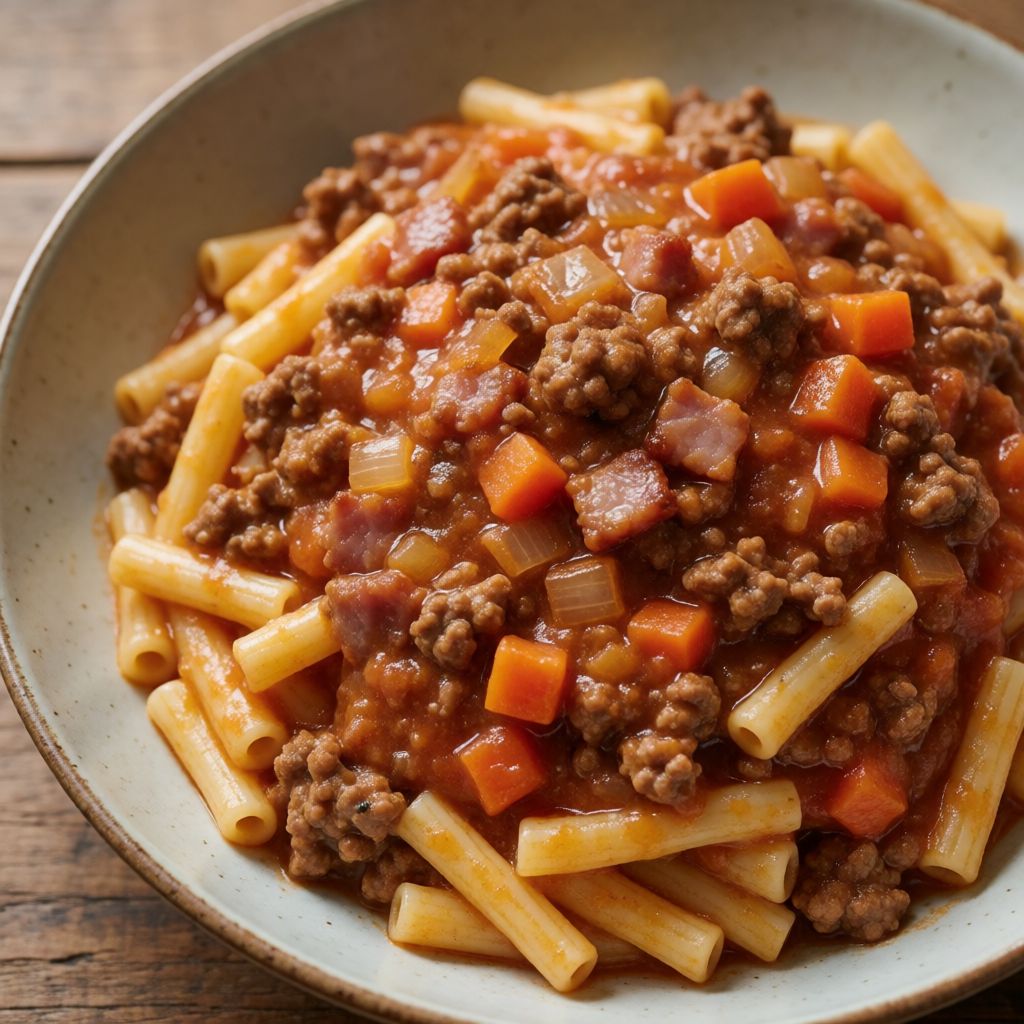
One-Pot Pasta with Meat Sauce
A hearty one-pot pasta with a rich meat and vegetable sauce, all cooked together in a single pan.
Labels are worked out automatically from the ingredients and can be wrong. Check the packaging if it matters to you.
Ingredients
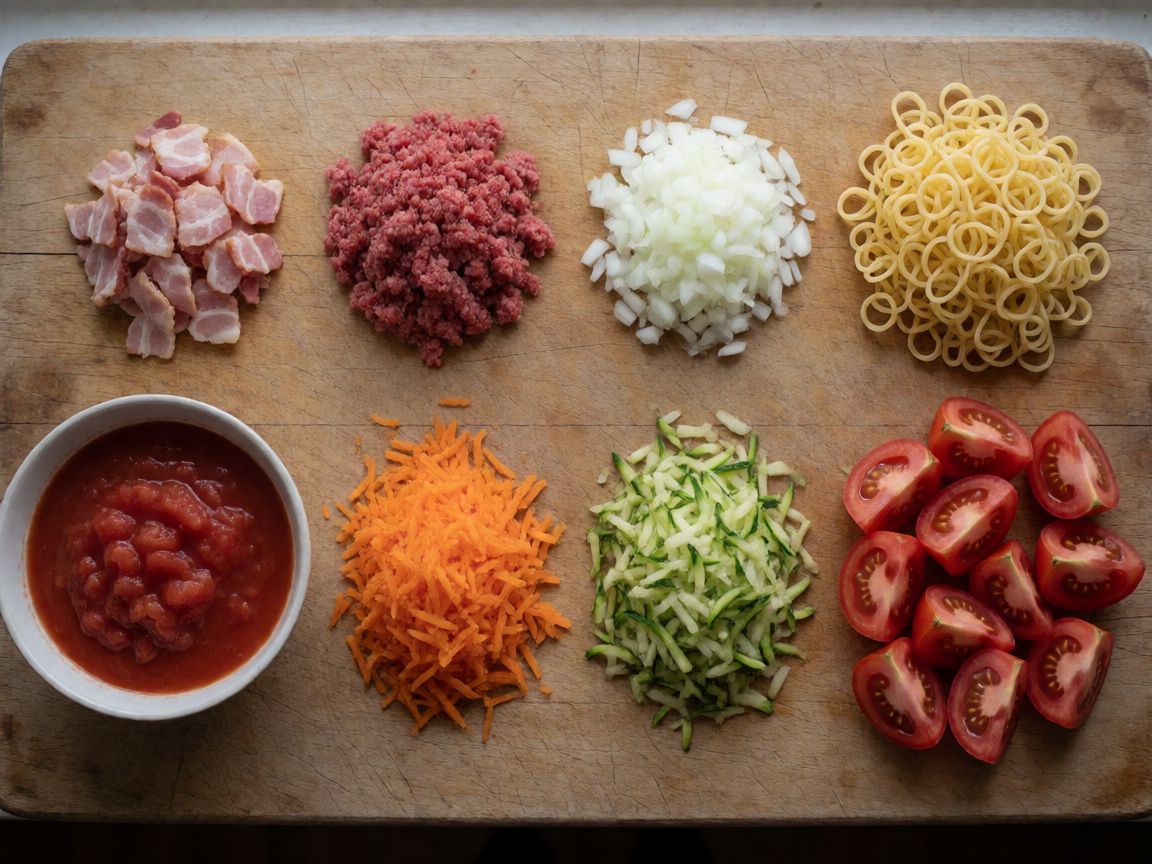
- 50 g Bacon
- 400 g Beef mince
- 350 g Pasta
- 2 pcs Onion finely chopped
- 800 g Tinned chopped tomatoes
- 2 pcs Carrot coarsely grated
- 1 pcs Courgette coarsely grated
- 10 pcs Tomato cut into wedges
- 2 pcs Celery stalks, coarsely grated
- 2 tbsp Sun-dried tomatoes finely chopped
- 1 tsp Dried thyme
- 2 clove Garlic finely chopped
- 2 tbsp Balsamic vinegar
- 500 ml Stock
- 100 ml Wine optional
- 2 tbsp Olive oil
- Salt
- Black pepper freshly ground
- 50 g Parmesan freshly grated
- 1 bunch Thyme fresh, a small handful



















Steps
Fry the bacon until crisp in a large pot with the oil – the same pot you'll cook the pasta in.
Set the bacon aside and brown the beef mince in the bacon fat in the same pot.
Add all the other ingredients along with the fried bacon to the pot.
Stir well and reduce the heat to medium.
Simmer covered for about 10-15 minutes.
Stir a few times during cooking and check that the pasta has reached al dente.
Serve with freshly grated Parmesan and, if you like, fresh thyme.
This is a one-pot pasta — the kind of dish invented by people who hate washing two pans more than they fear ruining risotto rules. Everything, meat sauce and pasta both, cooks in the same liquid, in the same pot. The sauce isn't made first and the pasta boiled separately and the two married at the end — the pasta cooks inside the sauce, drinking the stock as it goes soft, the way it would in a soupy risotto. That's the whole mechanism, and it decides everything else: how much liquid you need, how often you stir, and when you can walk away.
What decides whether it works is liquid management, not flavour. Pasta cooked in open water has an ocean to swim in — it can't run short. Pasta cooked in 500ml of stock plus a tin of tomatoes has a budget, and if you don't stir, the starch it sheds settles at the bottom and burns while the top stays dry and chalky. So "simmer covered" here isn't about trapping heat so much as trapping steam that keeps redistributing moisture across the pot — a lid substitute, a plate, does the same job on a normal hob if you don't own one that fits.
Some say one-pot pasta is "just lazy cooking" — no, because the laziness is the point and it's earned: frying bacon first, then browning mince in that same fat, means the fond stuck to the pot — all that savoury crust — gets picked up by the tomatoes and stock instead of thrown away with washing-up water. One pot isn't a shortcut to a worse dish. It's a shortcut to concentrating flavour you'd otherwise rinse down the sink.
Bacon first, in its own fat, no oil needed for that part — the oil is there to stop the bacon catching before it renders its fat, since cold pork fat takes a minute to loosen up and bare metal underneath scorches in that gap. Any streaky, smoky bacon works; if you've only got the unsmoked back bacon from a British fry-up, fine, you lose a bit of smoke but keep the fat, which is the actual job it's doing.
Beef mince goes into that same fat, not a clean pan, because browning meat in rendered bacon fat instead of neutral oil means the mince picks up smoke flavour while it browns rather than relying on the tomatoes alone to carry everything. Use beef with some fat in it — 15–20% — because lean mince just steams and goes grey instead of catching colour; if beef's not to hand, pork mince works the same mechanical way, lamb changes the flavour more than the method.
The vegetables — carrot, courgette, celery, grated rather than diced — aren't there for texture, they're there to dissolve. Grating multiplies surface area so they break down into the sauce in the time it takes pasta to cook, instead of sitting there crunchy the way a diced carrot would need forty minutes to soften. This is the same logic behind a soffritto, just compressed for time you don't have.
Tinned tomatoes plus fresh tomato wedges plus sun-dried tomato is three tomato textures doing three jobs: tinned gives bulk and acid liquid, fresh wedges hold their shape and give bursts of brightness, sun-dried concentrates sweetness the other two don't have raw. If you're missing sun-dried, a teaspoon of tomato purée fried briefly gets you partway there — concentrated tomato, just without the chew.
Balsamic vinegar and wine are both acid-and-sweetness adjustors against the richness of bacon fat and mince — wine's optional because its job (acid, a little sugar) is already partly covered by the vinegar and tomatoes; skip it and nothing collapses, the sauce is just a shade flatter. Stock instead of water is the one ingredient doing double duty — it's both the cooking liquid for the pasta and the seasoning base, so don't salt heavily before tasting, since stock already carries salt and stirring in extra too early is the easiest way to end up oversalted with no way back.
Parmesan at the end, not before — cheese stirred into a simmering pot that still has a way to go turns stringy and clumps, because it needs residual heat to melt into fat and liquid, not active bubbling. Grate it yourself if you can; pre-grated parmesan is often cut with anti-caking starch that stops it melting cleanly, which is the actual reason it goes gritty rather than silky.