
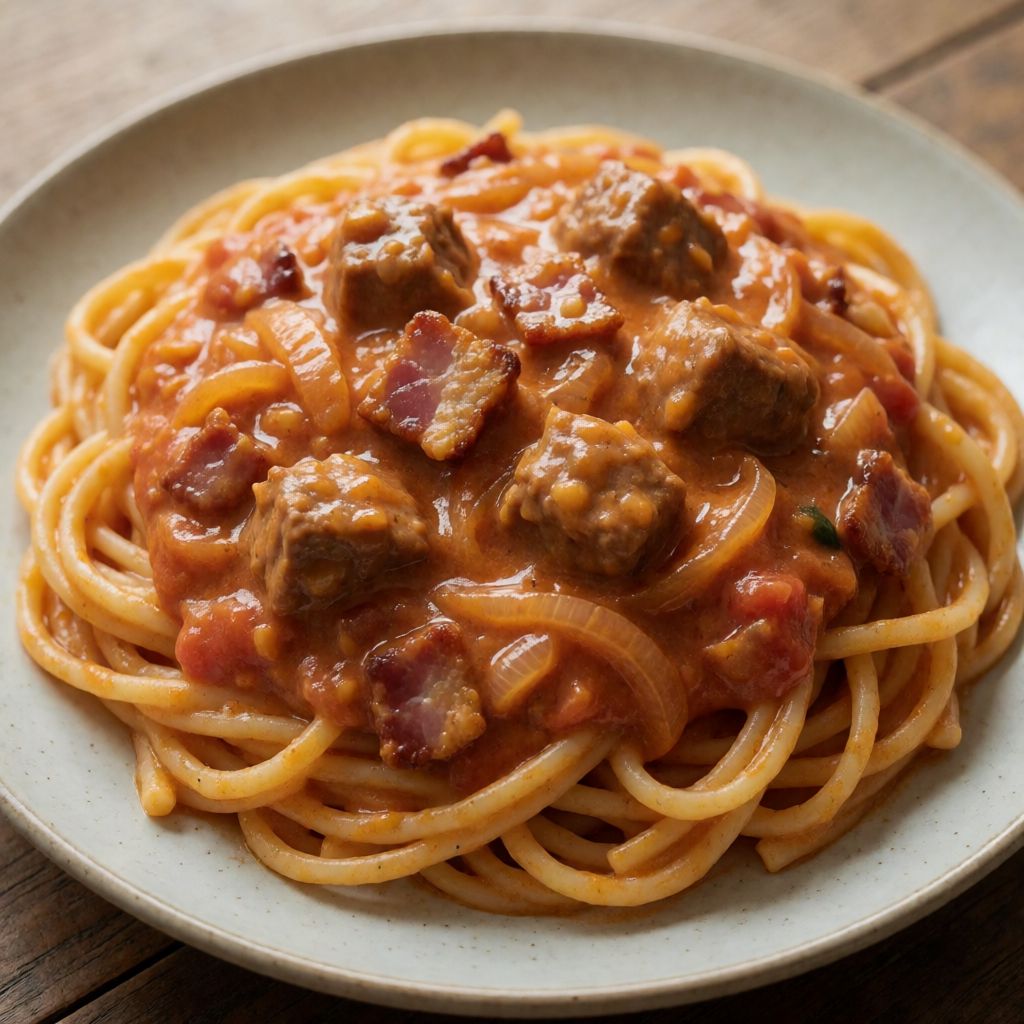
 AI photo
Pasta with Pork in Tomato and Cream Sauce
A comforting pasta of seared pork tenderloin and crispy bacon in a rich tomato and cream sauce with spinach and fresh oregano.
Labels are worked out automatically from the ingredients and can be wrong. Check the packaging if it matters to you.
Ingredients
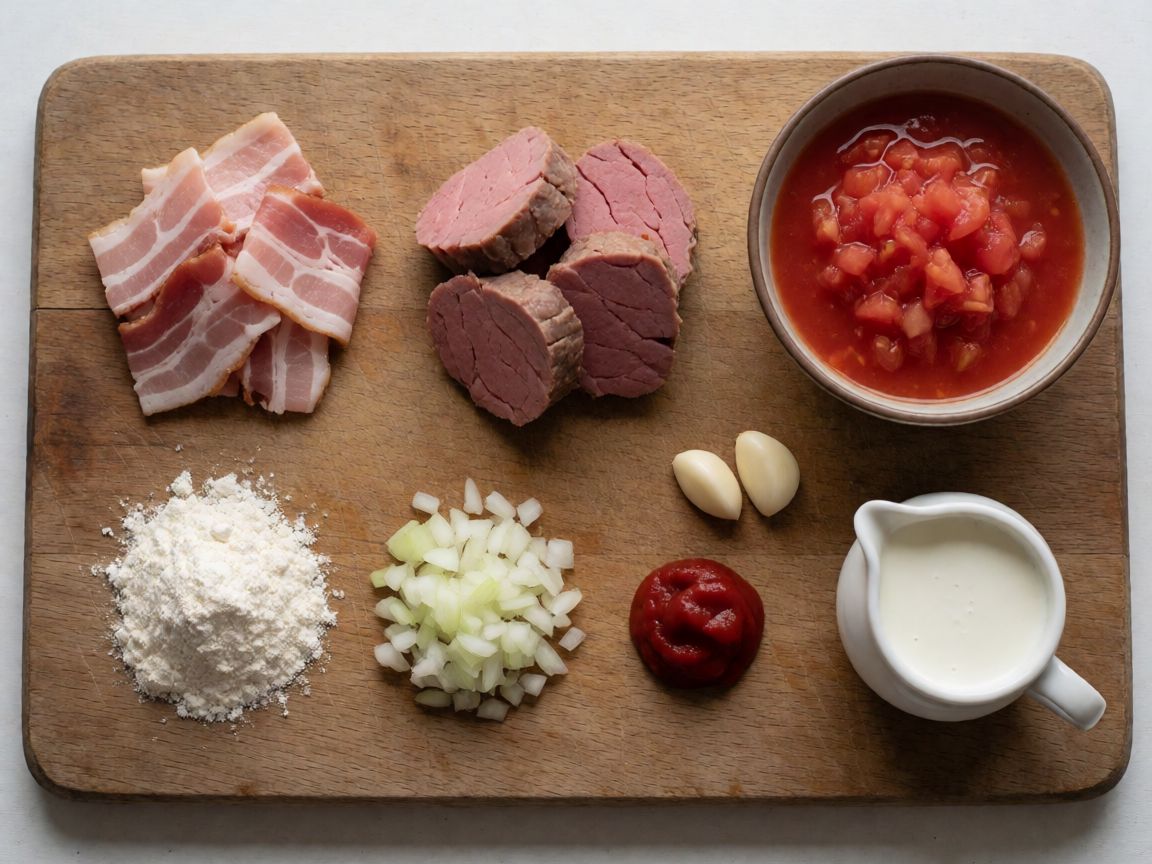
- 70 g Bacon
- 500 g Pork tenderloin
- 1 tbsp Plain flour
- 1 pcs Onion finely chopped
- 2 clove Garlic finely chopped
- 400 g Canned chopped tomatoes
- 1 tbsp Tomato paste
- 150 ml Double cream
- 1 tsp Dried oregano
- 1 tsp Dried thyme
- 400 g Pasta
- 80 g Spinach
- 3 tbsp Olive oil
- Salt
- Black pepper freshly ground
- 75 g Parmesan freshly grated
- 2 pcs Oregano fresh sprigs
















Steps
Trim the sinew from the tenderloin and slice it. Mix the flour, salt and pepper on a plate, then coat the meat in the mixture.
5 minHeat the oil in a pan and fry the bacon until crisp. Set the bacon aside on paper towel, then fry the meat on both sides until golden. Set the meat aside with the bacon.
8 minWipe the pan dry, lower the heat to medium and add a little oil. Fry the onion and garlic until soft. Add the tomatoes, tomato paste, cream, oregano and thyme. Bring to the boil, then reduce to a gentle simmer.
5 minMeanwhile, cook the pasta in salted water until a few minutes short of fully done.
10 minReturn the meat to the sauce and let it simmer until tender. If needed, add a little pasta water, then stir in the freshly cooked pasta. Mix well with the spinach and season with salt and pepper to taste.
Serve in deep bowls with freshly grated Parmesan and a little fresh oregano.
This is a Sunday-dinner dish pretending to be a weeknight pasta — pork tenderloin fried hard and fast, then softened back down in a tomato-cream sauce that owes more to a ragù than to anything Italian grandmothers would sign off on. It sits in that honest grey zone British kitchens are good at: not quite a roast, not quite a bolognese, borrowing confidence from both.
What decides whether it works is the flour on the meat. That thin dusting isn't there to thicken the sauce in any meaningful way — 1 tablespoon over 500g of pork barely does that. It's there to seal the surface so the meat browns rather than steams, and so the juices that do escape get caught on the coating instead of scorching on bare metal. Skip it and you get grey meat and a bitter pan.
The second thing that decides it: you fry the meat hard, then you deliberately undercook the pasta, then you let the meat go soft again in the sauce while the pasta finishes alongside it. Three separate doneness points converging in one pan. If you treat any of them as a fixed number of minutes rather than something you check by eye and bite, one of the three will be wrong when the other two are right.
Some say pork tenderloin needs long slow cooking to be tender — no, because tenderloin is already the tender cut; that's its whole job on the animal, it does almost no work. What it needs is the opposite: fast high heat for colour, then just enough time back in the sauce to pick up flavour without drying out. Treat it like braising beef and you'll toughen it, not tenderise it.
The bacon exists for fat and smoke, not bulk — 70g rendered in the pan gives you a cooking fat with more character than plain oil, and that fat is what the onion and garlic fry in later. This is the same economy that sits behind a British bacon sandwich or the lardons in a dauphinoise: a small amount of cured pork seasons a much bigger dish by proxy. If you haven't got bacon, pancetta does the same job with a cleaner cure; a dry-cured streaky from any supermarket deli counter is fine. Leave it out entirely and fry the onion in butter instead — you lose the smoke, not the dish.
Pork tenderloin (sometimes sold as pork fillet) is the right cut because it's lean and cooks in minutes, which matters here since it goes into the pan twice. A shoulder or diced leg would need real braising time the rest of the recipe doesn't have room for — don't substitute those and expect the same timing. If tenderloin isn't available, a boneless loin steak sliced thin works, though it's drier and will want the sauce time kept shorter rather than longer.
The flour-salt-pepper dredge is doing exactly what it does in a roast gravy: seasoning that sticks to the surface and a starch that browns. Plain flour is the only sensible choice — nothing fancy needed, this isn't a batter.
Tomatoes and cream together are the hinge of the sauce. Canned chopped tomatoes give acidity and body cheaply and reliably — fresh tomatoes out of season in the UK are watery and flavourless, which is exactly why tinned became the kitchen standard here, not snobbery, just better tomatoes year-round from somewhere warmer. The cream's job is to round off that acidity so the sauce reads as rich rather than sharp; double cream is used because it has enough fat to not split when it meets hot tomato acid — a thinner cream risks curdling into visible flecks instead of binding smooth. If cream isn't in the house, crème fraîche does the same acid-resistance job and adds a slight tang of its own; milk will not — it splits.
Oregano and thyme, dried rather than fresh, because dried herbs released their flavour slowly into a simmering sauce is exactly the job they're suited for — fresh herbs burn off fast and are better saved, as this recipe does, for scattering at the end where their smell still matters.
Spinach goes in at the very last moment, off heat or near it, because it collapses in under a minute — cook it any longer in that hot sauce and you get grey wilted rags instead of a few bright green leaves holding their shape through the pasta. This is the same reason you add spinach to a curry or a saag at the end, not the start: it has almost no structure to lose, so don't give it time to lose it.
Parmesan at the table rather than in the pot is not a stylistic flourish — grated fresh over a hot bowl, it melts slightly and smells of itself; cooked into the sauce it just thickens things and goes stringy or gritty depending on the cheese. Buy a block and grate it yourself if you can — the pre-grated bags in British supermarkets are often cut with anti-caking starch and melt less cleanly.
And patience is the one ingredient the list doesn't print: the sauce needs its own quiet simmering time to taste of tomato rather than tin, the pasta needs watching rather than a timer alarm, and the meat needs to go back in gently rather than being boiled hard to "catch up." Rush any one of those and the other two can't save it.