
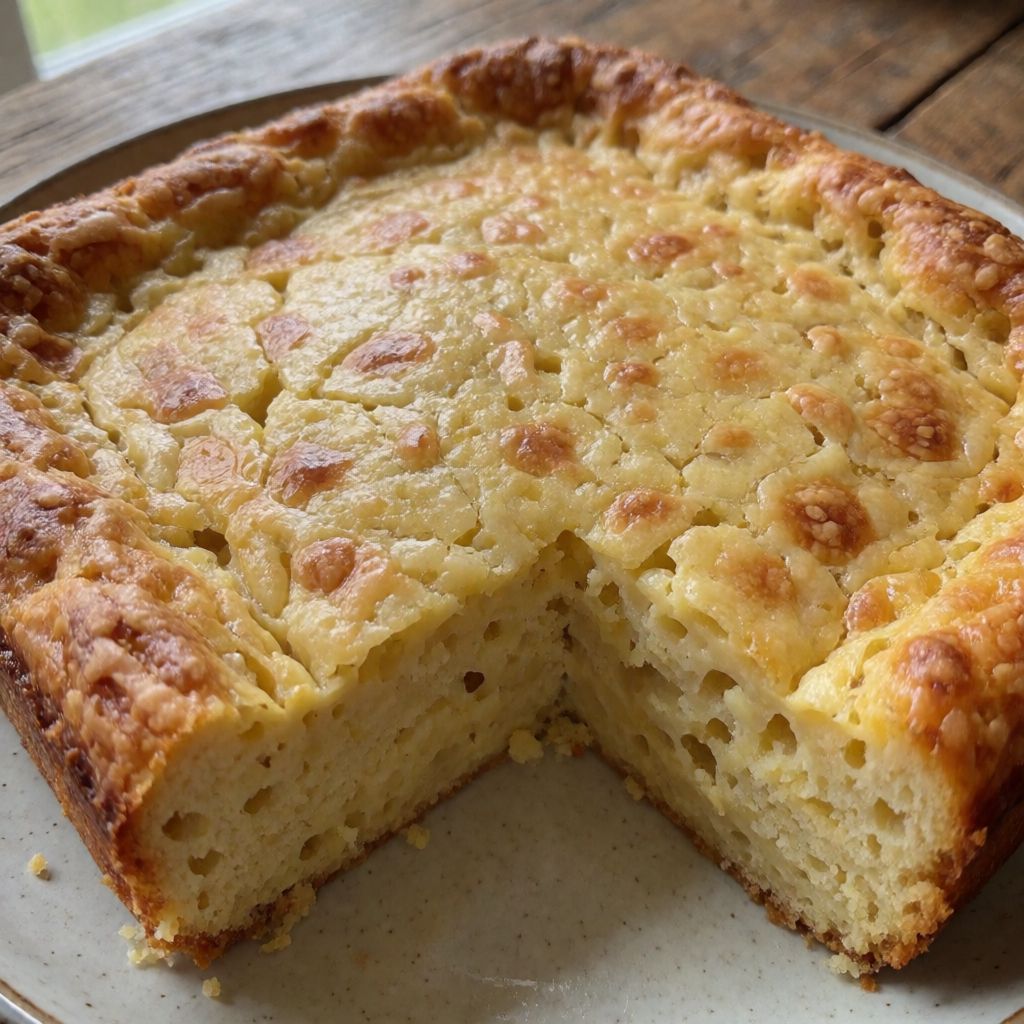
 AI photo
Savoury Pepper Bake
A savoury sponge bake topped with roasted peppers, cherry tomatoes and mini mozzarella, finished with a basil and soft cheese cream.
Labels are worked out automatically from the ingredients and can be wrong. Check the packaging if it matters to you.
Ingredients
- 240 g Plain flour
- 3 pcs Eggs
- 100 ml Milk
- 100 ml Sunflower oil
- 40 g Parmesan
- 16 g Baking powder
- 1 tsp Caster sugar
- 1 pinch Salt
- 2 pcs Bell pepper
- 200 g Soft cheese
- 12 pcs Buffalo mozzarella mini
- 12 pcs Cherry tomatoes
- Olive oil to taste
- Basil fresh herbs, to taste
- Thyme fresh herbs, to taste
- Parsley fresh herbs, to taste
- Black pepper to taste
- Oregano to taste


















Steps
Whisk the eggs with the salt and sugar until light and fluffy, then add the milk and oil and whisk for a few more minutes.
Add the Parmesan and the sifted flour with the baking powder, and mix until smooth.
Grease a 28 cm tin with oil and dust it with flour.
Pour the batter into the tin and bake in the oven at 180°C without fan.
25 minCheck it is done with a wooden skewer, take the bake out and leave it to cool.
Once cool, turn the bake out onto a serving plate.
Wash and dry the bell peppers, then roast them in the oven at 200°C.
30 minPut the roasted peppers to cool in a food-safe paper bag.
Dress the cherry tomatoes with olive oil, salt, black pepper, oregano and thyme, then roast at 200°C.
12 minRemove the seeds, stalk and skin from the peppers, then cut into strips.
Put the peppers in a bowl and dress with olive oil, salt, black pepper and parsley.
Roll the pepper strips into tubes to form little roses.
Mash the soft cheese with the basil using a spoon until it forms a smooth cream.
Fill the hollow in the base of the bake with the soft cheese and basil cream.
Arrange the mini buffalo mozzarella around the edge, alternating with the cherry tomatoes, and place a pepper rose in the centre.
What was changed
Soft cheese Soft cheese replaces the original cheese, as it is not available in local shops.
This is really two recipes wearing one coat: a savoury sponge — think Victoria sponge's less sentimental cousin, built on oil instead of butter, cheese instead of sugar — and a plate of roasted-vegetable antipasti sitting on top of it. Nobody in Georgia or anywhere calls this "traditional". It's a party-table trick: bake something that looks like a cake, decorate it like a cheeseboard, and watch people take a slice not quite knowing what they're eating until the mozzarella hits.
What decides whether it works is the crumb of that base. It has to be dense enough to hold a hollow and a weight of soft cheese and tomatoes without collapsing, but not so dense it eats like a brick. That balance comes from the oil-to-flour ratio and from not overworking the batter once the flour goes in — the same rule as any sponge, savoury or sweet: flour develops gluten the moment it meets liquid and gets stirred, and gluten is what turns "soft" into "chewy". Mix until smooth and stop.
The second thing that decides it is the peppers. Raw bell pepper has a thick waxy skin and a slightly bitter, grassy edge — roasting it isn't decoration, it's the only way to get rid of both. Heat breaks down the skin so it lifts off in sheets, and it converts some of the pepper's starch to sugar, which is why a roasted pepper tastes sweet where a raw one tastes green. Skip the roast and you've got crunchy strips with papery skin sitting on a cake — technically edible, not what you want.
Flour: plain, not self-raising — you're adding your own baking powder at a deliberately generous rate (16g to 240g flour is a lot, about double a standard sponge ratio) because this batter is heavier than a sweet cake, loaded with cheese and oil, and needs real lift to not sit flat. If you only have self-raising, drop the extra baking powder to a teaspoon or you'll get a bitter, soapy aftertaste — that's what too much raising agent tastes like, not a myth, a chemical fact.
Eggs and the whisking at the start: beating eggs with sugar and salt first, before any flour touches the bowl, traps air in the egg proteins. That air is your structure before the oven even starts working. Some say you can just dump everything in one bowl and stir — you can, but you'll get a flatter, tighter crumb, because you skipped building the scaffolding.
Oil instead of butter is the whole point of calling this "savoury" rather than "cake". Butter brings its own flavour and solidifies as it cools, which is lovely in a sweet sponge and wrong here — you want a base that reads as bread-adjacent, not dessert-adjacent. Any neutral oil with no smell of its own works: sunflower, light rapeseed, a bland vegetable oil. Olive oil in the batter would fight the Parmesan; save the olive oil for dressing the vegetables, where its flavour is meant to show.
Parmesan in the batter, not on top — it melts into the crumb as it bakes, salting the sponge from the inside, which matters because the only other salt in that batter is a pinch. This is why you taste depth without reaching for the salt cellar. Any hard, dry grating cheese that doesn't turn oily in the oven will do the same job — a mature Cheddar grated fine, a Grana Padano, a British-made hard cheese labelled "parmesan-style". What you don't want is anything soft or high-moisture in the batter itself; that's reserved for the filling.
The soft cheese and basil cream filling, the mozzarella, the tomatoes — none of this is cooked once assembled. That's deliberate. The bake is a vessel, cooled completely before you turn it out and hollow it, because warm sponge is fragile and warm cheese filling would just slide off a warm base. Patience here isn't optional — it's the only thing standing between "centrepiece" and "collapsed mess on a plate". Let it cool properly. There's no shortcut that doesn't show.
On the tomatoes: roasted at 200°C just long enough to soften and blister (12 minutes is your floor, not a deadline — look for the skin starting to split and the juice beginning to show, not a timer going off), with oil, salt, pepper, oregano and thyme rubbed in before they go in. That's a dry marinade doing fast work in a hot oven — the kind of seasoning that would take an hour to penetrate a raw tomato at room temperature but takes minutes once heat opens the skin. A British domestic oven without a fan runs a touch more unevenly than a fan oven — rotate the tray halfway if your oven has known hot spots, which most do.