
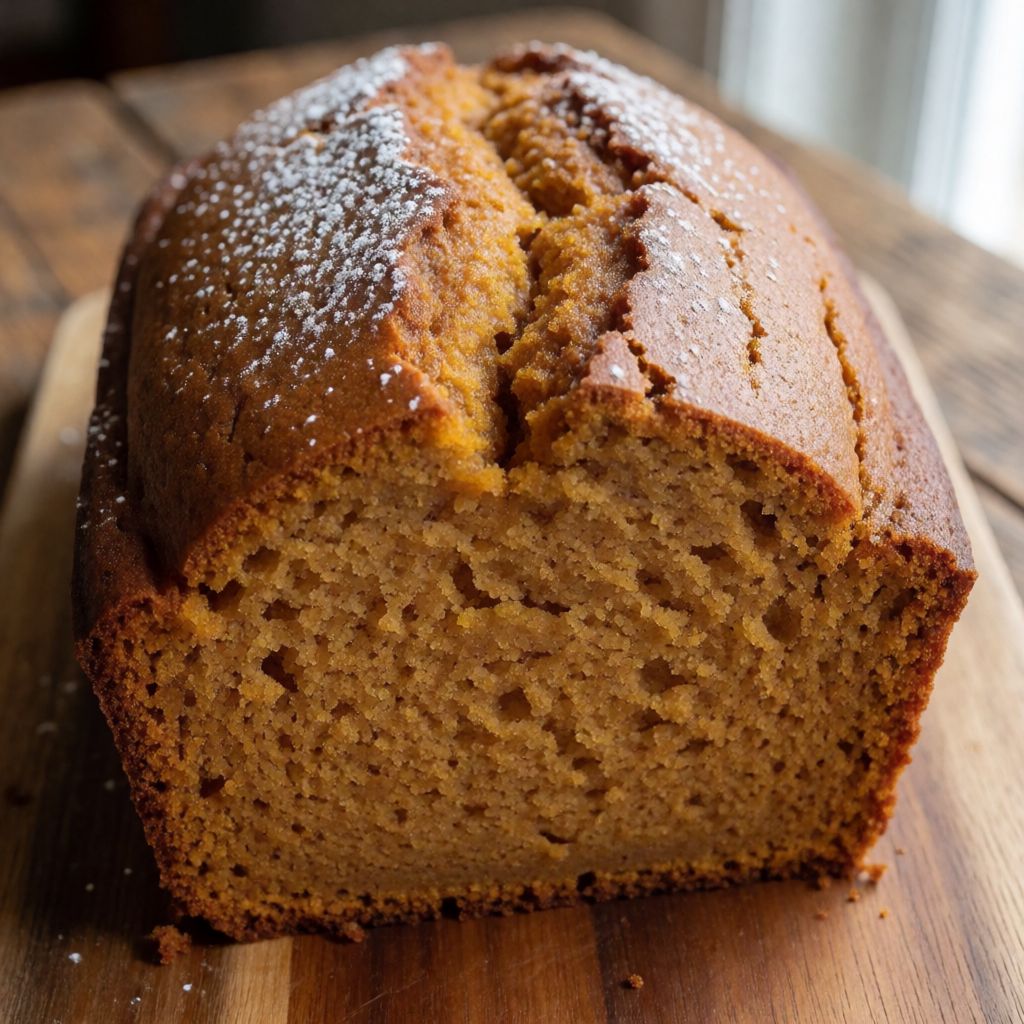
 AI photo
Pumpkin Spice Cake
A spiced pumpkin cake topped with a cream cheese and maple frosting, finished with orange zest and chopped nuts.
Labels are worked out automatically from the ingredients and can be wrong. Check the packaging if it matters to you.
Ingredients
- 175 g Butter room temperature
- 100 g Caster sugar
- 75 g Brown sugar
- 3 pcs Eggs
- 200 g Plain flour
- 2 tsp Baking powder
- 1 tsp Ground cinnamon
- 1 tsp Ground cardamom
- 1 pinch Ground cloves
- 1 pinch Salt
- 300 g Pumpkin coarsely grated
- 200 g Cream cheese
- 3 tbsp Maple syrup
- 1 pcs Orange finely grated zest
- 20 g Walnuts roughly chopped
- 10 g Pistachios roughly chopped
- 20 g Hazelnuts roughly chopped















Steps
Beat the butter, sugar and brown sugar until light and fluffy, then beat in the eggs one at a time.
3 minMix the flour, baking powder, spices and salt and sift into the batter, fold gently, then stir in the grated pumpkin.
2 minSpread the batter into a greased 20 cm cake tin lined with baking paper, and bake in a fan oven preheated to 175°C for about 45 minutes, until fully cooked through.
45 minLet the pumpkin cake cool slightly in the tin, then transfer to a wire rack to cool completely.
15 minMix the cream cheese with the maple syrup, adding a little freshly grated orange zest if you like, until smooth.
2 minSpread the icing over the cake once it is fully cooled. Sprinkle with finely grated orange zest and nuts, and drizzle with a little maple syrup before serving.
2 min
This is not pumpkin pie's shy English cousin — it's a butter cake that happens to have vegetable in it, and that's the whole trick. The pumpkin isn't there for flavour, it's there for moisture and weight. Grated coarse and folded in raw, it releases water slowly as it bakes, which is why this cake stays dense and damp instead of drying out the way a plain sponge does after a day on the counter.
What decides whether it works is restraint in two places: how you fold, and how you judge "done". Beat the butter and sugars properly first — light and pale, not just mixed — because that's where the air goes in; there's no other rising mechanism working hard enough on its own to save a dense, unbeaten batter. Once the flour goes in, you're done with vigour. Overwork it now and the gluten tightens, and what should be a tender crumb turns rubbery and close.
The spice blend — cinnamon, cardamom, a pinch of cloves — isn't decoration, it's balance. Pumpkin itself is nearly flavourless, mostly water and a bit of sweetness; the spice is doing the work pumpkin can't. Cardamom is the one people skip because it's "not traditional" — but traditional to what? This is a modern layering of autumn spices onto a Victoria-sponge method, there's no ancient law here. Leave it out if you must, you won't ruin the cake, you'll just flatten it.
The cream cheese icing goes on cold, onto a fully cooled cake, no exceptions worth taking — warmth melts it into a glaze instead of a spread, and you lose the tang that's meant to cut against the sweetness underneath.
Butter at room temperature means soft enough to hold air when beaten, not soft enough to be oily — if it's gone greasy and translucent at the edges, it's too warm, and it won't trap the bubbles that give you rise. On a normal UK worktop in a centrally heated flat, an hour out of the fridge is usually enough; don't rush it with a radiator or the microwave, both cook the edges before the middle softens.
Two sugars, not one, and that's not fussiness. Caster dissolves fast and creams cleanly for structure; brown sugar carries molasses, which means moisture and a rounder, almost caramel note that plain white sugar can't give you. If you've only got one sugar in the cupboard, use it — the cake will be slightly paler and a touch less deep in flavour, not ruined.
Pumpkin: grate it coarse, don't puree it. Puree releases its water all at once into the batter and you get a gummy streak through the crumb; coarse shreds hold their shape and let moisture out gradually as they cook, basically steaming gently inside the cake. Any dense, not-too-sweet squash works the same way — butternut is the easy substitute most British kitchens already have, and nobody at the table will know unless you tell them.
Baking powder, not bicarbonate of soda — the pumpkin doesn't bring enough acidity to activate soda properly on its own, and baking powder already carries its own acid-base pair, so it's the reliable choice here regardless of what's folded in.
Cream cheese for the icing should be full-fat and cold from the fridge when you mix it — the low-fat kind is wetter and looser and will slide rather than sit on the cake. Maple syrup sweetens it without the grittiness icing sugar can leave, and because it's a liquid sugar it blends in smooth with far less beating, which matters because overbeaten cream cheese can turn thin and runny on you.
The nuts and zest on top aren't garnish for the photo, they're texture — without them the cake is uniformly soft, and a soft cake with nothing to bite against gets boring by the third forkful. Walnut, pistachio, hazelnut, whatever's in the cupboard; the point is some crunch and a bit of oil against the sweetness, not the specific nut. Scatter them after the icing goes on, not before, or they go soft and sad under the moisture.
Patience matters twice here and both times people skip it. Cool the cake properly before icing — a cream cheese icing on a warm cake just runs off the sides, no fixing it after. And let the butter and sugar beat its full time at the start; three minutes feels long when you're standing there with a hand mixer, but that's where the lightness comes from, and you can't get it back later by stirring harder.