
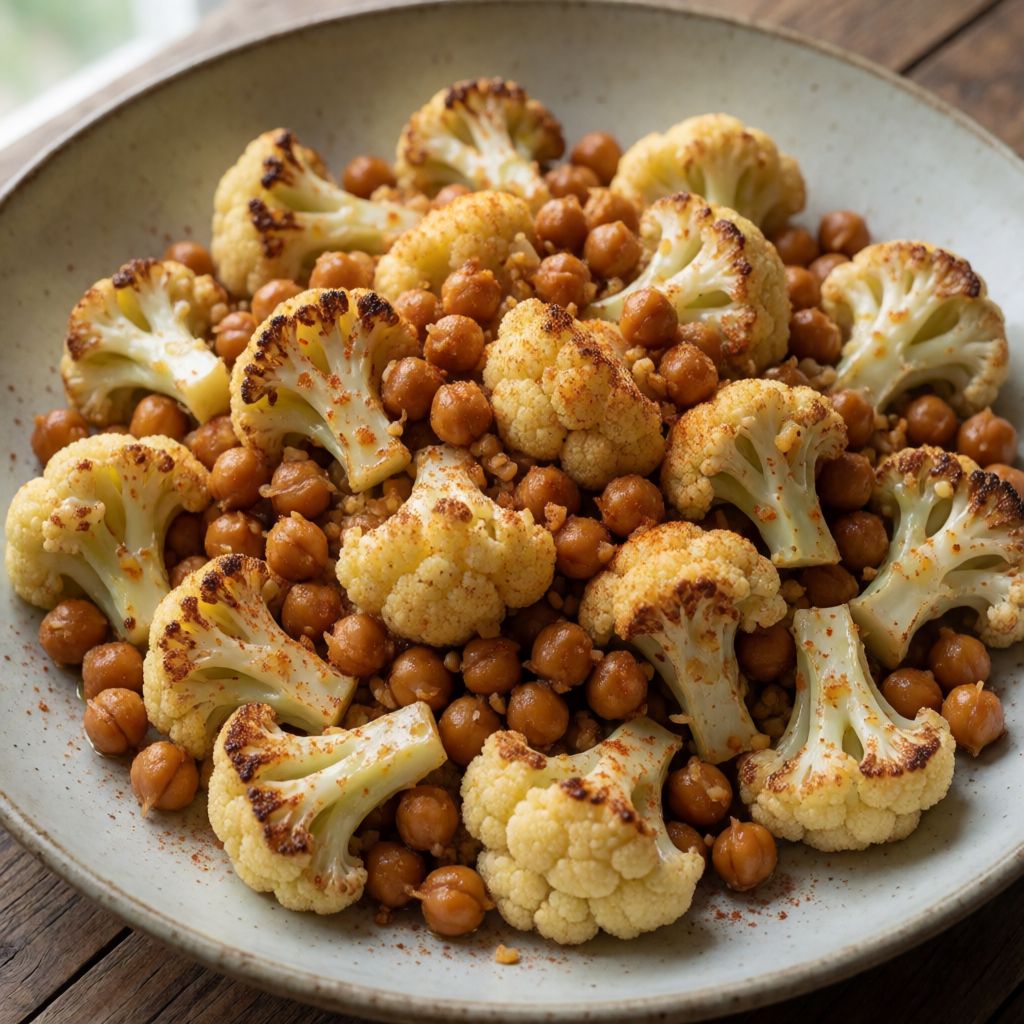
 AI photo
Roasted Cauliflower and Chickpea Salad
A warm salad of roasted cauliflower and chickpeas with spinach, cucumber, avocado and feta, finished with a tahini dressing.
Labels are worked out automatically from the ingredients and can be wrong. Check the packaging if it matters to you.
Ingredients
- 1 pcs Cauliflower cut into slices or florets
- 2 can Chickpeas drained and rinsed
- 2 tsp Smoked paprika
- 2 clove Garlic finely grated
- 4 tbsp Olive oil
- Salt to taste
- Black pepper freshly ground, to taste
- 75 g Spinach
- 75 g Spinach
- 1 pcs Cucumber halved and sliced
- 100 g Feta crumbled
- 2 pcs Avocado sliced
- 1 bunch Parsley finely chopped
- 1 bunch Parsley flat-leaf, finely chopped
- 2 tbsp Chives finely chopped







For the tahini vinaigrette
- 4 tbsp Olive oil
- 1 pcs Lemon juice and finely grated zest
- 1 tbsp Honey
- 1 tbsp Dijon mustard
- 2 tbsp Tahini
- Salt to taste
- Black pepper freshly ground, to taste



For the croutons
- 2 pcs Bread cut into cubes
- 2 tbsp Olive oil
- 1 clove Garlic finely grated
- Salt to taste
- Black pepper freshly ground, to taste
Steps
Spread the cauliflower and chickpeas on a baking tray lined with parchment.
Mix the smoked paprika, garlic, olive oil, salt and pepper, and toss with the cauliflower and chickpeas until evenly coated.
Roast in a preheated oven at 200°C (fan) for 20 minutes.
Heat a frying pan, add the bread cubes, olive oil and garlic.
Stir continuously until the bread is lightly toasted and crisp.
Sprinkle with flaky salt and freshly ground black pepper, remove from the heat and scatter over the salad.
For the tahini vinaigrette, whisk all the dressing ingredients together until smooth and creamy.
Season with extra honey, mustard, salt and pepper to taste.
Toss the spinach with half the dressing and arrange in a large bowl with the roasted cauliflower and chickpeas.
Garnish with cucumber, avocado, feta and croutons.
Sprinkle with fresh herbs and serve the remaining dressing on the side.
This is a Sunday roast's logic turned into a salad: something sturdy roasted hard and hot, something crisp fried in fat, something green and raw, and a sauce with enough backbone to hold it all together. The cauliflower and chickpeas are the "meat" of the thing — roasted together because they want the same thing, which is dry heat and no crowding. What decides whether this works is whether your oven actually gets hot where the tray sits, and whether you let the vegetables sit still long enough to brown rather than steam.
Cauliflower is mostly water held in a loose structure. At 200°C that water wants to leave as steam. If the florets are packed close, the steam has nowhere to go, gets trapped under the next piece, and you get grey, softened cauliflower instead of browned, nutty cauliflower — the defect people blame on "the oven" when it's really geometry. Spread it out, one layer, space between pieces, and the steam escapes upward instead of stewing the tray. Chickpeas roast alongside because they're basically dry already — rinsed and patted, they crisp at the edges in the same heat without needing their own tray.
Cauliflower: buy it heavy for its size and tight-headed — a cauliflower that's gone loose and separated at the florets has been sitting too long and will roast dry instead of nutty. Cut into slices if you want flat surfaces that catch more colour, or florets if you want more edges per bite — either works, the heat doesn't care, your knife does.
Chickpeas, tinned: rinse them properly, the canning liquid is starchy and will make your spice mix slide off rather than stick. Dry them on a tea towel before tossing in oil — wet chickpeas steam before they crisp, same problem as the overcrowded cauliflower, just in miniature.
Smoked paprika is doing a job regular paprika can't: it's dried and smoked over wood, so it brings a hint of char before anything's near a flame. If you haven't got it, sweet paprika plus a few drops of liquid smoke gets you close, or just paprika on its own and accept the dish will be a shade less campfire and a shade more simply roasted — not a disaster, a different dish.
Garlic grated fine, not crushed through a press, releases its oil evenly into the dressing and the spice mix rather than sitting in clumps that burn in the oven and taste bitter. Raw garlic in a dressing is sharp for the first hour and mellows — that's just chemistry settling, not a flaw.
Olive oil three times over here — in the spice mix, in the dressing, in the crouton pan — and it doesn't need to be the "extra virgin for drizzling" bottle in all three. Save the good peppery stuff for the dressing, where you taste it raw; use a plainer oil for roasting and frying, where heat flattens delicate flavour anyway. Any oil with no strong smell of its own works for the roasting — vegetable, rapeseed, sunflower — rapeseed being the one most UK kitchens already have from Sunday roast duty.
Tahini is sesame seeds ground to a paste, same family logic as peanut butter — if you've only got the jar that's split into solid and oil, stir it hard before measuring, it's meant to separate, that's not spoilage. No tahini in the cupboard — use natural peanut butter or cashew butter, something with fat and a bit of bitterness, and reduce the honey slightly since those are sweeter.
Dijon mustard's job is emulsion, not heat, so English mustard will push the dressing sharper than intended — use less of it if that's what's in the fridge.
Bread for croutons: a day-old loaf, something with a bit of structure, crisps better than fresh soft bread, which just goes chewy and oily. This is the same reason bread pudding exists — using up bread that's turned, not wasting it.
Spinach, cucumber, avocado, feta are the cool, raw layer and need no mechanism explained beyond: salt the feta's saltiness into account before you salt anything else, and slice the avocado last so it doesn't brown waiting on the counter — lemon from the dressing on it early buys you time if you're prepping ahead.
Patience is the actual ingredient holding the texture together — rushing the roast by cranking the oven hotter burns the outside before the inside gives up its water, and rushing the croutons means pale, chewy bread instead of crisp. Twenty minutes in the oven and a few minutes in the pan are lower bounds, not deadlines — look for colour, not the clock.