
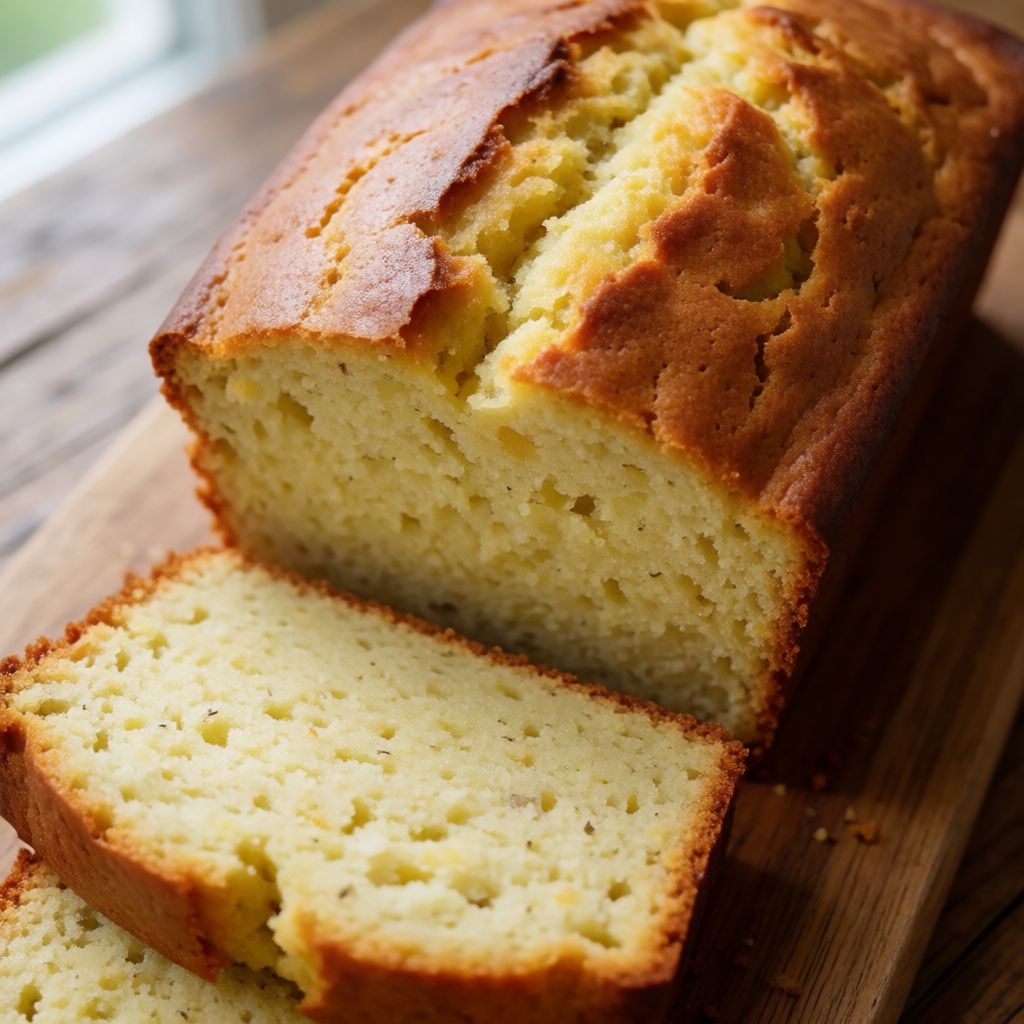
 AI photo
Savoury Vegetable Loaf Cake
A savoury loaf cake loaded with vegetables, peas, cheese and cured meats — a hearty slice for any time of day.
Labels are worked out automatically from the ingredients and can be wrong. Check the packaging if it matters to you.
Ingredients
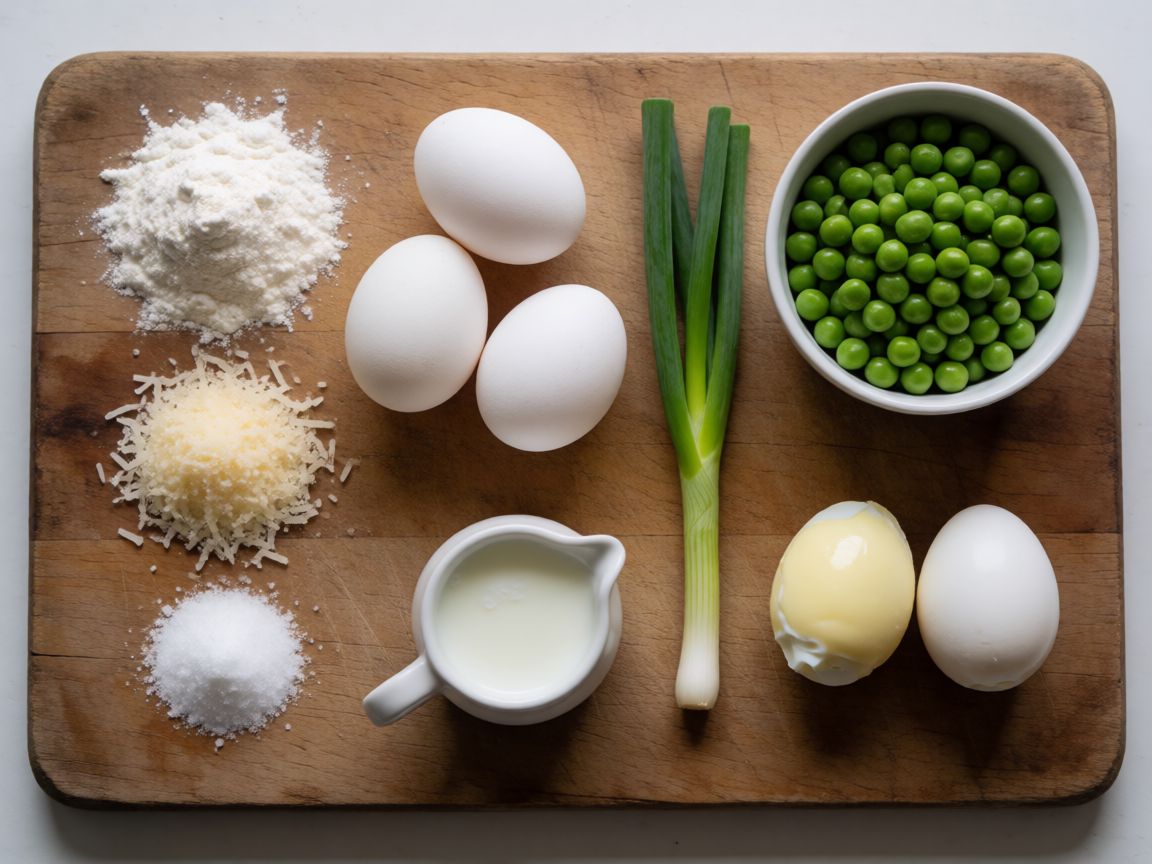
- 300 g Plain flour
- 20 g Parmesan
- Salt to taste
- Black pepper to taste
- 16 g Baking powder for savoury bakes
- 3 pcs Eggs
- 150 ml Milk
- 100 ml Sunflower oil
- 1 pcs Spring onion
- 200 g Peas
- 2 pcs Hard-boiled egg
- 200 g Courgette
- 200 g Red pepper
- Basil a few leaves
- 100 g Salami ham or salami
- 100 g Provolone














Steps
Wash and dry the vegetables; rinse the peas under running water and pat dry with kitchen paper.
Thinly slice the spring onion and fry it in a little oil until soft.
Add the courgette, red pepper and peas and cook over high heat for about 10 minutes.
10 minSeason with salt to taste and remove from the heat.
In a bowl, mix the dry ingredients: flour, baking powder, salt, black pepper and Parmesan.
Beat the eggs, oil and milk together, then gradually add to the dry ingredients, mixing until smooth.
Dice the provolone and salami.
Fold the cooled vegetables, basil, salami, provolone and diced hard-boiled egg into the batter. Mix gently.
Pour the batter into a loaf tin greased with butter and dusted with flour, and smooth the surface.
Bake at 180°C for about 45 minutes.
45 minAfter 35–40 minutes, if the top is browning too quickly, cover the tin with a sheet of baking paper and finish baking.
Remove the loaf from the oven, let it cool slightly and serve.
This is not a cake that happens to have vegetables in it — it's a loaf of batter built to carry them, the way a dough carries a filling. The flour-egg-milk mixture here is structural, not the point. Think of it as savoury quick bread with a Mediterranean vegetable sauté folded through, held together by baking powder instead of yeast, so there's no rising time, no proving, no patience needed at the start — all the patience goes into the oven, at the end.
What decides whether it works is moisture control, twice over. First in the pan: courgette and pepper thrown in with peas over high heat for ten minutes isn't about cooking them through — it's about driving off the water they'll otherwise weep straight into your batter. Courgette especially is mostly water held in a cell structure; low heat lets that water seep out slowly and pool, high heat forces it off as steam before the vegetable goes soft and sits in a puddle. Skip this and your loaf bakes gummy in the middle, no matter how long it's in the oven.
Second, moisture control at the end, in the oven's dishonesty with you. A domestic oven browns the surface of a dense loaf well before the centre sets — there's more mass here than in a sponge, more egg and cheese and diced meat weighing down the middle, so heat has further to travel. The baking-paper cover after 35–40 minutes isn't decoration, it's you intervening because your oven can't tell the difference between "done" and "about to burn."
Flour here is just flour — nothing to interrogate, except that plain, not self-raising, because the lift is coming entirely from the 16 g of baking powder you're adding yourself, and self-raising flour would double that lift unpredictably and leave you with a loaf that domes and cracks rather than rising evenly. Parmesan folded into the dry mix does two jobs: salt and savoury depth, the glutamate hit, before anything's even cooked. If you haven't got Parmesan, any hard, well-aged grating cheese with real bite — a mature Cheddar grated fine, a pecorino — does the same work; a young, mild cheese won't, because it has nothing to contribute but fat.
The eggs and milk and oil are the liquid that turns flour into batter rather than dough — three separate jobs bundled into one mixture. Eggs bind and set; milk thins and tenderises; oil, not butter, because oil stays liquid at room temperature and keeps the crumb moist after cooling, where butter would re-solidify and make a drier bite the next day. Any neutral oil with no smell of its own does this — sunflower, a mild vegetable oil, a light rapeseed. Extra virgin olive oil would fight the basil and the salami for attention, which is why it's not here.
The vegetables — spring onion, courgette, red pepper, peas — are chosen for colour against the pale crumb as much as flavour, and for cooking at roughly the same rate once chopped small. Spring onion goes in first, softened gently in a little oil, because it's thin enough to catch and bitter if you rush it; the others follow and go in hard and fast, as above, to lose water rather than gain softness. Frozen peas are fine here, arguably better, since fresh peas this size are mostly pod-shopping effort for the same result — just rinse off the ice and pat dry so they don't bring extra water to a mix that's already fighting to shed it.
Salami or ham, provolone, and the hard-boiled eggs are the weight in the loaf — the reason it's a meal and not a side. Diced small and folded in late, after the vegetables have cooled, because warm vegetables folded straight into raw batter with egg already in it will start to set the egg at the edges before the loaf's anywhere near the oven. Provolone melts to pockets rather than disappearing, so if you substitute, look for a semi-hard cheese that holds some shape under heat — a mozzarella that's been well drained, a young Gouda — rather than anything that turns to oil, like a very soft Brie would.
Basil is the only ingredient here doing nothing but flavour, and it's added raw, folded in at the same point as everything else, because baked basil in a 45-minute loaf turns bitter and dark rather than fragrant — a few torn leaves is restraint, not stinginess.
In a British kitchen this sits well next to the Sunday roast logic you already know — a loaf like this slices cold the next day for lunchboxes, or warm as a side where you'd otherwise reach for a Yorkshire pudding or bread. Six people, one standard loaf tin, and the only real patience required is letting it cool slightly before you cut it — cut it hot and the crumb, still setting, collapses under the knife rather than holding a clean slice.