
 AI photo
Chocolate and Almond Muffins
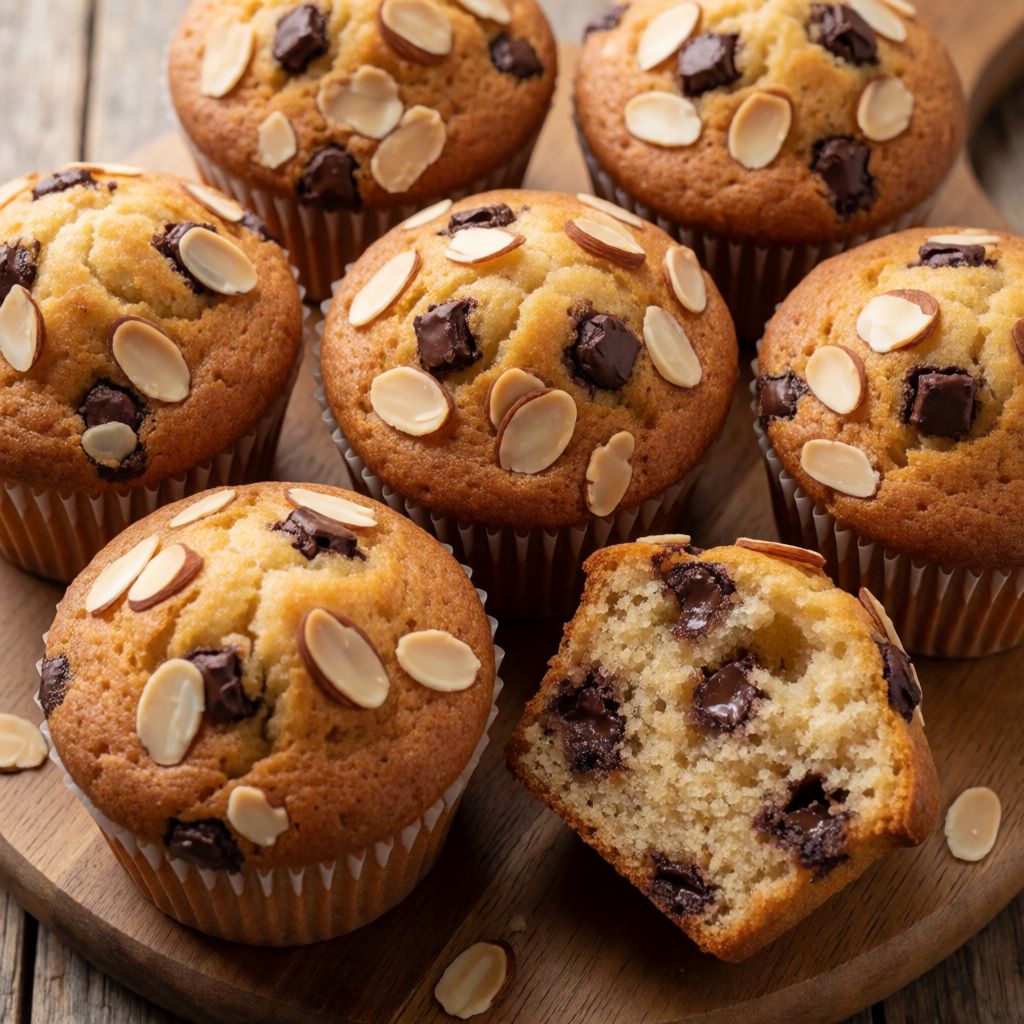
Rich chocolate and almond muffins with a buttery crumb, topped with almonds and baked until golden.
Labels are worked out automatically from the ingredients and can be wrong. Check the packaging if it matters to you.
Ingredients
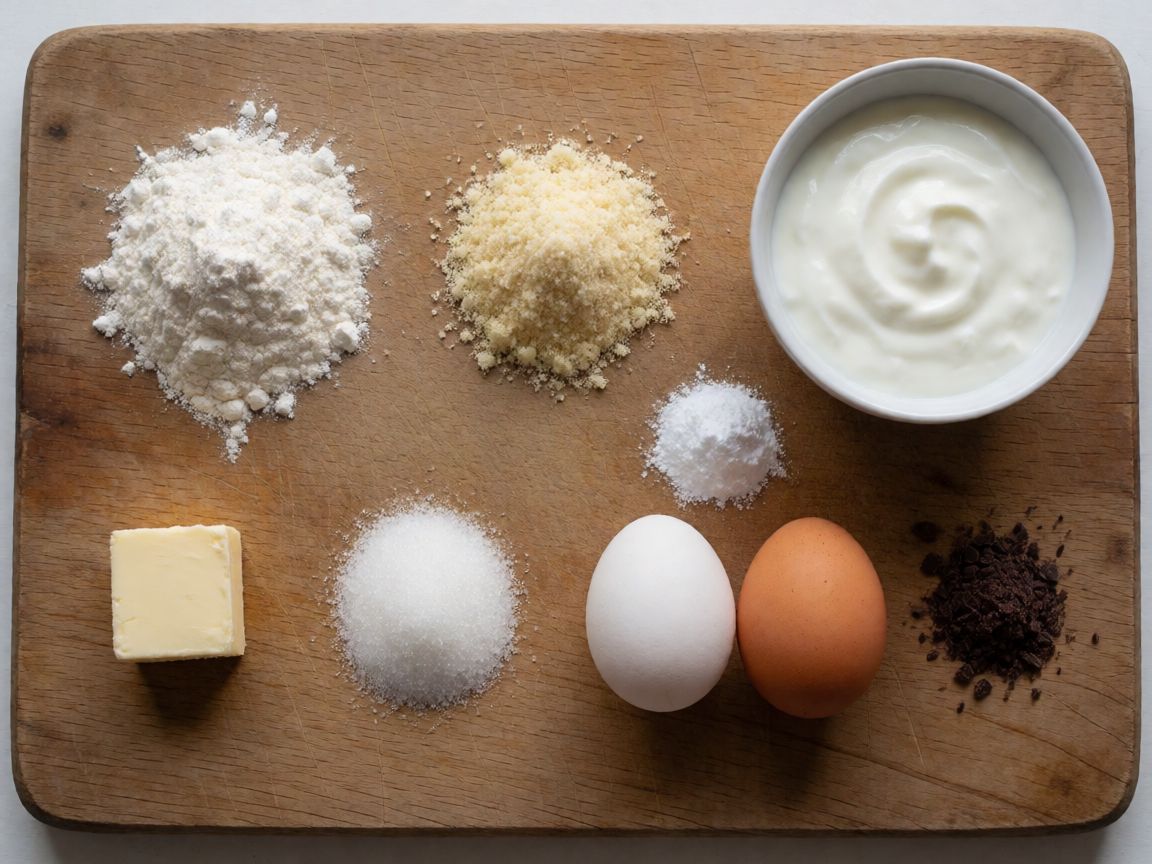
- 200 g Plain flour
- 120 g Almond flour
- 90 g Butter
- 120 g Caster sugar
- 250 g Low-fat plain yoghurt
- 2 pcs Eggs
- 1 pcs Baking powder
- 100 g Dark chocolate at least 80% cocoa
- 1 tbsp Cocoa powder
- 1/2 pcs Vanilla pod
- 1 pinch Almonds to taste











Steps
Soften the butter at room temperature or in the microwave.
Tip the sugar into a bowl, add the softened butter and eggs, and whisk until smooth.
Sift the plain flour with the almond flour, mix, and stir into the bowl, beating well.
Add the yoghurt, the seeds from the vanilla pod and the baking powder, and mix.
Chop the chocolate finely and fold it into the batter.
Add the cocoa powder and stir thoroughly with a wooden spoon until smooth.
Grease the moulds with butter, dust with flour, and divide the batter halfway up each.
Sprinkle the surface with almonds and place on a baking tray.
Bake at 180°C, without opening the oven before 20 minutes have passed.
20 minRemove the tray and let the muffins cool before serving.
A muffin is a cupcake that never had to pretend to be elegant — and this one, with almond flour and dark chocolate chopped by hand rather than melted, sits closer to a small dense cake than to the airy, domed thing from a coffee chain. What decides whether it works is restraint at two points: how much you beat the batter once the flour goes in, and how much you trust the oven door to stay shut.
Flour develops gluten the moment it meets liquid and gets agitated. Beat a muffin batter like you would a Victoria sponge and you build long elastic strands that trap steam and pull the crumb tight and chewy — fine for bread, wrong here. That's why the almond flour matters beyond flavour: it has no gluten in it at all, so swapping a third of the plain flour for it is dilution insurance, not just a nutty note. Stir in the egg-flour mixture, don't whisk it.
The surface sugar-and-butter base, creamed first, is doing a different job: trapping air mechanically before any raising agent gets involved, so the baking powder has pockets to expand into rather than having to create structure from nothing. This is also why room-temperature butter is a condition, not a nicety — cold butter won't hold air when beaten, it just breaks into lumps and sits there being smug.
Butter here is for aeration and flavour, not purely fat content — it's why margarine, which holds less air when beaten, gives a flatter result. If you're out of butter, a neutral oil can replace it in the liquid stage but you lose the creaming step entirely and the muffin becomes denser, closer to a quick bread. Fine, just know what you're trading.
Caster sugar dissolves into the beaten butter faster than granulated because of its finer grain — less grinding against itself, less time, fewer undissolved pockets that scorch at the edges. Granulated will work if that's what's in the cupboard; just beat a little longer.
The yoghurt is doing double duty: moisture, and mild acidity that reacts with the baking powder for a second, gentler lift on top of the one from creaming. Low-fat yoghurt specifically keeps the crumb from turning greasy on top of the butter already in there — full-fat is fine too, you'll just taste it more.
Dark chocolate at 80% is a deliberate choice against bitterness collapsing into sweetness: anything much lower in cocoa solids and the sugar in the bar competes with the sugar in the batter, and you lose the contrast that makes a "chocolate" muffin taste of chocolate rather than of sugar with brown flecks. Chop it by hand rather than using chips — chips are stabilised to hold their shape in the oven, so they melt less, sit as little round blobs. Hand-chopped pieces melt unevenly into streaks and pockets, which is the texture you actually want biting into.
The vanilla pod seeds are there for a fragrance that vanilla extract fakes with alcohol and sugar syrup — if you don't have a pod, a good extract (not "vanilla flavouring," which is often just vanillin with no complexity) is the honest substitute, a few drops stirred in at the same stage.
Almond flour, besides the gluten point above, is ground almonds with the oils already released by grinding — it behaves differently from just scattering ground almonds into plain flour, because it brings a little fat and moisture with it. If you can't get it, finely ground blanched almonds from a food processor get you close, though slightly coarser.
On the UK kitchen you've got: a domestic oven that very likely runs a few degrees off whatever the dial says, and no kazan-level insulation to even that out — an oven thermometer is a five-pound fix for a problem that otherwise shows up as one tray of muffins browning faster on the side nearest the element. Rotate the tray only after the first 20 minutes are up, never before, for the reason already given.
As for yield: eight muffins from this is a Sunday-afternoon batch, not a tea-break one — good with tea with milk, which cuts the bitterness of 80% chocolate rather than fighting it, the way black coffee would instead compete with it. Patience is the real ingredient in step 9: the waiting is the cooking.