
 AI photo
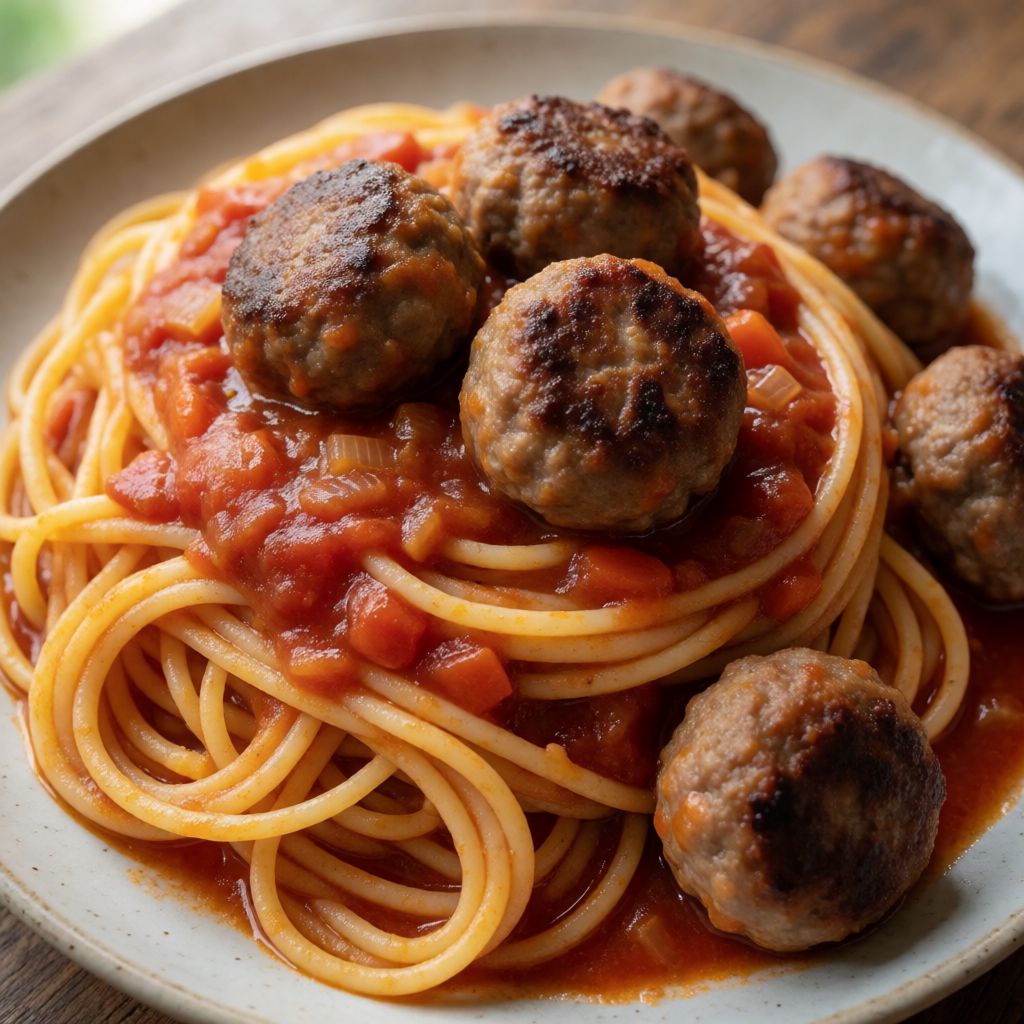
Spaghetti in Tomato Sauce with Meatballs
A hearty spaghetti and meatball dinner with a rich, vegetable-packed tomato sauce.
Labels are worked out automatically from the ingredients and can be wrong. Check the packaging if it matters to you.
Ingredients
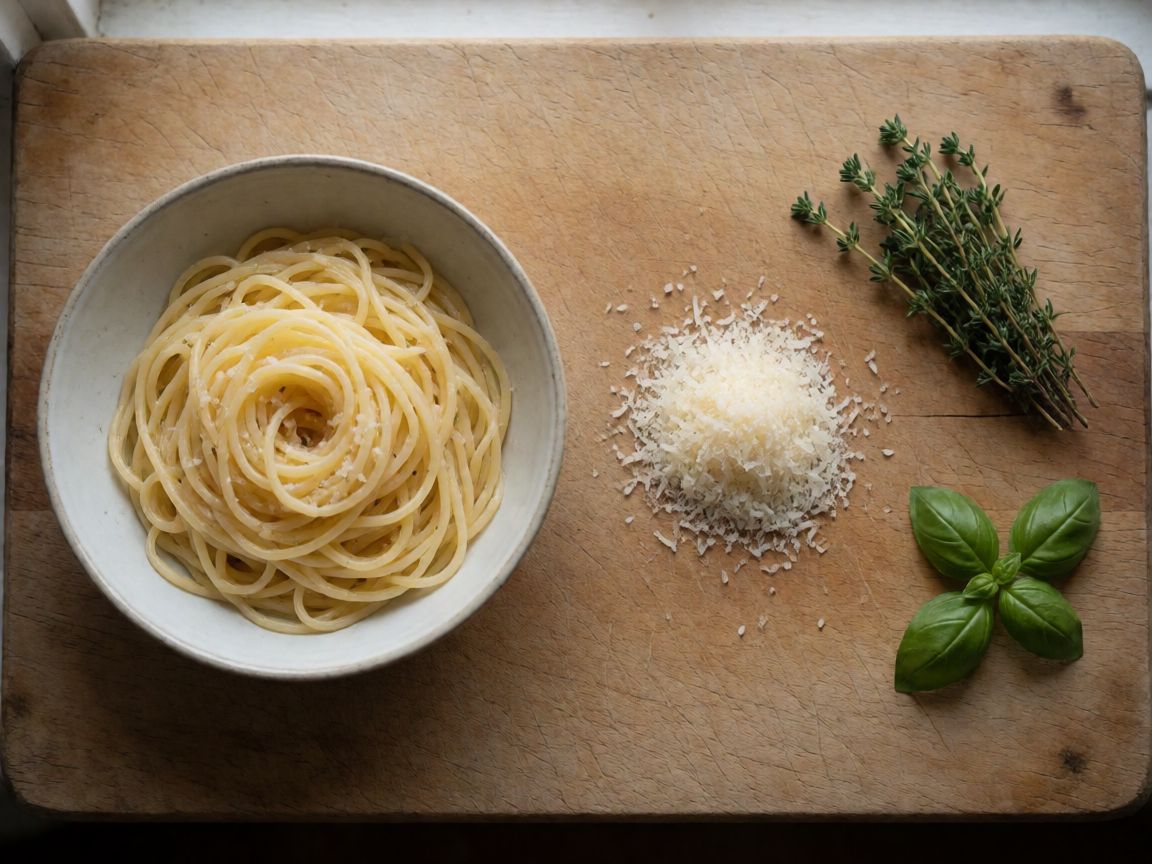
- 400 g Spaghetti cooked al dente
- 100 g Parmesan
- 1 bunch Fresh Herbs e.g. thyme and basil



Tomato Sauce
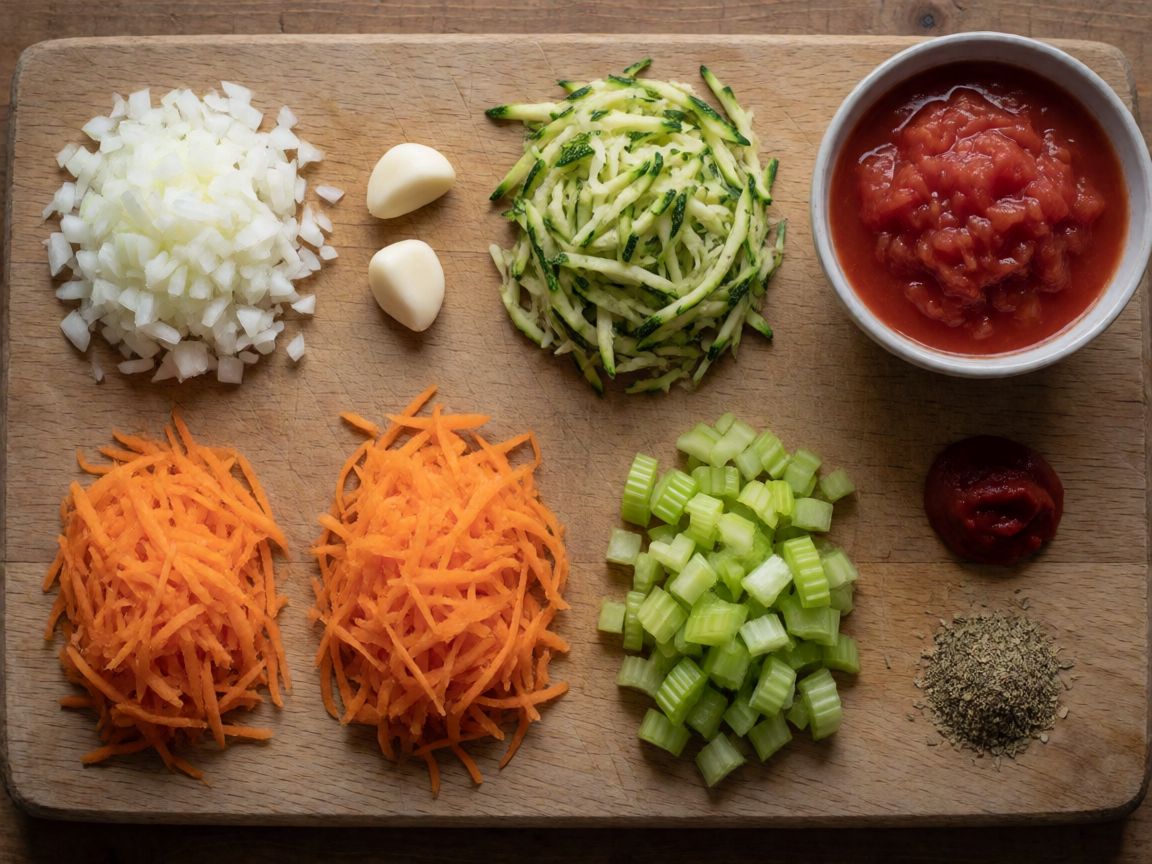
- 2 pcs Onion finely chopped
- 2 clove Garlic finely chopped
- 1 pcs Courgette coarsely grated
- 2 pcs Carrot coarsely grated
- 2 pcs Celery coarsely grated
- 800 g Canned Chopped Tomatoes
- 100 g Tomato Paste
- 2 tbsp Dried Oregano dried
- 1 tbsp Olive Oil
- Salt
- Black Pepper freshly ground











Meatballs
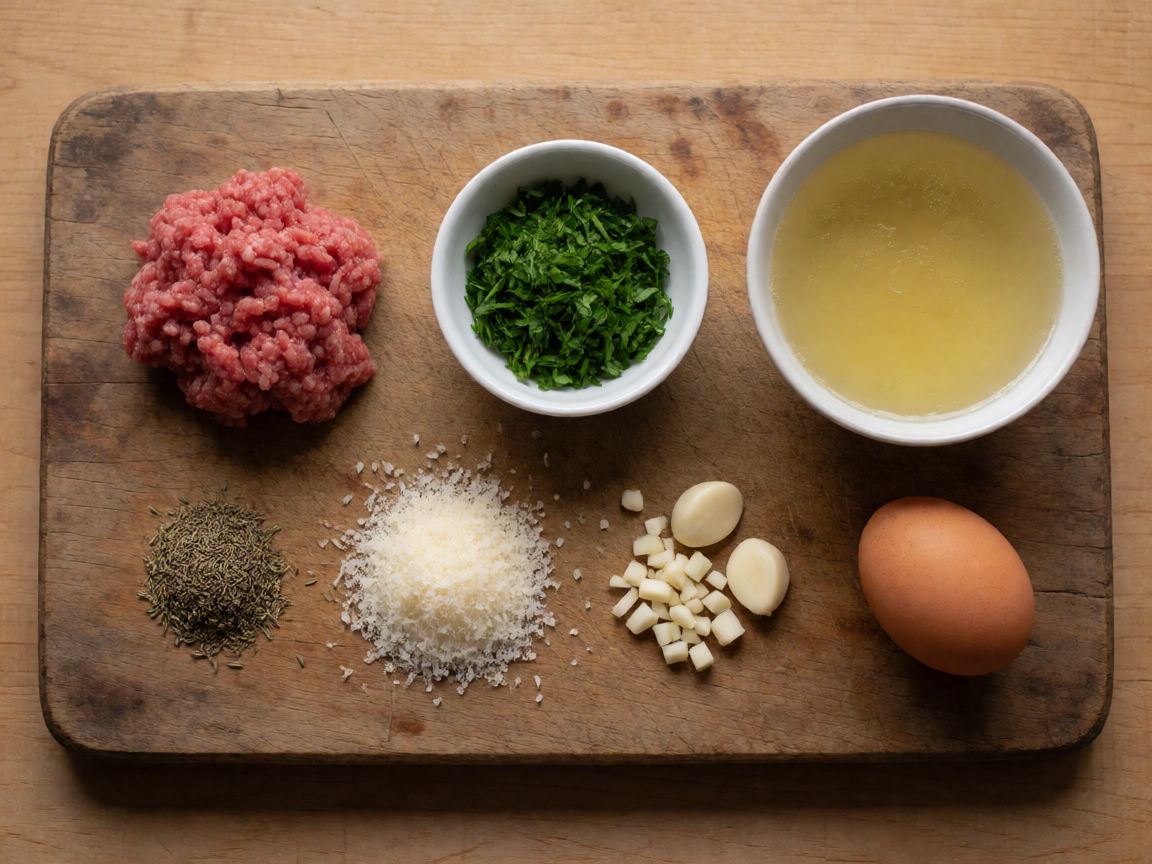
- 300 g Minced Beef
- 100 ml Parsley finely chopped
- 1 tsp Dried Thyme dried
- 30 g Parmesan freshly grated
- 2 clove Garlic finely chopped
- 1 pcs Eggs
- 500 ml Stock
- Salt
- Black Pepper freshly ground





Steps
Fry the onion and garlic in olive oil in a large pot over medium heat until soft.
4 minAdd the courgette, carrot, celery, canned tomatoes, tomato paste and oregano.
3 minStir well, bring to the boil and leave to simmer for 30 minutes.
30 minBlend the sauce with a hand blender and season with salt and pepper.
2 minMix the minced beef, parsley, thyme, parmesan, garlic, egg, salt and pepper (without the stock) well and shape into meatballs.
3 minBring the stock to the boil in a pot and add the meatballs.
3 minCook the meatballs for 1 minute, then remove them.
1 minPut the meatballs into the hot tomato sauce and simmer together for 5 minutes.
1 minServe with spaghetti, parmesan and a sprinkle of herbs, such as thyme leaves and finely chopped basil.
1 min
This isn't spaghetti bolognese, even though the shopping list looks related. The sauce is a vegetable sauce that happens to carry meatballs, not a meat sauce that happens to sit on pasta — and that distinction decides your Monday. Three grated vegetables — courgette, carrot, celery — go in raw and cook down into the tomato until you can't tell them apart from it. That's the whole trick: bulk and sweetness without a scrap of meat in the base.
What decides whether it works is the thirty minutes of simmering, and what happens inside it. Grated vegetables are mostly water held in cell walls. Low, slow heat breaks those walls down so the water leaves and the sugars inside concentrate — that's why the sauce thickens and sweetens on its own, no sugar added, no need to fry the vegetables brown first. Rush it on high heat and the outside of the veg catches and tastes bitter before the inside has given up its water. Some say a tomato sauce needs hours to taste "cooked" — no, it needs the vegetables broken down, and grating them fine does half that work before the pot ever gets hot.
The meatballs are poached, not fried, and that's deliberate, not lazy. A minute in boiling stock sets the outside of each ball — the egg and parmesan inside firm up — so it holds its shape when it goes into the sauce. Fry raw meatballs straight into a simmering sauce and they shed fat and fray at the edges; the sauce goes greasy and the balls go ragged. Poach first, finish in the sauce, and you get a ball that stays round and a sauce that stays clean.
The vegetables — onion, garlic, courgette, carrot, celery — are grated coarse on purpose, not fine. Fine grating turns to mush and disappears without texture; coarse grating gives the blender something to catch after the simmer, so the sauce has body rather than being a purée with tomato colour. If you've no courgette, use more carrot and celery — the balance of sweet (carrot) against savoury-bitter (celery) is what you're protecting, not the courgette itself, which mostly adds bulk and water.
Canned chopped tomatoes plus tomato paste is doing two jobs, not one. The canned tomatoes give you acidity and moisture to simmer the vegetables in; the paste is already reduced, so it tops up the tomato flavour without adding more water you'd then have to boil off. Skip the paste and your sauce will taste thin no matter how long you cook it — you'll be chasing a flavour that was never concentrated enough to begin with.
Dried oregano here, not fresh — fresh oregano is sharp and grassy and gets lost against thirty minutes of simmering; dried has already lost its volatile top notes and what's left is the steady background flavour that survives heat. This is the same reason you finish the dish with fresh herbs on top rather than cooking them in: thyme and basil added at the end keep their brightness because they never see the pot.
The egg and parmesan in the meatball mix aren't filler, they're glue and seasoning together. Egg binds the mince so it holds together through poaching instead of falling apart into stock; parmesan salts the meat from inside and brings its own savoury depth, meaning you need less added salt than you'd think. Stock, not water, for poaching matters for the same reason sauce needs a base — plain water would leach flavour out of the meatballs and give nothing back; stock holds its own seasoning so the exchange is more even.
Minced beef at 300g against 400g of pasta and a full pot of sauce looks light if you're picturing a meat sauce — it's not meant to be a meat sauce. The vegetables are the volume; the meatballs are a garnish with protein in it, four or five per person, not a meatball dinner with pasta on the side. If you want more meat presence, add beef to the mixture rather than adding more sauce — the sauce proportions are already balanced to coat the pasta without drowning it, and extra liquid just thins what the simmer has thickened on purpose.
Stock for the meatballs doesn't need to be anything grand — a cube dissolved in water does the job, since its purpose is seasoned heat to poach in, not a dish in itself. Parmesan twice in the ingredient list is not a typo: 30g goes into the meatball mix for binding and salt, 100g goes on top at the table for the hit of savoury you actually taste, since cooked-in parmesan mostly vanishes into the meat.