
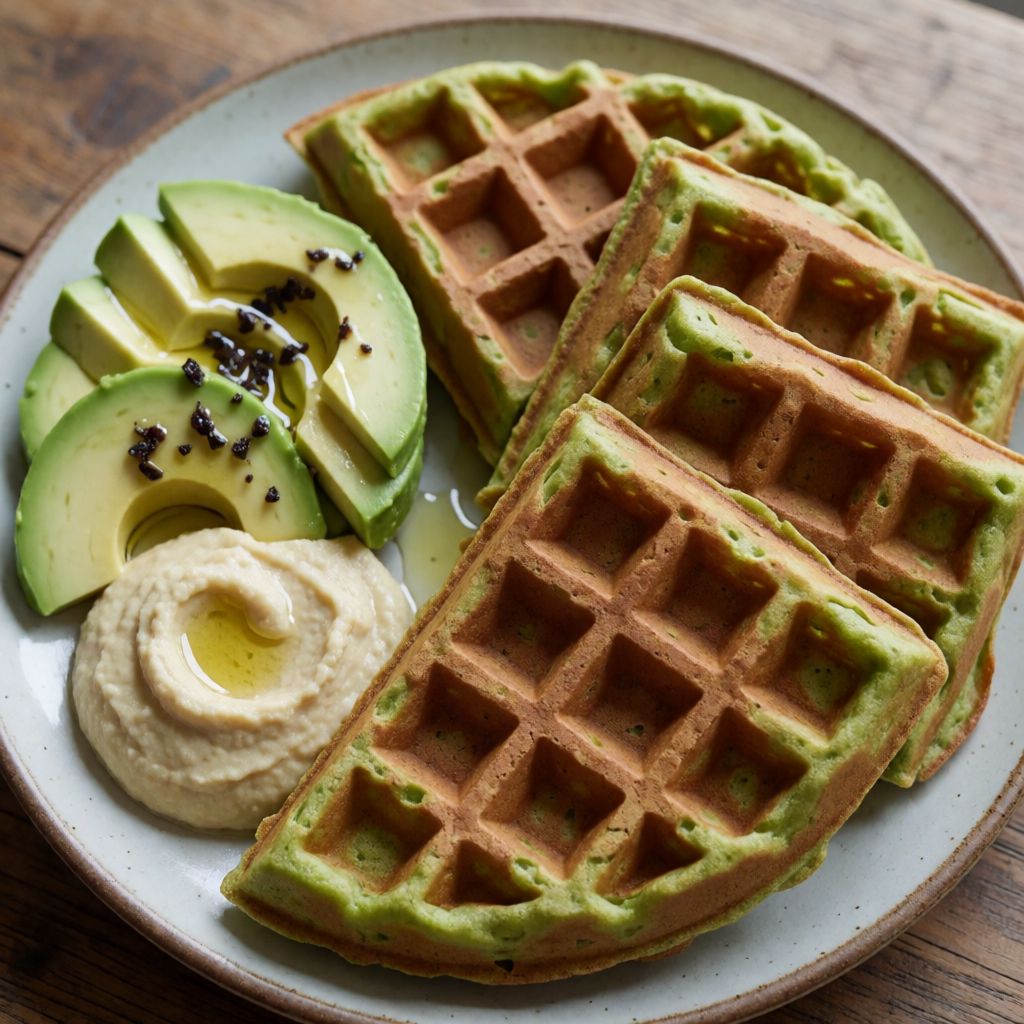
 AI photo
Spinach Waffles with Hummus and Avocado
A savoury spinach waffle recipe served with homemade hummus, avocado, halloumi and crispy rye crumbs.
Labels are worked out automatically from the ingredients and can be wrong. Check the packaging if it matters to you.
Ingredients
- 125 g Plain flour
- 75 g Wholemeal flour
- ½ tsp Baking powder
- 125 g Spinach fresh or frozen
- 4 pcs Eggs
- 250 ml Milk
- Salt
- Black pepper freshly ground
- 3 tbsp Olive oil
- 250 g Halloumi sliced
- 150 g Rye bread sliced
- 1 tsp Fennel seeds
- 25 g Butter
- Salt flaky
- 2 pcs Avocado sliced
- 70 g Rocket
- 1 bunch Thyme fresh















for the hummus







Steps
Blend the tahini with lemon juice for 1 minute, then add the remaining hummus ingredients and blend for another minute.
2 minIf needed, add an ice cube and cold water to reach the desired consistency, and season with lemon juice, oil, salt and pepper.
2 minMix the plain flour, wholemeal flour and baking powder well in a bowl.
2 minRinse the spinach, then put the spinach and the remaining waffle ingredients into a blender and blend to a smooth, runny batter.
3 minLet the batter rest for 15 minutes so the flour can absorb some of the liquid.
15 minGrease the waffle iron with oil or butter and cook the waffles until golden and fully cooked through.
10 minFry the halloumi slices on both sides in a pan with oil or butter until golden and crisp.
5 minPut the rye bread into a mini chopper and pulse to fine crumbs.
2 minFry the rye crumbs in a pan with butter, stirring often, and season with fennel seeds and flaky salt.
5 minServe the waffles with hummus, avocado slices, crispy halloumi, rye crumbs, rocket and fresh thyme.
This is a savoury waffle doing the job a slice of toast usually does — a crisp, starchy base for something soft and something sharp. The spinach isn't really a flavour here; it's mostly water and colour. Blitz it raw into the batter and it bleeds green and a faint iron taste into the mix, turning an ordinary waffle into something that looks like it belongs next to hummus and avocado instead of maple syrup.
What decides whether this works is the batter rest and the iron's heat, not the recipe's clock. Fifteen minutes isn't a ritual — it's the time flour needs to actually drink the milk and egg around it, so the starch swells before it ever meets heat. Skip that and you get a waffle that's gummy in the middle because the outside sets before the inside's had a chance to firm up. You're not waiting for the timer; you're waiting for the batter to go from thin and runny to something that coats the back of a spoon and holds a trail when you drag a finger through it.
The other fork in the road is the waffle iron itself, and this is where a flat in Clapham differs from a diner in Ohio. Domestic irons vary wildly in how hot they actually get and how evenly — some scorch the ridges and leave the valleys pale. Watch the steam, not the clock: when it slows right down and nearly stops coming out the sides, the inside's cooked through. Steam means water still escaping; no steam means it's mostly gone, and that's your real signal, not "10 minutes."
Take the flours first. Plain flour alone gives you a soft, slightly bland crumb — fine, but nothing to it. Wholemeal brings bran, which is basically tiny blades that cut the gluten strands shorter as they form. That's useful here: a waffle doesn't want to be chewy and elastic like good bread, it wants a bit of crumble so it shatters rather than stretches when you bite it. If you've only got plain flour in the cupboard, use it all — you lose a little nuttiness and bite, you don't lose the dish. Some people think wholemeal is "healthier" and plain is "cheating" — no, it's just rougher. Neither is more virtuous in a waffle iron.
The spinach: fresh or frozen both work, and frozen is arguably less fuss since it's already wilted and watery — you're blending it raw either way, so there's no texture to preserve. What you're buying with spinach is colour and a very mild vegetal edge, not nutrition theatre. If spinach isn't in the fridge, any soft leaf that purées smooth — rocket, even a handful of parsley — will tint the batter without changing the mechanics of it.
Eggs and milk aren't just "wet ingredients" — eggs are the structure once heat hits them, the protein that sets and holds the waffle's shape so it doesn't collapse the moment it leaves the iron. Milk's fat and sugar are what let the outside brown rather than just dry out; water alone browns reluctantly. Any milk with roughly that fat content does the same job — this isn't a dish where oat milk versus whole milk will make or break you, just expect a slightly paler crust from a leaner one.
For the hummus, tahini is sesame's version of nut butter — it's there for fat and a bitter-savoury backbone that plain chickpeas don't have on their own. Blending it with lemon juice first, before anything else goes in, isn't fussiness: tahini seizes and goes grainy when it meets acid cold, same way chocolate seizes with water, and whisking it loose with the lemon first gets past that so the whole hummus stays silky instead of stiff and sandy. The ice cube at the end is the same logic restaurants use for mayonnaise — cold water emulsifies in more smoothly than tap-warm water, keeping the hummus glossy rather than split and oily on top.
Frying the halloumi needs a dry pan and real patience before you flip — the squeak and the golden crust only arrive once enough surface water has cooked off that the cheese can actually brown instead of just steam. Move it too soon and it tears and sticks; that's not the cheese being difficult, that's the crust not being formed yet. And the rye crumbs with fennel and butter are standing in for croutons — stale rye bread used to be something you had no choice but to use up, not a trendy garnish, and frying it in butter with fennel seeds is just turning a cost-saving habit into a texture you'd now bother to make on purpose.