
 AI photo
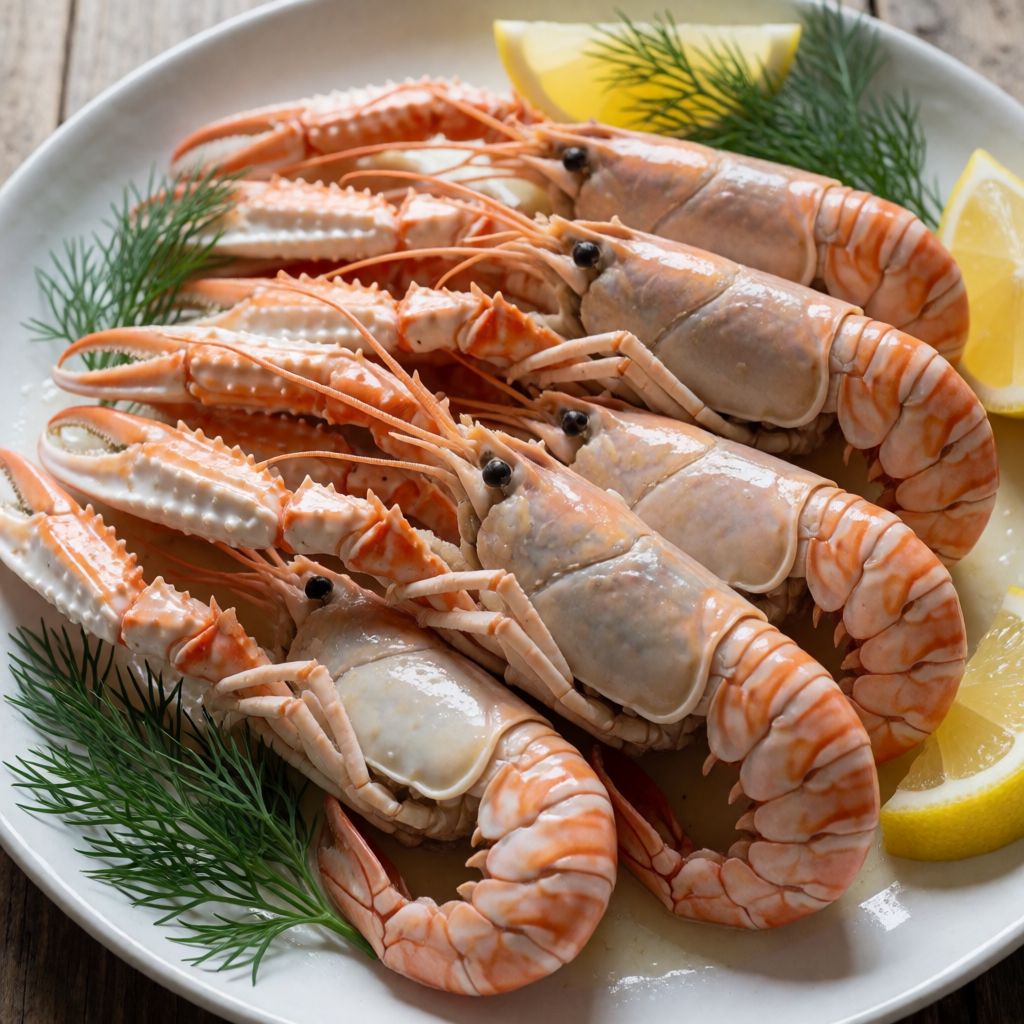
Whole Boiled Langoustines
A simple way to cook langoustine tails, served warm with good bread, butter and mayonnaise.
Labels are worked out automatically from the ingredients and can be wrong. Check the packaging if it matters to you.
Ingredients
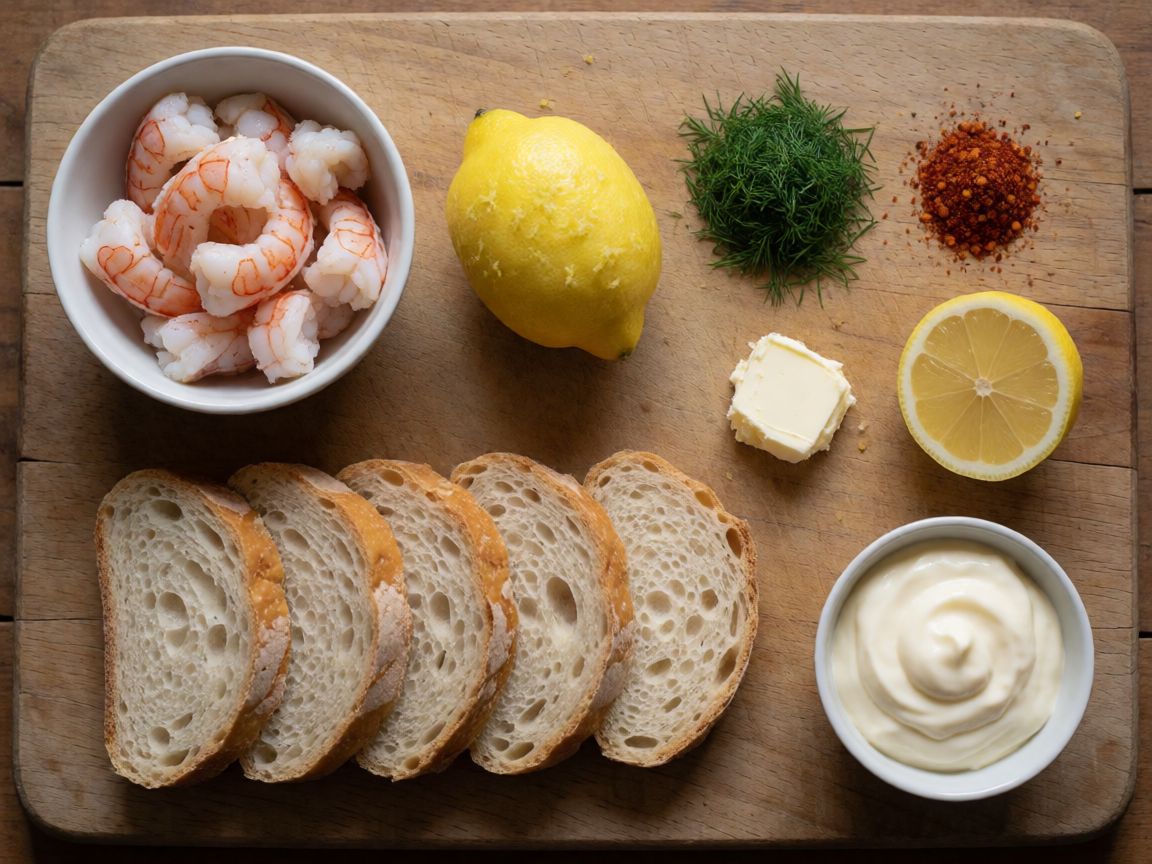
- 1 kg Langoustine tails
- 2 l Water
- 1 pcs Lemon zest and juice
- 1 bunch Dill fresh
- 1 pinch Cayenne pepper
- 4 tbsp Salt
- 1 pinch Black pepper freshly ground
- 4 pcs Bread e.g. sourdough slices
- 50 g Butter
- 1 pcs Lemon cut into wedges
- 100 ml Mayonnaise









Steps
Bring a large pot of water to the boil. Once boiling, add the lemon juice, lemon zest, dill, cayenne pepper, salt and black pepper.
5 minLower the langoustine tails into the barely simmering water, taking care it doesn't return to a full boil — keep the temperature at around 90°C, checking with a thermometer. The langoustines will float to the surface when done, and should stay in the water for a maximum of 1-2 minutes.
2 minDrain the water and serve the hot, steaming langoustines immediately. If serving after a short wait, be careful to take the langoustines off the heat and out of the boiling water as soon as they rise to the surface.
Serve the langoustines on a large platter with good bread, butter, mayonnaise or aioli, and lemon wedges to squeeze over the delicious seafood.
Langoustines are prawns that went to a good school — same family, same sweetness, but the tail meat is denser, the flavour closer to lobster, and that's exactly why people overcook them. Whether this dish works or not is decided in about ninety seconds, in water that is not quite boiling.
The whole point of a langoustine is a tail of muscle that has almost no fat to protect it. Fat forgives; this doesn't. Push it past the point where the protein firms up and it turns from tender to rubbery in the time it takes to answer the phone. So the water here isn't a boiling pot in the usual sense — it's a holding temperature, somewhere just under the boil, where the heat is gentle enough that the langoustine cooks through before it seizes up.
Some say you boil seafood hard, the way you'd boil pasta. No — because a rolling boil cooks the outside of the tail faster than the heat can reach the centre, so by the time the middle is done the outside is already tough. A bare simmer lets the heat travel evenly, and the signal that it's ready isn't a clock, it's the langoustine itself rising to the surface — that's the moment to watch, not a number of minutes.
This isn't a fiddly restaurant dish dressed up as home cooking. It's closer to a Sunday tea with better protein: bread, butter, something creamy to dip in, lemon to cut through the richness. The whole performance is in the pot, for ninety seconds.
The lemon, dill and cayenne going into the water before the langoustines aren't a marinade — the langoustines are in there for two minutes, nothing has time to marinate. What they're doing is seasoning the water itself, so the heat carries flavour into the tail as it cooks, the way stock seasons rice. Zest rather than just juice because the oils in the peel carry the lemon smell that the juice alone doesn't — juice gives sourness, zest gives scent. If you've no fresh lemon, a few drops of good vinegar and a strip of any citrus peel will do roughly the same job, though it's not quite the same thing.
Four tablespoons of salt in two litres sounds like a lot until you remember this is meant to taste faintly of the sea, not of a soup. It's closer to brine than seasoning — it firms the texture a touch and stops the tail tasting flat, the way unsalted pasta water leaves pasta tasting of nothing but starch.
On buying langoustine tails: look for ones that smell of the sea and nothing else — ammonia in the smell means they're past their best, no amount of cooking fixes that. If you're nowhere near a fishmonger who stocks them, large raw tiger prawns are the honest substitute — same family, same cooking logic, just a slightly less sweet result. Don't reach for langoustine that's already been cooked and frozen for this; you'd be reheating, not cooking, and the whole ninety-second window the recipe is built around disappears.
The bread and butter aren't garnish, they're the other half of the plate. Langoustine meat is lean and a little tight; butter on warm bread gives the fat that the shellfish doesn't have, and mayonnaise does the same job in a cooler, sharper way. This is why the dish reads as a feast rather than a starter for four — you're not meant to eat the langoustine alone.
On the UK hob: a thermometer is the honest tool here, not a guess, because "barely simmering" looks different on every pot and every ring. If you don't have one, watch the water — tiny bubbles breaking gently at the edge of the pot, no rolling motion in the centre — and pull the langoustines the instant they float, not a count of seconds after. Doneness here is something you watch for, not something you time and hope.
Patience is the ingredient most people skip, because the pot looks ready before it is and two minutes feels too short to matter. It's exactly short enough to matter.
·