
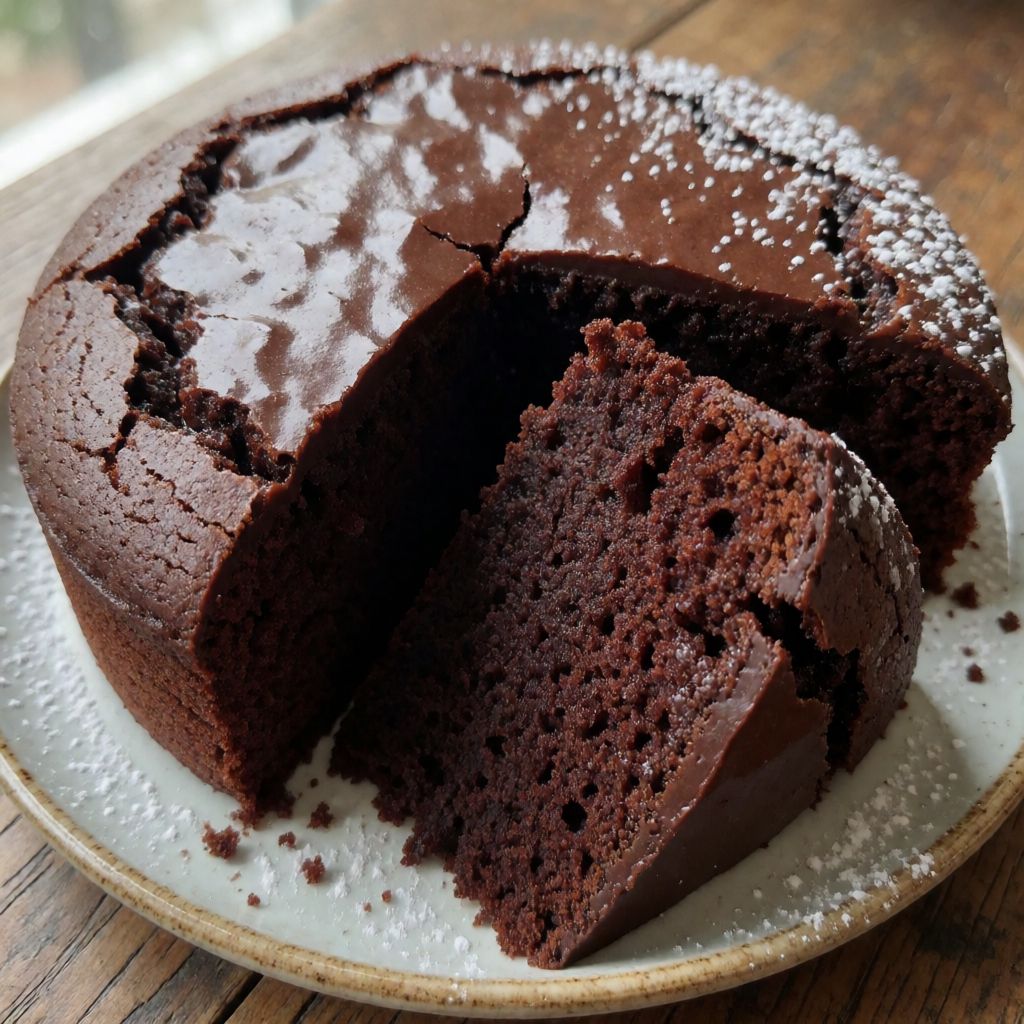
 AI photo
Chocolate Cake
A rich chocolate sponge split into two layers, filled with a chocolate mousse and finished with cream and fresh berries.
Labels are worked out automatically from the ingredients and can be wrong. Check the packaging if it matters to you.
Ingredients
- 150 g Butter
- 50 g Dark chocolate
- 4 pcs Eggs
- 1 pcs Vanilla pod seeds scraped out
- 150 g Caster sugar
- 80 g Plain flour
- 50 g Ground almonds
- 1 tbsp Cocoa powder unsweetened
- 2 tsp Baking powder
- 1 pinch Salt
- 2 pcs Gelatine gelatine leaves
- 2 pcs Egg whites
- 250 ml Double cream
- 125 g Milk chocolate finely chopped
- 3 pcs Egg yolks
- 50 g Caster sugar
- 400 ml Double cream whipped to soft peaks
- 125 g Strawberries
- 125 g Blueberries
- 125 g Raspberries
- 1 bunch Mint fresh















Steps
Melt the butter over low heat, remove from the heat and stir in the chocolate.
5 minSeparate the eggs into whites and yolks. Whisk the whites to stiff, airy peaks.
3 minSlice the vanilla pod lengthways with a knife, scrape out the seeds and mix them with the sugar.
2 minWhisk the vanilla, sugar and yolks until light and fluffy. Fold in the melted butter and chocolate.
3 minMix the flour, cocoa, baking powder and salt. Add to the batter and gently fold in the egg whites, trying to keep the air in.
2 minSpread the batter into a 22cm tin and bake at 170°C for about 40 minutes.
40 minLet the cake cool in the tin, then slice it into two layers once fully cooled.
30 minSoak the gelatine leaves in cold water for 10 minutes.
10 minWhisk the egg whites to stiff peaks. Whip the cream to soft peaks. Melt the chocolate over a bain-marie on low heat.
5 minWhisk the yolks with the sugar until light and fluffy.
3 minSqueeze out the gelatine and melt with 1 tbsp water over low heat. Cool and mix with the egg mixture.
Slowly fold in the melted chocolate. Gently add the cream a little at a time, then fold in the egg whites in batches, keeping the volume of the foam.
3 minPlace the bottom layer in the tin and spread the mousse over it. Chill for 2 hours.
120 minPlace the top layer on the cake. Chill for at least 2 hours.
120 minPipe cream around the sides of the cake with a star-tipped piping bag and decorate the top with berries and mint.
5 min
This is really two cakes wearing one dress. A dense, almost fudgy chocolate-almond sponge underneath, and on top a chocolate mousse set with gelatine instead of just whipped and hoped-for. The ground almonds are doing a job flour alone can't — they hold moisture and stop the sponge going dry and cakey the way a plain Victoria sponge would. What decides whether the whole thing works isn't the baking, which is forgiving, but two separate moments of patience: cooling the sponge fully before you slice it, and chilling the mousse layer properly before you add the lid. Rush either and you get a mess, not a cake.
Some say a chocolate sponge should be moist in the middle, slightly underdone, wobbly when it comes out — no, because that's a brownie, not a cake, and a wobbly middle here means your mousse has nothing solid to sit on. This sponge wants to be properly baked through and then cooled hard, because you're about to slice it horizontally with a knife, and a warm or underbaked cake tears instead of cutting.
Butter and dark chocolate melted together, off the heat, is the fat base of the sponge — melt it low and slow because chocolate seizes and goes grainy if it meets direct high heat or water droplets; a bain-marie habit from the mousse stage later would serve you just as well here if your hob runs hot and uneven. Use a dark chocolate you'd actually eat off the bar — 60-70% cocoa — because this cake has no other source of deep chocolate flavour in the sponge beyond the one tablespoon of cocoa powder, which is really there for colour and dryness-balance, not flavour.
The egg separation and the double-whisking of whites (once for the sponge, once for the mousse) is where most of this cake's lightness actually comes from, not the baking powder — two teaspoons of raising agent on a batter this heavy with butter, almonds and chocolate would barely lift a scone, let alone this. Whisk whites in a bowl with no trace of fat or yolk in it — a single yolk streak and they won't peak — and whisk to stiff but not dry, meaning they hold a point on the whisk without crumbling into clumps when you tap it.
Ground almonds instead of more flour: this is the oldest trick for a cake that needs to stay moist for days without going stale, because almonds carry their own oil and don't dry the way wheat starch does once baked. No ground almonds in the cupboard — ground hazelnuts work almost as well, same oil content, slightly different flavour; desiccated coconut is a worse substitute because it has far less fat and more fibre, drying rather than moistening.
Gelatine leaves, not powder, because leaves bloom (soak) cleanly in cold water and melt without the grittiness powder sometimes leaves if it isn't fully dissolved — soak until genuinely soft and floppy, not just wet, that's the ten minutes doing its work. If you only have powdered gelatine, use roughly the same weight and bloom it in a small splash of cold water first rather than adding it dry to anything warm, or it clumps.
Milk chocolate for the mousse rather than dark is a deliberate contrast against the darker sponge underneath — it also melts more gently and sets slightly softer, which matters for mousse texture; swapping to dark chocolate here isn't wrong but will set firmer and taste more bitter against the same amount of cream and gelatine, so you may want to ease the gelatine back slightly if you do.
Double cream, whipped to soft peaks for the mousse and to proper piping stiffness for the decoration, needs cold cream and a cold bowl — in a British kitchen that usually just means cream straight from the fridge, not sat out while you faff with the chocolate; warm cream won't hold peaks no matter how long you whisk it, it just turns to butter at the edges first.
On the plate and paper napkins question: this cake wants a proper springform or loose-based 22cm tin, because you're unmoulding a cake with a soft mousse layer in the middle, and trying to tip that out of a solid tin onto a plate is how mousse ends up on your worktop instead of between the sponge layers. If you don't have a springform tin, line a solid one heavily with cling film with overhang, and lift the whole thing out by the film — a workaround, not as good, but it works. The fridge time, both two-hour waits, is the one place this recipe genuinely can't be rushed with clever technique; that's not a flaw in your kitchen, it's chemistry setting at its own pace, and no amount of impatience changes it.