
 AI photo
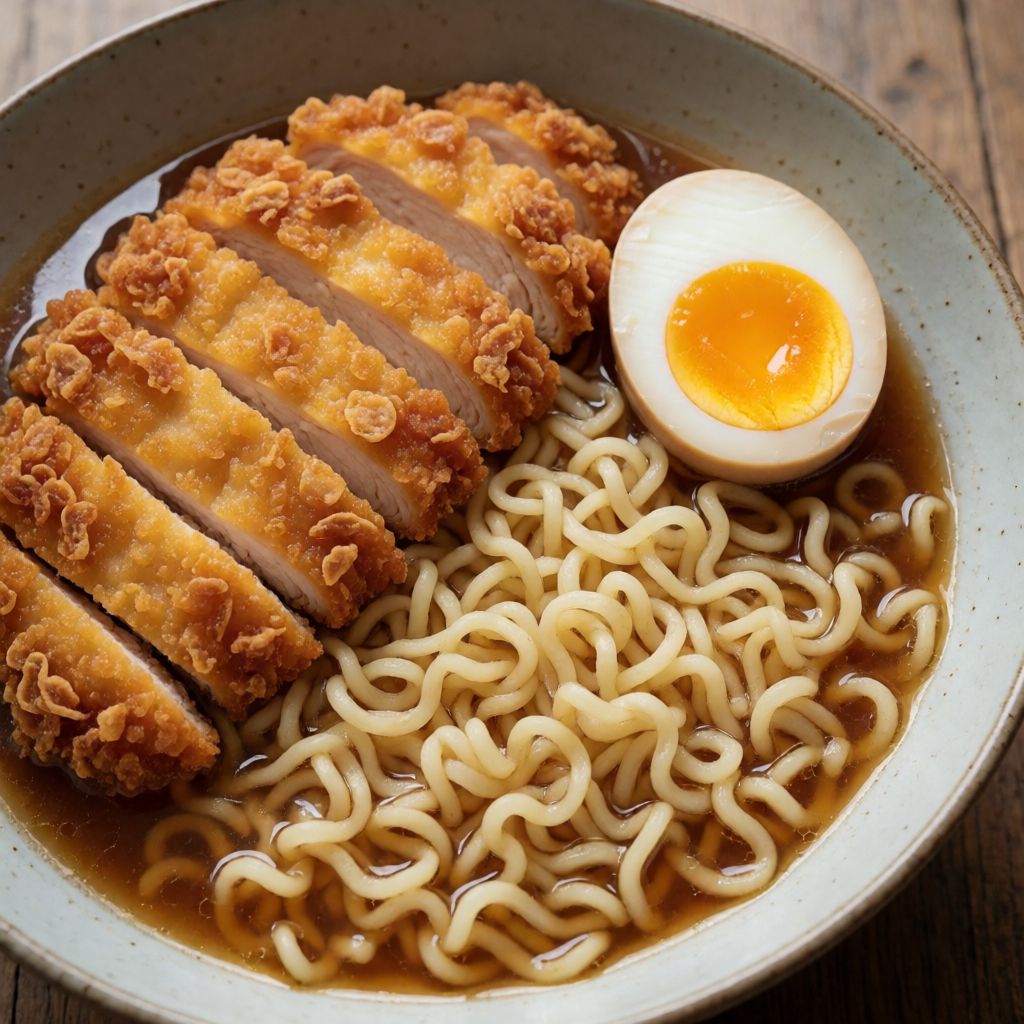
Crispy Chicken Ramen
A warming bowl of ramen noodles with crispy breaded chicken, miso broth, bok choy and a soft-boiled egg.
Labels are worked out automatically from the ingredients and can be wrong. Check the packaging if it matters to you.
Ingredients
- 25 g Sesame seeds
- 200 g Ramen noodles
- 4 pcs Eggs
- 1 pcs Egg beaten
- 400 g Chicken breast
- 1 tbsp Plain flour
- 75 g Panko dried
- 50 ml Sesame oil or another oil for frying
- Salt
- Black pepper freshly ground
- 1.5 l Stock
- 2 clove Garlic crushed
- 2 tsp Ginger finely grated
- 2 tbsp Miso
- 1 tbsp Soy sauce
- 1 tbsp Fish sauce
- 200 g Bok choy roughly shredded
- 2 pcs Spring onion finely sliced
- 1 bunch Coriander finely chopped, fresh
- 1 tsp Chilli flakes
- 1 pcs Lime cut into wedges















Steps
Toast the sesame seeds in a dry pan without oil until fragrant and lightly golden, then set aside.
4 minCook the noodles in lightly salted boiling water, ideally a minute less than the pack says, until tender but with a little bite. Drain and rinse under cold water so they don't stick together.
3 minSoft-boil the eggs in boiling water for 7 minutes. Peel the eggs.
7 minCrispy chicken: coat the chicken breast in plain flour, salt and pepper. Then dip into the beaten egg, and finally coat in panko. Press the panko on gently so it sticks well.
2 minFry the chicken breast in a pan over medium heat in oil for about 6 minutes on each side, until crisp and golden and cooked through.
12 minAdd the stock to a pan together with the ginger and garlic and bring to the boil.
5 minRemove the pan from the heat and stir in the miso paste. Season with soy sauce and fish sauce to taste.
1 minSlice the crispy chicken and divide the noodles, chicken, bok choy, spring onion and coriander between bowls.
2 minPour over the hot miso broth and top with the soft-boiled eggs, chilli flakes and sesame seeds, then squeeze over lime juice.
This is two dishes sharing a bowl, and that's exactly the trick. One is a miso broth that gets its depth from bloomed garlic and ginger, finished — never boiled — with miso stirred in off the heat. The other is a piece of fried chicken that would be happy on its own plate, sliced over the top so it stays crisp instead of turning soft in the soup. Keep them separate until the last second and you understand the whole recipe.
What decides whether it works is heat management in two very different registers. The broth wants a hard boil to pull flavour out of garlic and ginger, then a drop to nothing before the miso goes in — miso is a live fermented paste, and simmering it just cooks the nuance out and leaves you with salty water. Some say you can boil miso in, like a stock cube — no, because that's the one move that throws away what you paid for.
The chicken, meanwhile, needs a hob that behaves, not a number. You're listening for the fry: a steady, confident sizzle, not a violent spatter and not a shy hiss. Golden panko and chicken cooked through at the same moment is the test — cut one piece open if you're not sure, better that than serving pink chicken under a crust that looks done.
Everything else — noodles, eggs, bok choy — is assembly and timing of readiness, not technique. The noodles go in cold water to stop them continuing to cook and clumping into a brick; the egg at seven minutes gives you a soft, jammy yolk, which is the whole point of putting it in a noodle soup rather than a lunchbox.
Start with the stock — 1.5 litres of it, which sounds like a lot until you remember it's feeding four bowls and has to carry the whole dish on its back. Use a stock with some body to it, chicken or a good vegetable one; a thin stock cube broth will taste like miso-flavoured water, because miso is a seasoning, not a flavour engine. Garlic and ginger go in with the stock at a full boil, not a simmer, because that's when their oils actually move into the liquid rather than just sitting on top of it.
Miso itself: the paste should smell savoury and a little sweet, not sharp. White or yellow miso is milder and more forgiving for a first attempt; the darker, longer-fermented kinds are saltier and more assertive, so go gently if that's what's in your cupboard. No miso at all — unlikely in most UK supermarkets now, but if so, a spoon of good stock cube paste plus extra soy will get you a flatter, honester approximation, not a copy.
The chicken breast is the one ingredient where size matters more than any number in the recipe. A thick breast fried whole will crisp outside long before it's cooked inside — that's the actual reason to flatten it slightly or butterfly it if yours is a fat one, not written in the steps but worth knowing. The flour-egg-panko sequence isn't decoration: flour gives the egg something to grip, egg gives the panko something to grip, and pressing the panko on by hand is what stops it falling off in the pan, which is the single most common reason "crispy chicken" comes out patchy and bald in places.
Sesame oil for frying is a flavour choice, not a neutral one — it has its own nutty presence and will perfume the chicken a little, which is fine here because the dish is built around sesame anyway. If the smell bothers you, or you only have one bottle of oil and it's extra virgin olive, use any oil with no smell of its own and save the sesame for the seeds on top, where it actually gets tasted rather than just getting hot.
The soft eggs are not optional texture, they're the dish's one moment of richness cutting through a salty broth — peel them gently, the shell comes away easier under cold running water, which also stops the cooking exactly where you want it. Bok choy goes in raw, under the hot broth; the heat of the liquid itself wilts it in the bowl, which saves you a pan and keeps some bite in the stem. If bok choy isn't in the shop, any quick-wilting green leaf — pak choi's cousins, even shredded spring cabbage — does the same job on the same logic: thin leaf, short cook, crunch kept in the stalk.
Patience here is mostly about sequence, not waiting around: toast the sesame seeds before you start anything else so you're not burning them while watching chicken fry, cook the eggs while the chicken's in the pan, and don't stir the miso in until the broth's off the heat, however tempting it is to just get it all in together. Rushing that one step is the difference between a broth that tastes like something and one that just tastes like soy and salt.