
 AI photo
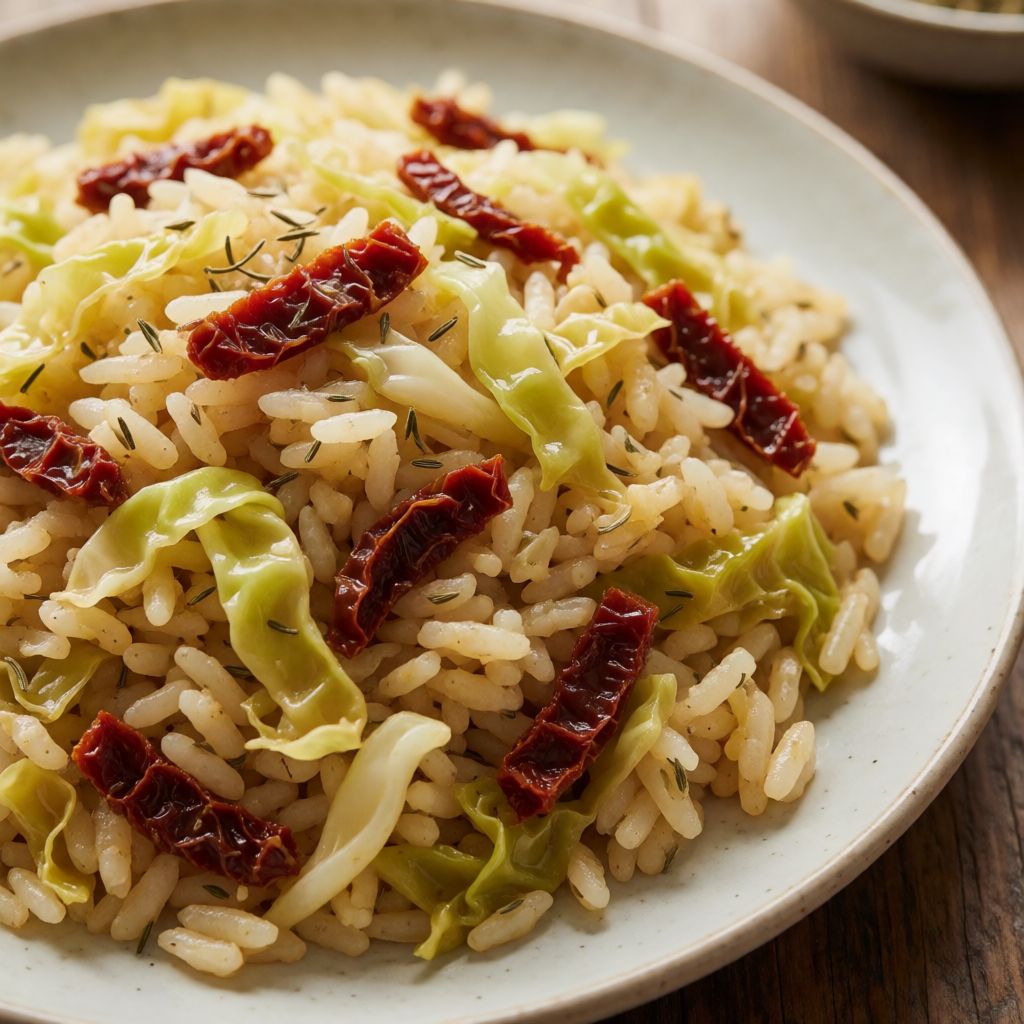
Greek-Style Rice
A hearty bake of spiced chickpea-halloumi patties served over slow-cooked basmati rice with courgette, tomato, spinach, feta and olives.
Labels are worked out automatically from the ingredients and can be wrong. Check the packaging if it matters to you.
Ingredients
- 3 pcs Eggs beaten
- 50 g Plain flour
- 150 g Pointed cabbage finely shredded
- 2 tsp Dried thyme
- 20 g Sun-dried tomatoes finely chopped
- 2 clove Garlic crushed
- 1 can Chickpeas
- 100 g Halloumi
- Salt to taste
- Black pepper to taste, freshly ground
- 4 tbsp Olive oil for frying
- 1 pcs Onion finely chopped
- 3 clove Garlic crushed
- 50 g Sun-dried tomatoes finely chopped
- 1 pcs Courgette coarsely grated
- 800 g Tinned chopped tomatoes
- 300 ml Stock
- 1 tbsp Dried thyme
- 1 tsp Dried rosemary
- 300 ml Basmati rice
- 150 g Spinach
- 100 g Feta
- 80 g Olives
- 1 bunch Oregano fresh
- 1 tbsp Olive oil for frying




















Steps
Combine the eggs, plain flour and shredded pointed cabbage in a bowl, add the thyme, sun-dried tomatoes and garlic, and mix well.
5 minLet the mixture rest for 15 minutes, then mix thoroughly again.
15 minPut the chickpeas into a blender or food processor and pulse coarsely. Add the chickpeas to the mixture along with the finely diced halloumi.
8 minShape into small round patties about the size of a golf ball, oiling your hands as you form them.
5 minPlace the patties on a baking tray lined with parchment and bake in an oven preheated to 175°C (fan) for 15-18 minutes, turning a few times.
17 minPour the oil into a sauté pan and fry the onion, garlic and sun-dried tomatoes for a few minutes over medium heat until soft.
5 minAdd the courgette, chopped tomatoes, stock, thyme, rosemary and basmati rice, and mix well. Cover and simmer gently until the rice is perfectly tender.
23 minStir in the spinach, arrange the Greek vegetable patties over the rice, crumble over the feta and scatter the olives, finishing with fresh oregano.
2 min
This is two dishes sharing a pan's worth of work: a tomato-and-herb rice that cooks itself into tenderness, and a batch of fried-then-baked chickpea-cabbage patties that sit on top like something you'd find at a taverna counter, not because it's "authentic" Greek — it isn't, not really — but because the logic is the same one Greek home cooks use: stretch good vegetables and a little cheese over rice, let the oven do the frying so you're not standing over a pan of hot oil for twenty patties.
What decides whether it works is restraint in two places. First, the rice: basmati wants to be left alone once the lid goes on. Lift it every two minutes to check and you break the steam seal, and the grains on top stay hard while the bottom turns to paste. Second, the patties: the mixture needs its fifteen-minute rest so the flour actually hydrates and the cabbage lets go of a bit of its water — skip that and the patties slump and spread in the oven instead of holding a shape.
Think of this as a one-pan supper built from two separate techniques that meet on the plate. The patties could be a starter on their own with yoghurt; the rice could carry grilled fish instead. Together they feed four properly, with the patties doing the job a protein usually does.
Myth worth killing early: that rice dishes need constant stirring to stop sticking. That's risotto thinking, and basmati isn't Arborio — it doesn't want its starch coaxed out. Stir basmati like risotto and you get a sticky, claggy mess instead of the separate, fluffy grains you're after.
Start with the patty mix, because it's the part with a waiting game built in. Eggs and flour here aren't for richness — they're the glue holding shredded cabbage, chickpeas and halloumi together once heat hits them. The fifteen-minute rest matters for a reason you can feel with your hands: raw flour straight out of the bag is thirsty, and cabbage, even finely shredded, is still mostly water in cell walls that haven't broken down yet. Give it quarter of an hour and the flour pulls in that moisture, the mixture tightens, and when you shape a golf-ball patty it holds its dome instead of oozing sideways on the tray. Rush that step and you'll know it in the oven — flat, cracked discs instead of rounds.
The chickpeas get pulsed, not pureed, because texture is the whole point. Blitz them to paste and you lose the bite that tells your mouth "this is a patty, not a pancake." A few seconds of pulsing, checking as you go, leaves some whole and some broken — that's the texture you want, not a smooth hummus consistency. If you don't own a food processor, a fork and some elbow grease against the side of a bowl does the same coarse job, just slower; patience again, not equipment, is the ingredient.
Halloumi earns its place because it doesn't melt into nothing the way most cheeses do under heat — it holds shape, gives a salty, slightly squeaky counterpoint inside the patty. If you can't find it, a firm feta diced small does a similar job, though it'll crumble more than hold a cube shape; a vegetarian hard cheese that doesn't collapse under heat is really the criterion, halloumi's just the easiest example in a UK supermarket.
Oiling your hands before shaping isn't a fussy chef habit — it's what stops the mixture sticking to your palms and tearing apart as you try to round it off. A domestic oven fan setting at 175°C is gentle enough that the patties cook through without the outside hardening before the inside sets, and turning them partway stops one side drying out while the other stays pale — in a home oven, heat rarely comes evenly from all sides, so you compensate by moving the food, not by trusting the dial.
For the rice itself: onion, garlic and sun-dried tomatoes go in first over a heat where the onion turns translucent and then takes on a little colour at the edges — that's the sugars starting to caramelise, which is where the savoury depth comes from, not from the stock alone. Courgette goes in grated coarsely rather than diced because it needs to more or less dissolve into the sauce as it simmers, adding moisture and a little sweetness without you noticing distinct pieces of courgette on the spoon.
The canned tomatoes and stock together give the rice enough liquid to cook through without turning to risotto — basmati drinks roughly its own volume again in liquid, swelling and elongating as it goes from brittle to properly tender; you'll feel the difference biting a grain rather than needing a timer to tell you. Once the lid's on, the job of the stove is just to hold a gentle simmer, not a rolling boil — boil hard and the liquid evaporates faster than the rice can absorb it evenly, leaving you with scorched bottom and crunchy top at the same time.
Stir the spinach in right at the end, off direct heat if you can manage it, because spinach collapses in under a minute — any longer and it turns from bright green to a dull khaki and loses the fresh, slightly mineral bite that's doing real work against the sweetness of the tomato sauce. Feta crumbled on top rather than stirred in stays distinct — salty little pockets instead of melting into the sauce, since feta, unlike halloumi, doesn't really melt, it just softens and breaks. If feta isn't to hand, any firm, salty brined cheese that crumbles rather than stretches will do the same job — a hard goat's cheese, for instance.
Olives and fresh oregano scattered at the very end are there for contrast, not cooking — oregano loses its oil and its smell fast once it hits heat, so it goes on raw, torn or whole, right before the dish reaches the table.