
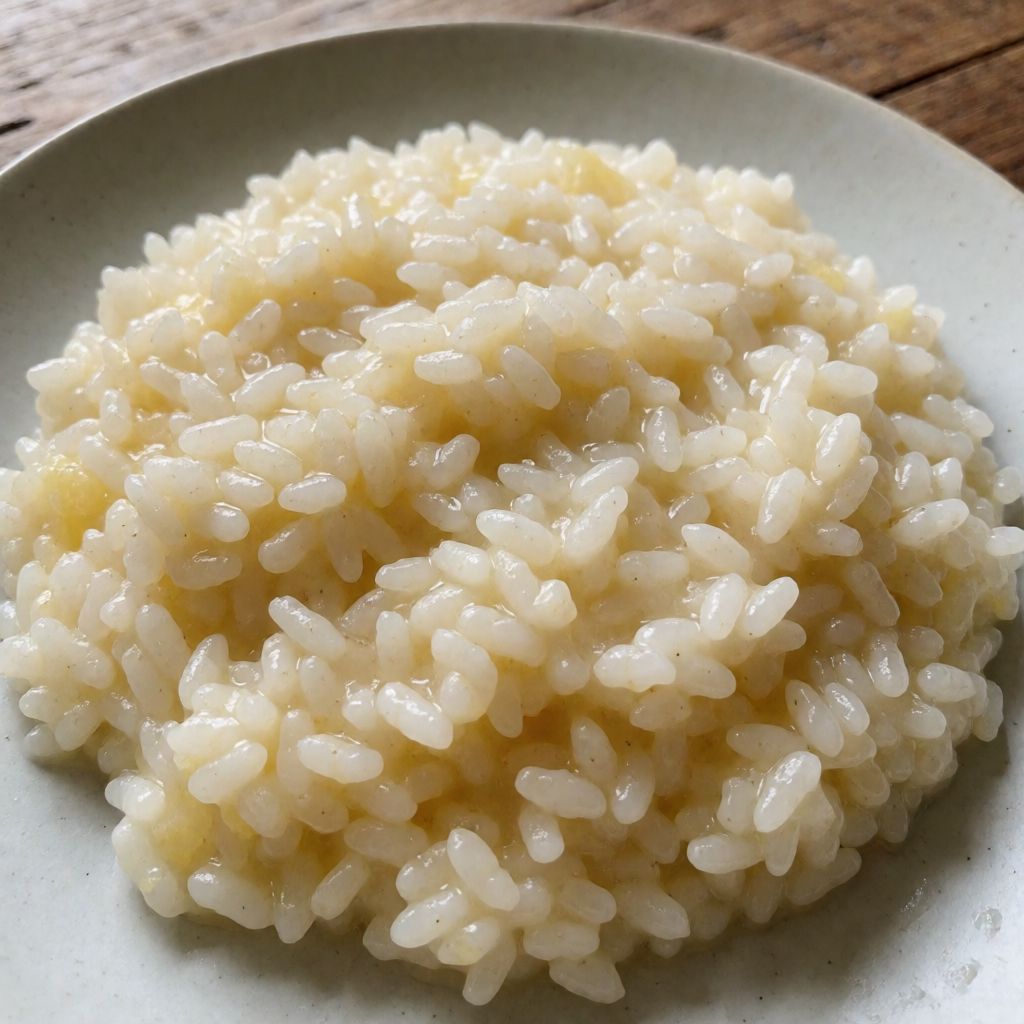
 AI photo
Melon Risotto
A creamy risotto with melon, a surprising sweet-savoury combination.
Labels are worked out automatically from the ingredients and can be wrong. Check the packaging if it matters to you.
Ingredients
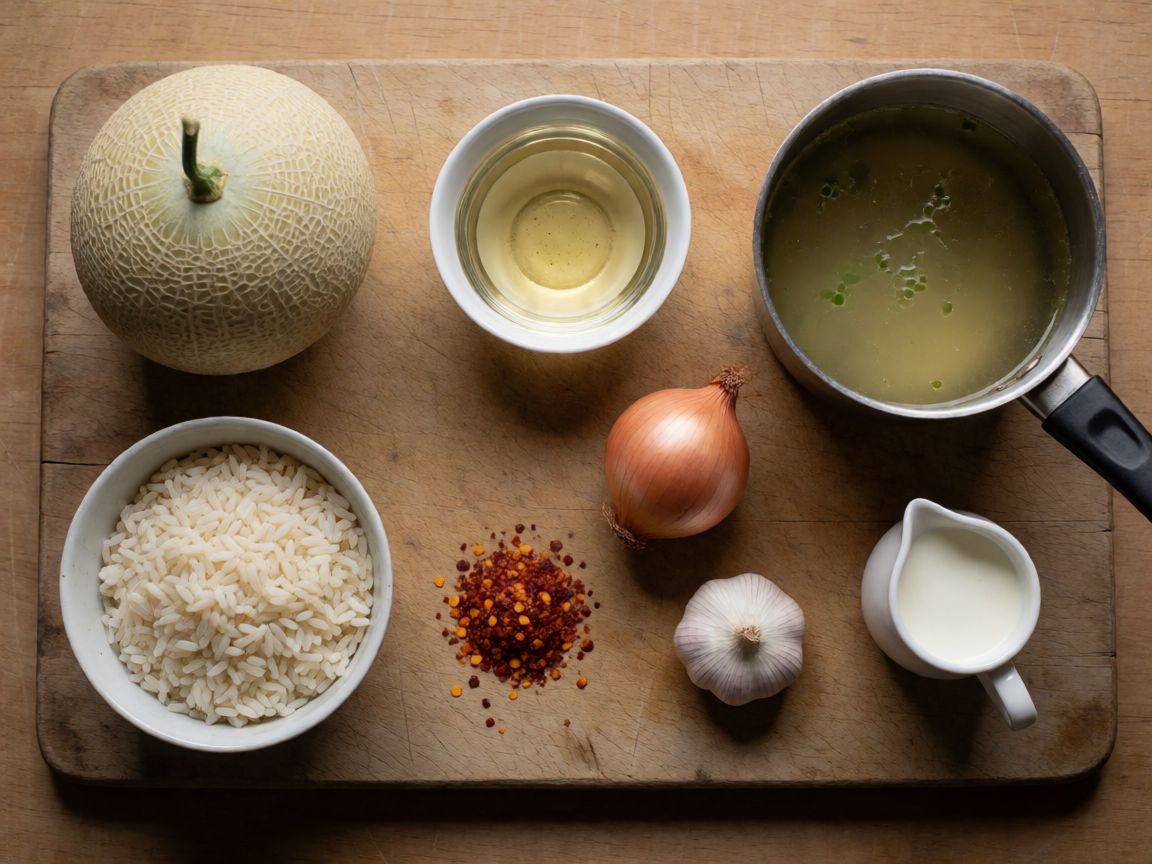
- 1 pcs Melon
- 200 g Risotto rice
- White wine to taste
- Chilli flakes to taste
- Onion to taste
- Garlic to taste
- 1 tbsp Cream
- Vegetable stock to taste
- Olive oil to taste
- Salt to taste









Steps
Peel the melon, cut it into cubes and blitz briefly in a blender.
In a pan with a little oil, fry the onion and garlic until soft.
In a pot, lightly toast the rice, then pour in the white wine and let it evaporate.
Add the melon, mix well, season with salt and add chilli flakes to taste.
Pour in a few spoonfuls of vegetable stock and cook the rice until done, gradually adding the rest of the stock.
15 minOff the heat, stir in a spoonful of cream and mix well — the risotto should stay creamy.
Risotto is not a rice dish — it's a starch-release technique, and once you see that, melon stops looking like a stunt. The rice grain (arborio or carnaroli, round and chalky-cored) has a shell of amylose starch wrapped around it. You bruise that shell by toasting the dry grain in fat first, then you feed it liquid in small doses so the starch leaks out slowly and binds with the water into something glossy, not soupy. Melon is just another liquid — sweeter and more watery than stock, but it behaves the same way once it's blitzed down. The result is a savoury-sweet risotto that leans closer to a Sunday-dinner side than a dessert, something to put next to grilled fish or a plate that's otherwise short on brightness.
What decides whether it works is restraint on two fronts: the wine has to actually evaporate before anything else goes in, and the heat under the rice has to stay low enough that you're simmering, not boiling. Boil it and the outside of the grain cooks before the inside softens — you get a rice that's mushy on the surface and chalky in the middle, no matter how long you leave it. A wide pan helps here more than a tall pot; more surface means the liquid you add spreads thin and gets absorbed evenly instead of pooling and drowning one side of the grains.
The onion and garlic go in first and cook until soft, not coloured — this is a base, not a fry-up. Colour means Maillard browning, which brings bitterness and a roasted note that fights the melon's sweetness rather than supporting it. You want them translucent, collapsed, giving up their own moisture quietly. A knife-point of garlic burning in the pan is the one thing that will ruin this dish outright and can't be fixed later, so keep the fat under it, not the heat under a dry pan.
The rice is the one ingredient you can't improvise on. Arborio or carnaroli both carry a starchy core that survives the slow liquid feed and still holds its shape — a long-grain basmati or jasmine rice, built to stay separate and fluffy, will just turn to paste here, because it doesn't have that amylose reserve to release. If you can't find risotto rice, that's genuinely a different dish, not a substitution.
White wine serves one function: acid. It cuts through the fat from the onion stage and stops the dish tasting flat before the sweetness of the melon arrives. If you don't drink wine or don't have any open, a squeeze of lemon juice added at the same point does the same acid job, though you lose the slight sourness-into-sweetness turn that wine gives as it cooks off. Either way, let it reduce to nothing in the pan before you add liquid — that smell of raw alcohol disappearing is your cue, not a timer.
Vegetable stock is there to season and to carry the starch — use what you'd use for a Sunday gravy's veg water, or a cube dissolved in hot water if that's what's in the cupboard. It should taste pleasant on its own, slightly salted, because the rice absorbs whatever you give it and gives nothing back. Add it a few spoonfuls at a time, letting the rice drink each addition down to nearly dry before the next — this is the actual mechanism of risotto, not a stirring ritual. Rush it by dumping all the stock in at once and you boil the rice in a lake instead of coaxing starch out of it.
Chilli flakes earn their place because melon sweetness without heat reads as dessert; a little capsaicin resets your tongue so the dish tastes savoury again. Add it early with the salt, not as a garnish, so it has time to bloom into the liquid rather than sitting as raw dots on top.
The cream at the end is off the heat, deliberately. Cream left on direct heat for too long can split — the fat separates from the water and you get little oily beads instead of a silky sauce. Stirred in after the pan is off the burner, it just rounds out the starch-thickened liquid into something glossier, the final "all'onda" wave that good risotto should have when you tilt the pan. If you're out of cream, a small knob of cold butter stirred in the same way does a similar job, though it leans the dish savoury rather than silky.
Patience is the real ingredient missing from most risotto failures. Twenty minutes isn't a lot, but it's twenty minutes of actually watching the pan — not stirring maniacally, not walking off for ten — and feeling when the grain stops being chalky and starts being just firm. That's doneness: bite one grain, feel for a tiny resistance at the centre, not a crunch and not a smear.