
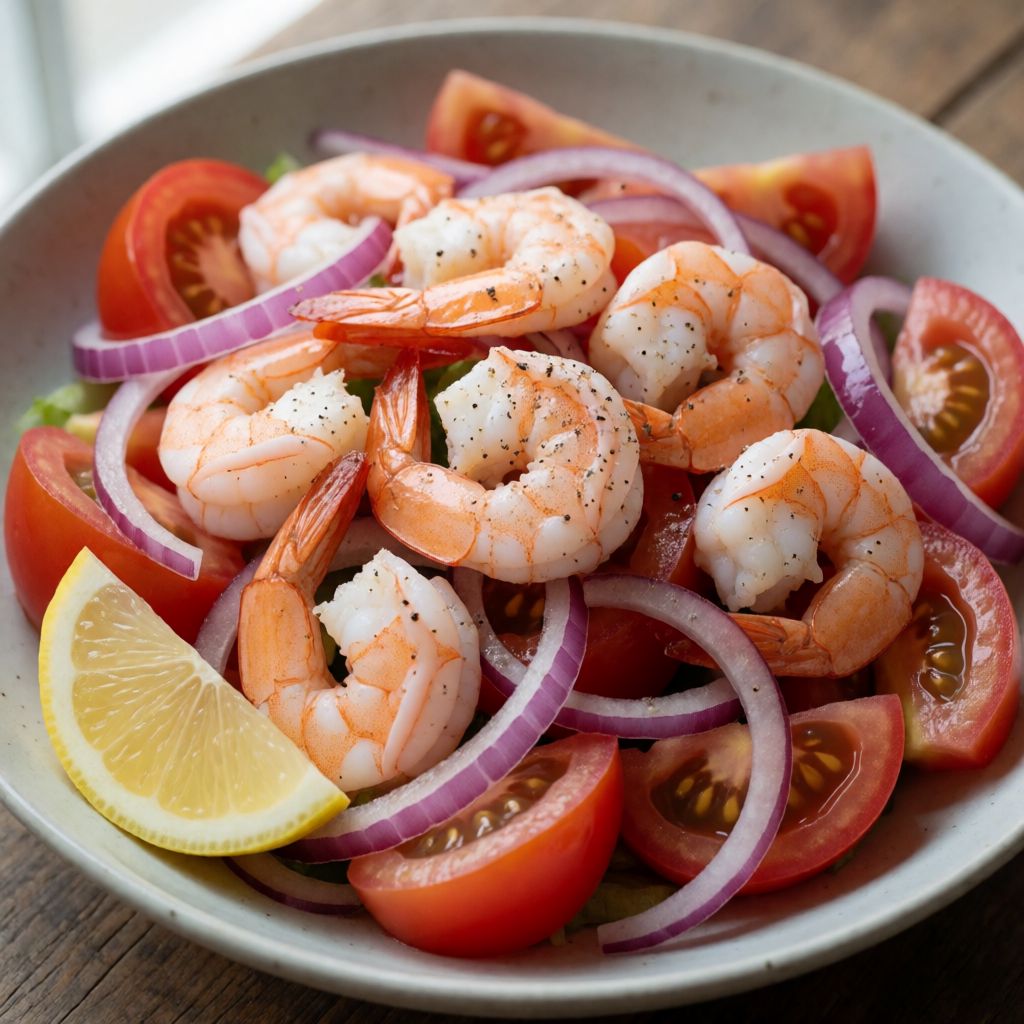
 AI photo
Prawn Salad
A light, fresh salad of prawns with tomato, red onion and a lemon dressing.
Labels are worked out automatically from the ingredients and can be wrong. Check the packaging if it matters to you.
Ingredients
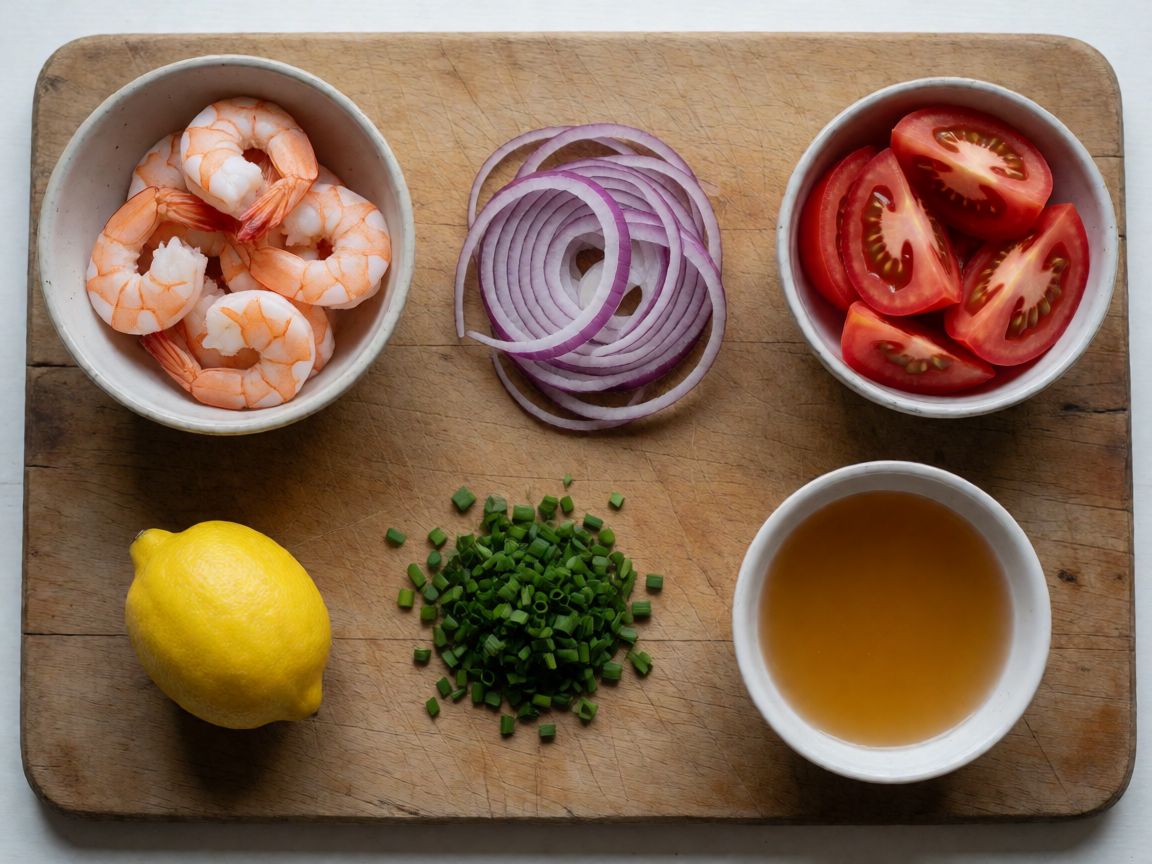
- 800 g Prawns
- 1 pcs Red onion thinly sliced
- 200 g Tomato cut into wedges
- Salt to taste
- Black pepper to taste
- 1 pcs Lemon for juice
- 1 tbsp Olive oil
- Chives to taste, roughly chopped
- Apple cider vinegar to taste









Steps
Boil the prawns in water with apple cider vinegar until cooked through (63°C)
Drain and cool the prawns, peel off the shells and arrange on a plate
Add the tomato wedges and thinly sliced red onion
Dress with an emulsion of olive oil, lemon juice, salt and black pepper
Add the roughly chopped chives
Chill in the fridge for 60–120 minutes before serving
90 min
A prawn salad lives or dies on one number: 63°C. Not "cook the prawns till they're pink" — pink happens long before the prawn is actually right, and it carries on happening long after, by which point the flesh has gone tight and squeaky, like eating an eraser. Prawn muscle is short-fibred and has almost no connective tissue to melt and soften it, unlike a bit of stewing beef — so there's no slow-cooking your way out of a mistake here. Past a point, every extra degree just wrings more water out of the protein. You're not cooking the prawn so much as stopping at the exact moment it's cooked.
Some say — no, because — you don't need to time it. "Three minutes for prawns" is a myth that assumes every prawn is the same size, which they never are. A small shelled prawn is done the moment the water comes back to a simmer; a big tiger prawn in its shell needs real minutes. The honest cue is the curl and the colour change: raw prawn is translucent and limp, greyish; cooked prawn is opaque white through the middle, with a tight, even "C" curve — if it's curled into a full circle, you've gone past it and it's already toughening. A thermometer in the thickest one removes the guesswork, but even without one, cut a prawn in half and look: opaque to the centre, no glassy core, and you stop right there.
Prawns: fresh if you can get them, but frozen raw prawns are genuinely fine here and often better than "fresh" supermarket ones that were frozen on a boat and thawed for display anyway — just thaw them slowly in the fridge, not under a tap, or you'll flush out moisture and flavour before they ever hit the pot. Shell-on keeps more flavour in the poaching water and protects the flesh, shell-off is faster and less washing-up; either works, it's a trade of convenience against taste, not right against wrong.
Red onion is sliced thin for a reason beyond looks: raw onion this thin wilts slightly in the acid of the dressing over the chilling time, taking the rawest bite off it without you having to blanch or salt it separately. A white or shallot works if that's what's in the fridge — just expect a sharper note, shallot being gentler, white onion being harsher.
Tomato wedges, not diced — wedges hold their shape and don't flood the plate with seed-juice the way a dice does once salt hits them. Any ripe, firm tomato does the job; in a British winter when tomatoes taste of water and ambition, cherry tomatoes halved will usually give you more flavour for your money than a big "beef" tomato that's been in a lorry since Spain.
The dressing is an emulsion, which just means oil and lemon juice held together rather than sitting in separate puddles — whisk or shake them hard enough and the acid breaks the oil into droplets small enough to stay suspended for a few minutes, long enough to coat the plate evenly instead of pooling. Olive oil here wants to taste of something; if yours is flavourless, any neutral oil with no smell of its own does the carrying job just as well — sunflower, rapeseed — you're just losing the olive note, not breaking the dish. Lemon is both acid and brightness; cider vinegar can stand in for the juice in a pinch, though you lose the citrus perfume, which is most of why lemon's there in the first place.
Chives go in roughly chopped and late, because fine herbs like this lose their colour and sharpness fast once cut — chop them too early and by the time the salad's chilled, they've gone dull and a bit grassy instead of fresh and oniony.
The chill — an hour and a half, give or take half an hour either way — is doing real work, not just cooling the plate down for a hot day. It's giving the onion time to soften in the acid, the dressing time to properly meet the tomato and prawn rather than sit on top of them, and the flavours time to settle into each other instead of tasting like four separate things on a fork. Skip the chill and you've made the same ingredients, but not the same salad. That's patience as an ingredient, and there's no substitute for it — you can't salt your way to the effect that time gives you for free.
In a British kitchen, a wide pan and a hob that doesn't always hold a steady simmer is no obstacle here — you're not braising for hours, you're bringing water to a bare bubble and watching a handful of prawns for a couple of minutes. A plate and cling film does the job of a lid for chilling in the fridge just as well as any dedicated container.
·