
 AI photo
Smoked Salmon Sushi Rolls
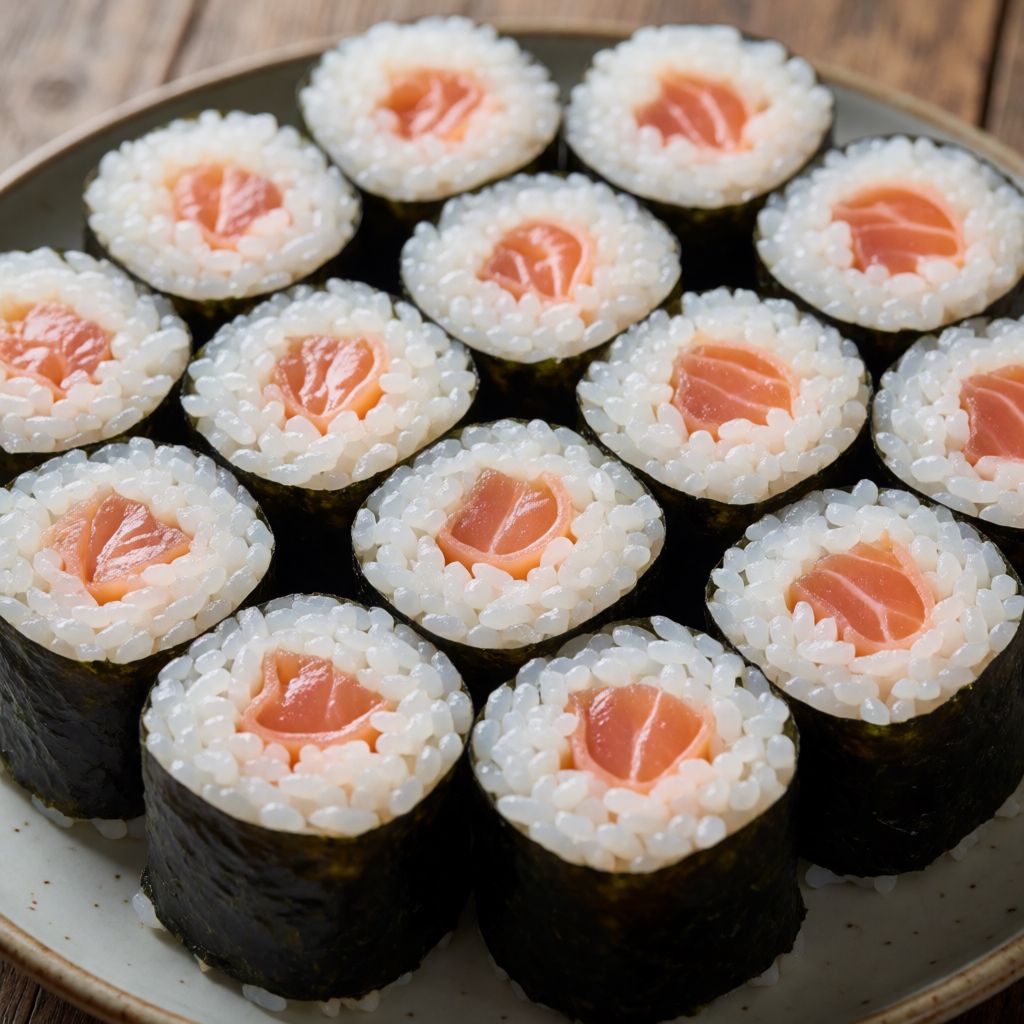
A fresh roll of sushi rice, smoked salmon, salad leaves and garlic cream cheese, sliced and served with wasabi.
Labels are worked out automatically from the ingredients and can be wrong. Check the packaging if it matters to you.
Ingredients
- 250 g Sushi rice
- 1 tsp Rice vinegar or apple cider vinegar
- 0.5 tsp Caster sugar
- Salt
- 5 pcs Nori sheets
- 100 g Smoked salmon
- 125 g Salad leaf mix
- 100 g Garlic cream cheese
- 1 bunch Chives







Steps
Cook the rice following the pack instructions a few hours before you need it.
Let the rice cool to room temperature (not fridge-cold).
Lay a sheet of nori on a bamboo mat and spread a portion of rice over it, pressing gently with your fingers into an even layer.
In the centre of the rice, lay the salad leaves, salmon, garlic cream cheese and chives, roll the sushi up tightly and slice into pieces with a sharp knife.
Serve with wasabi, soy sauce and pickled ginger.
This isn't really sushi in the Edo sense — it's a roll that uses nori and rice as a wrapper for a deli-counter filling: smoked salmon, cream cheese, salad leaves. Think of it as the sushi-shaped cousin of a smoked salmon sandwich, and it works for exactly the same reason a good sandwich works: contrast of cold, salty, creamy and crunchy, held together by something starchy.
What decides whether it holds together is the rice, and specifically its temperature when you spread it. Hot rice steams the nori from underneath and turns it leathery and impossible to seal — that's the defect, and the fix is simple: let the rice drop to room temperature before it ever touches the sheet. Fridge-cold is the opposite problem — the starch stiffens, the grains stop gripping each other, and the roll falls apart at the first cut. Room temperature is the narrow window where the rice is still tacky enough to stick to itself but not so warm it cooks the wrapper.
Some say you need a special "sushi rice cooker" or the roll will fail. No — you need rice that's been seasoned with vinegar, salt and a touch of sugar while warm, so the grains absorb it, and then given time to cool and firm up. The rice cooker just automates a pan you could watch yourself; it's not magic, it's consistency.
Patience here isn't poetic — it's structural. Rushing the cooling is the single most common reason home rolls collapse into a bowl of deconstructed sushi on the plate.
Sushi rice itself is a short-grain variety bred to be sticky — high in a starch called amylopectin, low in the amylose that makes long-grain rice fluffy and separate. That stickiness is the whole point: it's the glue. Don't swap in basmati or a long-grain "easy cook" rice thinking rice is rice — it won't bind, and your roll will shed grains like a bad haircut.
The vinegar, sugar and salt aren't there for a sharp flavour hit on their own — in the amounts given they're subtle, there to season the rice so it tastes of something even on its own, and the acid also firms the starch slightly as it cools, helping the grains hold shape. Rice vinegar is traditional because it's mild; cider vinegar is the honest substitute because it shares that same gentle sourness rather than the harsher bite of malt or white vinegar, which would fight the fish.
Nori is dried seaweed, pressed into sheets the way paper is pressed from pulp — it's a preservation trick turned into packaging, cheap and stable for months, which is why it became the default wrapper rather than something fresh. Buy it in sealed packs and keep it sealed until you use it: it picks up moisture from the air and goes soft and chewy rather than giving you that initial crackle-then-give bite.
Smoked salmon here is doing the job raw tuna or fish would do in Japan — a cured protein that doesn't need cooking, sliced thin enough to roll. Use cold-smoked salmon, not hot-smoked (which flakes into chunks rather than folding into a layer). If you can't get it, a well-cured gravadlax or even thinly sliced smoked trout does the same structural job: thin, flexible, already seasoned by the smoke and salt.
Garlic cream cheese is the un-Japanese bit, and also the bit that makes this recipe workable in a flat with no sushi training — it's doing the creamy, rich counterpoint that avocado or mayo-based fillings do in Western rolls, and it also acts as a bit of extra glue holding the filling together when you cut. Any full-fat soft cheese with a mild garlic or herb flavour will do the same job; plain cream cheese plus a crushed clove works if that's what's in the fridge.
The salad leaves and chives are there for crunch and a clean, grassy note against all that smoke and fat — any mix of lettuce and a mild allium works, the rule isn't "this leaf" but "something raw and crisp that won't wilt and go watery before you eat it."
Rolling tight with a bamboo mat, then cutting with a sharp wet knife rather than sawing, matters for the same reason slicing a terrine matters: a dull or dry blade drags the filling instead of parting it cleanly, and you get a squashed oval instead of a round disc. Wipe the blade between cuts — that's the trick nobody mentions, and it's the difference between neat rounds and a plate of rice rubble.