
 AI photo
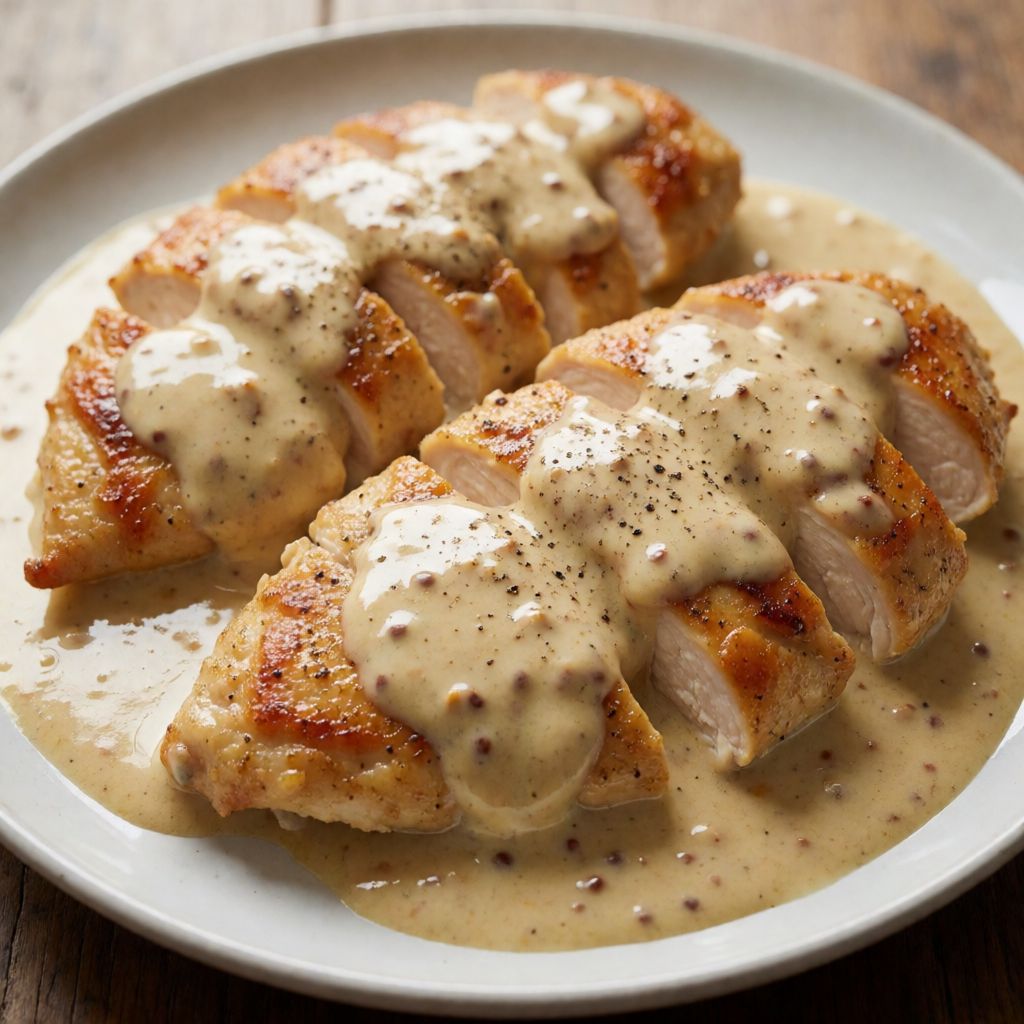
Chicken in Creamy Mustard Sauce
Pan-fried chicken breast in a creamy mustard sauce with crispy bacon, served with rice and warm green beans.
Labels are worked out automatically from the ingredients and can be wrong. Check the packaging if it matters to you.
Ingredients
- 25 g Plain flour
- 600 g Chicken breast
- 25 g Butter for frying
- 1 tbsp Olive oil for frying
- Salt
- Black pepper freshly ground
- 75 g Bacon sliced
- 1 pcs Onion finely chopped
- 1 clove Garlic crushed
- 250 ml Double cream
- 1 tbsp Cornflour
- 100 ml Stock
- 100 ml Wine
- 2 tbsp Wholegrain mustard
- 1 tbsp Dijon mustard
- 50 ml Tarragon finely chopped
- 300 ml Basmati rice cooked according to pack instructions
- 400 g Green beans frozen
- 0.5 pcs Lemon
- 1 tbsp Hemp seeds
- 1 tsp Olive oil




















Steps
Cook the rice according to the pack instructions.
18 minMix the plain flour with salt and pepper and coat the chicken. Fry the chicken in a pan with butter and olive oil over medium heat for 3–4 minutes on each side, until golden brown.
4 minSet the chicken aside on a plate, covering with a bowl.
2 minWipe the pan and fry the bacon until crisp, adding a little oil if needed. Place the bacon on a paper towel, then fry the onion in the bacon fat until soft.
5 minPour in the white wine and let it come to a boil. Stir the cornflour into the cream and add it to the pan along with the stock, wholegrain mustard and Dijon mustard. Bring to a boil, season with tarragon, salt and freshly ground black pepper.
3 minReturn the chicken and the chopped crispy bacon to the sauce in the pan and finish cooking the chicken in the hot sauce.
Bring salted water to a boil and add the beans. Cook for 2–3 minutes, then drain and rinse the beans with ice water in a sieve to stop cooking. Let drain.
2 minMix the beans with olive oil, salt, freshly ground black pepper, a little lemon juice and grated lemon zest. Serve sprinkled with hemp seeds.
Serve the rice with the chicken in creamy mustard sauce and the warm beans.
This is a pan dish pretending to be a sauce dish, and the difference matters. The chicken is not the point — it's a vehicle for cooking off flour, which is the actual first act of the sauce. Coat the breast in seasoned flour not to "seal in juices" — that's an old kitchen tale, flour does nothing to stop moisture escaping, meat is not a bag — but because a dusted surface browns in patches and ridges that the cream sauce later grips onto. A naked breast in a pan slides in its own sauce; a floured one holds it.
What decides whether this works is restraint with the cream. Double cream plus cornflour plus wholegrain and Dijon mustard is a sauce that wants to split or go gluey if you rush it. Cornflour needs heat to swell and thicken — that's its one job — so you bring it to a boil deliberately, not nervously, and you let the wine boil down before the cream goes anywhere near it, because alcohol and cold dairy meeting over low heat is how you get a sauce that looks curdled and tastes of raw wine.
The bacon is not garnish, it's the fond. Frying it first and cooking the onion in its fat means the onion carries smoke into the sauce before the cream arrives — this is why you don't wash the pan between steps, you wipe it. Scrub it clean and you've thrown away the one ingredient that was free.
Chicken breast is the right cut here because it cooks fast and takes no chewing-through — this is a weeknight dish wearing a bit of French-bistro clothing, not a Sunday roast. If you only have thighs, use them; they forgive a slightly longer simmer in the sauce where breast punishes you for it by drying out. Bone them yourself or ask the butcher, it's not a big ask.
Butter and olive oil together in the pan is an old trick with a real reason: butter alone burns its milk solids below the temperature you need for a proper brown crust, oil alone browns fine but tastes of nothing. Mixed, the oil raises butter's effective ceiling and the butter gives flavour the oil can't. Any neutral oil with no smell of its own does the oil's job — sunflower, a mild rapeseed — olive oil is just what's usually already open on a British worktop.
The bacon should be the stuff sold as "bacon lardons" or streaky, sliced thin — you want rendered fat, and a thick back-bacon rasher gives you chew instead of crisp shards. If you've only got back bacon, slice it thin yourself.
Two mustards, not one, because they do different jobs: wholegrain gives you the pop of whole seed and a milder vinegar heat, Dijon is smooth and sharper, carrying real bite into the cream without seeds getting stuck in your teeth. Use all wholegrain if that's what's in the fridge — the sauce will be gentler and a touch grainier, not wrong.
Cornflour stirred into cold cream before it goes anywhere near heat is not fussiness. Tip cornflour straight into a hot pan and it clumps instantly into little dumplings that never dissolve; mixed into cold liquid first, it disperses evenly and only starts thickening once the whole lot comes to a boil. That boil is non-negotiable — raw cornflour has a faintly chalky, uncooked taste, and only heat gets rid of it.
Tarragon is doing something specific that parsley can't: an anise-like sweetness that sits against mustard's sharpness instead of just adding green. Dried tarragon works at a third of the amount, added earlier so it has time to soften in the liquid rather than sitting raw on top.
The lemon and hemp seeds on the beans are there to answer a texture problem, not a flavour one — a creamy, soft main needs one cold, acidic, crunchy thing on the plate or the whole dinner reads as one note. Hemp seeds are a modern addition with no history behind them worth inventing; toasted flaked almonds do the same crunch job if that's what's in your cupboard.
Patience here isn't about long cooking — this is a thirty-minute dish — it's about not rushing the handful of moments that actually need a pause: letting the wine properly reduce before the cream goes in, letting the sauce actually reach a boil rather than a shimmer. Those seconds are where the dish either comes together or separates on the plate.