
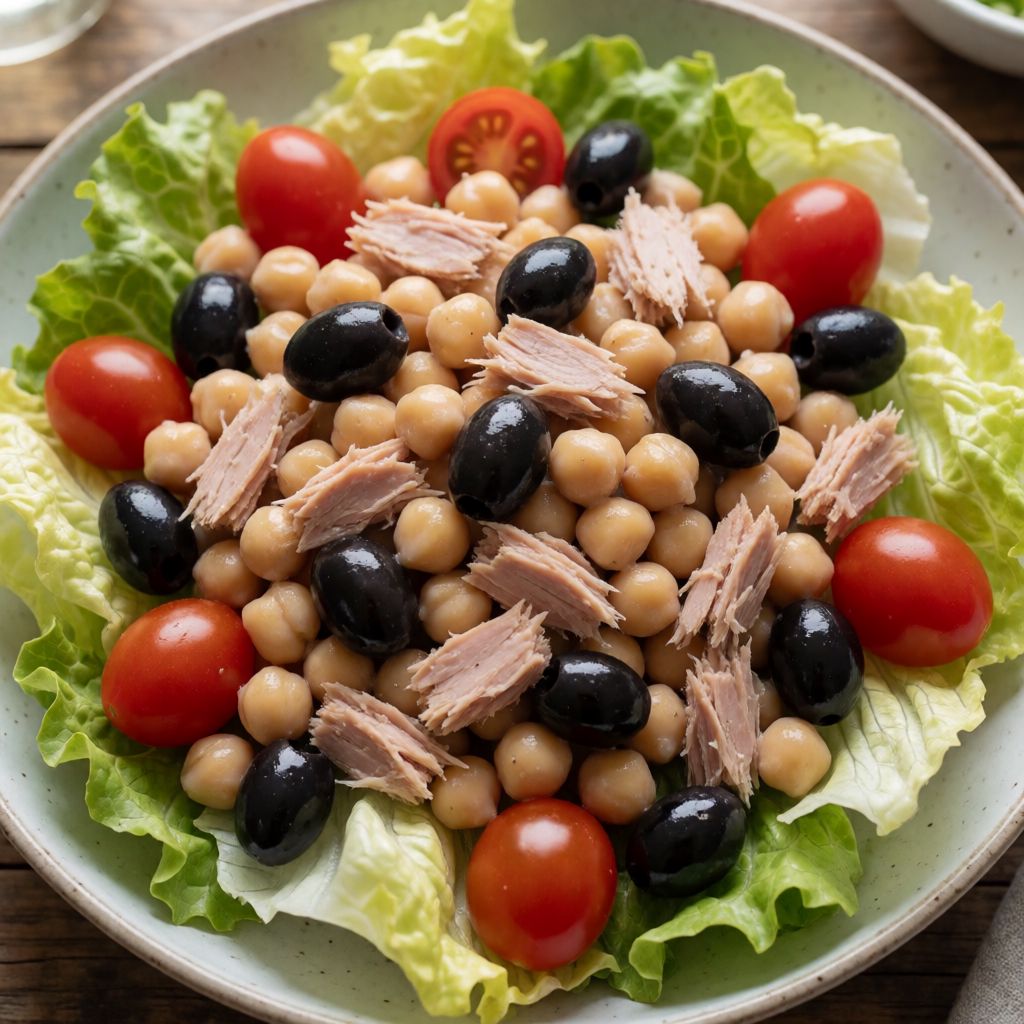
 AI photo
Chickpea, Tuna and Vegetable Salad
A simple, fresh salad of chickpeas, tuna and crisp vegetables, ready in minutes.
Labels are worked out automatically from the ingredients and can be wrong. Check the packaging if it matters to you.
Ingredients





Steps
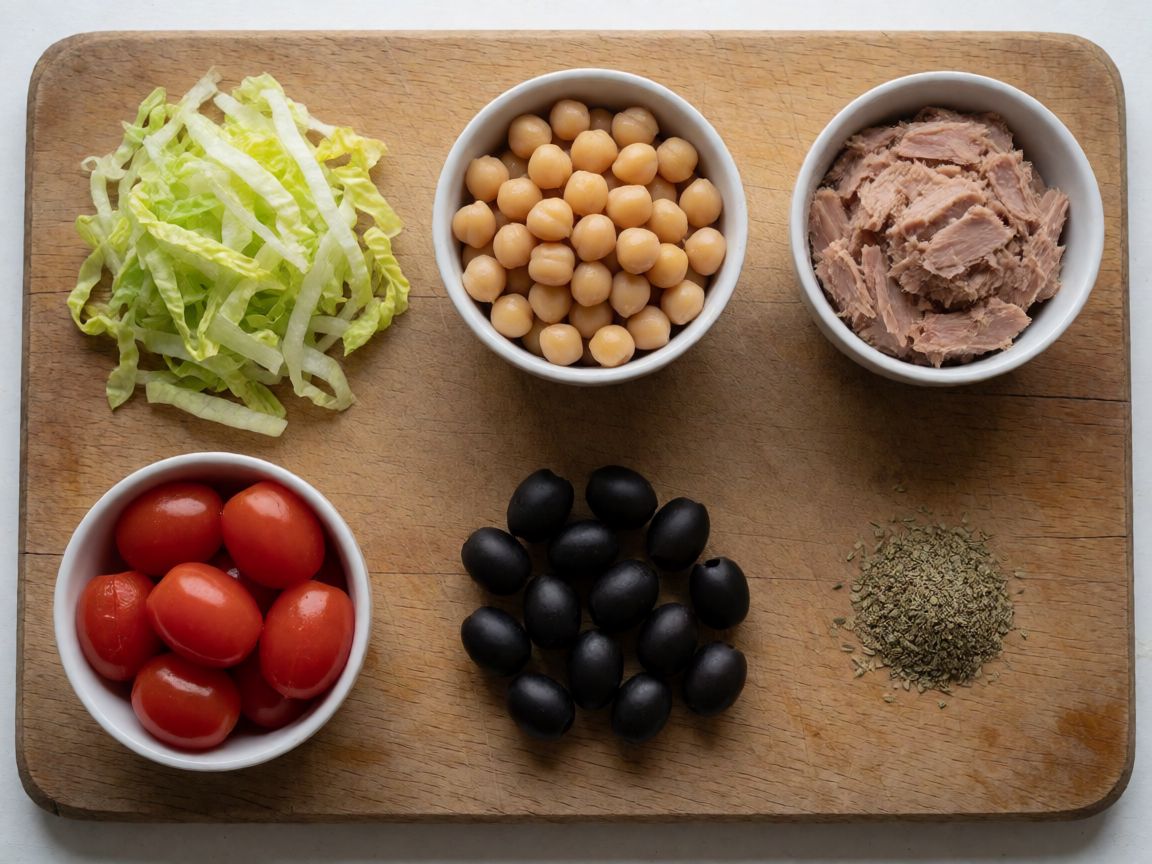
Wash and chop the lettuce (rocket, lamb's lettuce or other leafy greens also work well).
Drain and rinse the cooked chickpeas.
Wash and halve or quarter the cherry tomatoes, and slice the black olives into rounds.
Add the canned tuna, season to taste with salt and oregano, and drizzle with olive oil.
Toss everything together and serve.
This isn't really a recipe, it's an assembly — and that's exactly where it can go wrong. There's no heat to hide behind, no simmering to fix a bad call later. What you put in the bowl is what you eat, raw and unimproved. So the whole thing stands or falls on four things: how dry the chickpeas are, how ripe the tomatoes are, whether the tuna's oil or brine was poured away or kept, and whether you dress it a minute before eating or an hour before.
The chickpea is doing the heavy lifting here, not the tuna. Tuna is flavour and a bit of fat; chickpeas are the bulk, the thing that makes this a lunch and not a side plate of garnish. That's why rinsing them matters more than it sounds: tinned chickpeas sit in a starchy, slightly metallic liquid (the same liquid people now whisk into aquafaba meringues, so don't throw it out if you bake). For a salad, that liquid is dead weight — it dilutes your oil, flattens your salt, and leaves a tinny film on the tongue. Rinse it off under the tap, then shake the sieve properly. A soggy chickpea is a chickpea nobody can season.
Some say tinned chickpeas are "the cheat's version" and dried ones soaked overnight are the real thing. No — dried chickpeas need soaking plus an hour or more of simmering to go from stone-hard to tender without turning to paste, and for a 10-minute salad that's not a shortcut avoided, it's a different dish entirely. Tinned chickpeas are already cooked properly, by someone with a bigger pot than you have on a Tuesday. Use them without guilt.
On the olive oil: this is a dish with almost no cooking to layer flavour onto, so the oil is doing structural work, not just lubrication. Use one you'd be happy to taste on its own — extra virgin, something with a bit of green bite to it — because there's no frying, no reduction, nothing to mask a dull or rancid one. If you don't have olive oil, any oil with no smell of its own will carry the salt and oregano fine, but you lose the one note that actually tastes of something here; a flavourless oil in a salad like this is just grease, so olive oil isn't tradition for tradition's sake, it's the only ingredient doing double duty as seasoning.
Tuna: buy it in oil if you want richness, in water or brine if you want the chickpeas and tomatoes to speak louder. Either way, the draining matters for the same reason the chickpea rinse matters — leftover tin liquid is where "fishy" smell actually comes from, far more than the fish itself. Drain it properly, break it up with a fork rather than leaving it in a solid block, and it'll distribute through the bowl instead of sitting as one lump someone has to fight over.
Lettuce is the one truly flexible ingredient, and the recipe says so itself — rocket, lamb's lettuce, whatever's crisp. The job of the leaf here is textural, a cool crunch against the soft chickpea and the firmer tomato, so pick on texture, not on the idea that one lettuce is "correct". Wash it and, important bit nobody mentions, dry it — wet leaves dilute the dressing exactly the way unrinsed chickpea liquid does, so a proper shake in a colander or a few turns in a tea towel earns its place.
Olives: sliced into rounds rather than left whole, because a whole olive is a surprise bite of concentrated salt, and a sliced one spreads that saltiness evenly through the bowl, meaning you need less added salt overall. Taste before you add more — between the olives, the tuna brine residue, and any salt in the tin liquid you didn't fully rinse away, this salad is often seasoned before you've touched the salt pot.
Oregano here isn't a garnish, it's standing in for the smoky, herby lift a kazan or a grill would normally give a dish like this — there's no cooking step to build that savour, so the dried herb does it instead. A pinch, rubbed between your fingers over the bowl rather than shaken straight from the jar, wakes it up more than the amount suggests.
Patience, oddly, is still an ingredient even in a ten-minute dish: patience to rinse the chickpeas properly, drain the tuna properly, dry the leaves properly, and wait until you're actually about to eat before you dress it. None of that takes long. All of it is the difference between a salad and a bowl of wet ingredients that happen to be in the same place.