
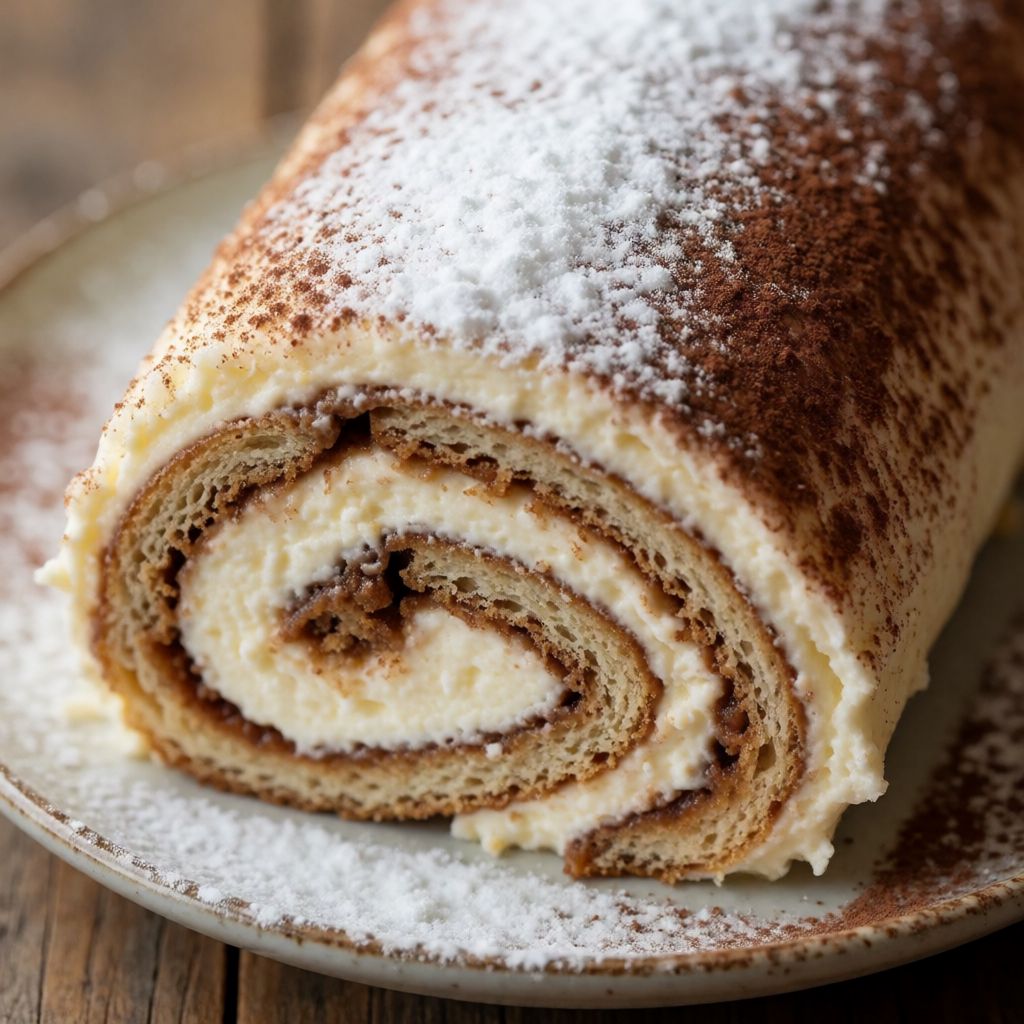
 AI photo
Tiramisu Roll: A Quick Twist on the Classic Dessert
A quick tiramisu roll, a speedy alternative to the classic dessert.
Labels are worked out automatically from the ingredients and can be wrong. Check the packaging if it matters to you.
Ingredients
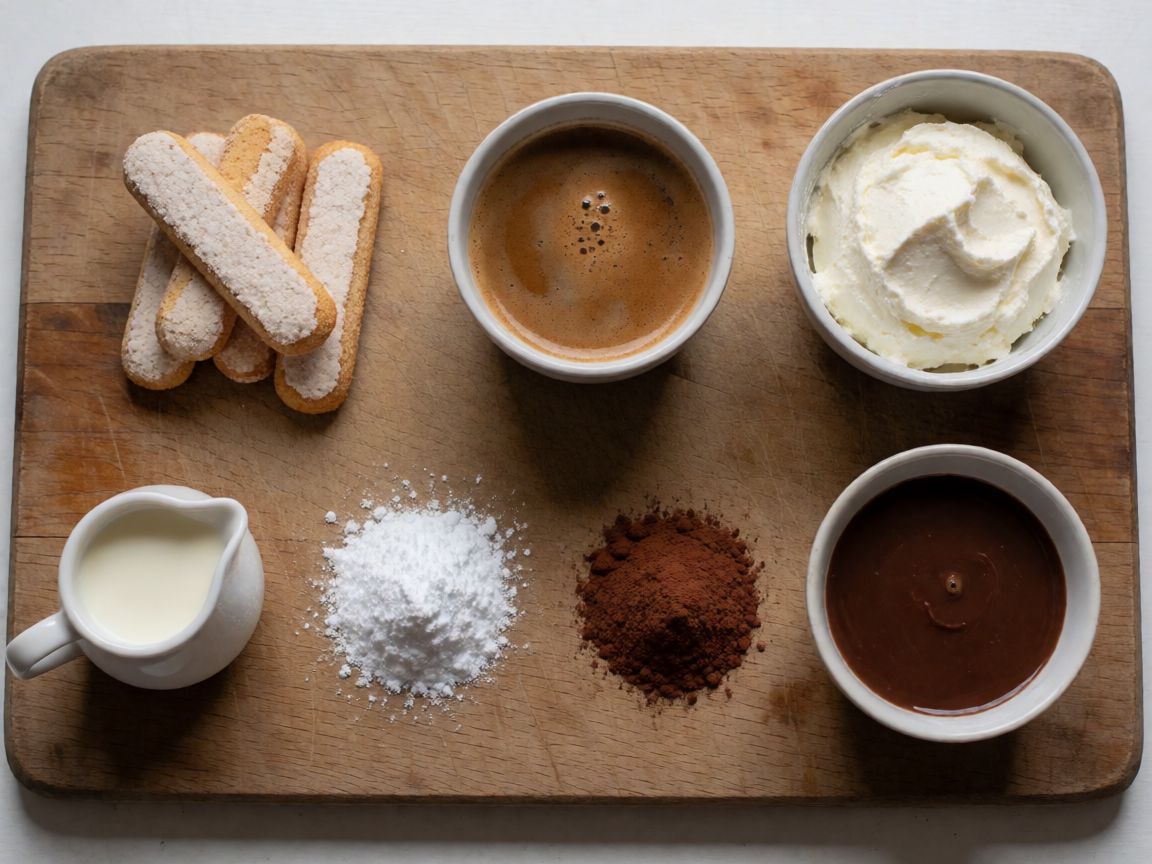
- 200 g Savoiardi biscuits
- Coffee to taste, for soaking the biscuits
- 250 g Mascarpone
- 200 ml Double cream
- 100 g Icing sugar
- 10-15 ml Coffee
- 50 g Nutella optional, softened
- Cocoa powder for dusting







Steps
Brew the coffee and leave it to cool.
In a bowl, beat the mascarpone and add 10-15 ml of coffee.
Separately whip the double cream with the icing sugar until thick, then gently fold into the mascarpone.
Lay cling film on a work surface and arrange the savoiardi biscuits, quickly dipped in coffee, in two rows.
Spread the cream evenly over the biscuits with a spatula.
If using, add softened Nutella in strips down the centre and edges.
Using the cling film, carefully roll the biscuits into a log.
Wrap the roll tightly in cling film and refrigerate for 3-4 hours.
180 minBefore serving, dust with cocoa powder.
A tiramisu roll is tiramisu with the architecture reversed. The classic sits in layers in a dish — biscuit, cream, biscuit, cream — and you dig down through it with a spoon. Here the biscuits become the shell and the cream becomes the filling, rolled into a log like a Swiss roll. Same three ideas — soaked biscuit, mascarpone cream, bitter cocoa dust on top — just reshaped so you can slice it into neat spirals instead of scooping it.
What decides whether it holds together, not whether it tastes right — the flavour looks after itself if the ratios are sane — is the biscuit's moisture. Savoiardi are dry and brittle by design; a bakery makes them that way on purpose because dry biscuit has a long shelf life and absorbs liquid evenly, like a sponge that hasn't been used yet. Dip them too long in the coffee and they go to paste, and a roll made of paste doesn't roll, it tears. Dip them too briefly and the centre stays chalky and the roll cracks along the dry line when you curl it, because dry biscuit doesn't bend, it snaps. You want "quickly" to mean exactly that — in and out, a second or two per side. You're wetting the surface, not soaking the biscuit through. The tell is visual: the biscuit should darken evenly but still feel firm between your fingers, not soft.
Mascarpone is the one ingredient here with no real substitute, because its whole character is fat with almost no water in it — that's what gives tiramisu cream its density without turning gluey. Full-fat cream cheese comes closest if you're stuck, but it carries more moisture and a tang mascarpone doesn't have, so you'd want less liquid elsewhere to compensate. Don't reach for low-fat versions of either — the structure of this cream is built on fat holding air, and low-fat versions just don't hold it.
Double cream, not whipping cream, matters for the same reason: higher fat content means it whips to a stiffer peak and stays stiff longer once folded into the mascarpone and chilled. Whipping cream will work but softens faster, and in a roll that's sitting rolled up under its own weight for three or four hours, a softer cream means more risk of it slumping sideways when you unwrap and slice. Whip it to the point where it holds a peak that just about droops at the tip — any stiffer and you've started making butter, any looser and it'll weep into the biscuit and turn your crisp log soggy from the inside.
Icing sugar rather than caster is about speed of dissolving, nothing more romantic than that — caster sugar in a cold cream needs real effort and time to lose its grain, icing sugar is already fine enough to vanish on contact. If all you've got is caster, it'll still work, just whip the cream a little longer and taste before you decide it's sweet enough.
The coffee is doing two separate jobs and it's worth keeping them separate in your head. The coffee you dip the biscuits in is about moisture and flavour on the surface — use it strong, because the amount that actually transfers in a quick dip is small, and weak coffee dipped quickly tastes like nothing at all. The coffee folded into the mascarpone is a different, smaller amount, there to flavour the cream itself rather than wet anything — instant coffee dissolved in a tablespoon of hot water does this job just as well as filter coffee, since nobody's judging its aroma on its own.
Nutella in the centre is honestly just an addition for people who think tiramisu needs more chocolate in it — original tiramisu has none. If you use it, soften it first, meaning let it come properly to room temperature or give it ten seconds in the microwave, because cold Nutella is too stiff to spread thinly and you'll end up tearing the cream layer underneath trying to push it around.
Cocoa powder on top at the end, not before — this is the one step where timing against moisture really tells on you. Dust it too early and the cream's surface moisture turns the cocoa into a damp, patchy film instead of a dry dark dust; dust it just before the roll goes to the table and it stays matte and sharp, which is also where its job is — pure bitter cocoa against all that sweet cream is what stops the whole thing tasting one-note.
The three to four hours in the fridge isn't really "cooking time", there's no heat involved, but don't skip it or shorten it out of impatience. What's happening in that time is the cream firming back up after being folded and spread, and the biscuit finishing its job of absorbing just enough moisture to go from "quickly dipped" to properly set, so that when you unwrap and slice, you get a clean spiral instead of a collapse. Patience here isn't tradition for its own sake, it's the actual mechanism that turns a wet roll of biscuit and cream into something you can cut with a knife and have it hold its shape on the plate. A quicker route doesn't exist — you can make it look ready in twenty minutes, but it isn't, and the knife will tell you so.