
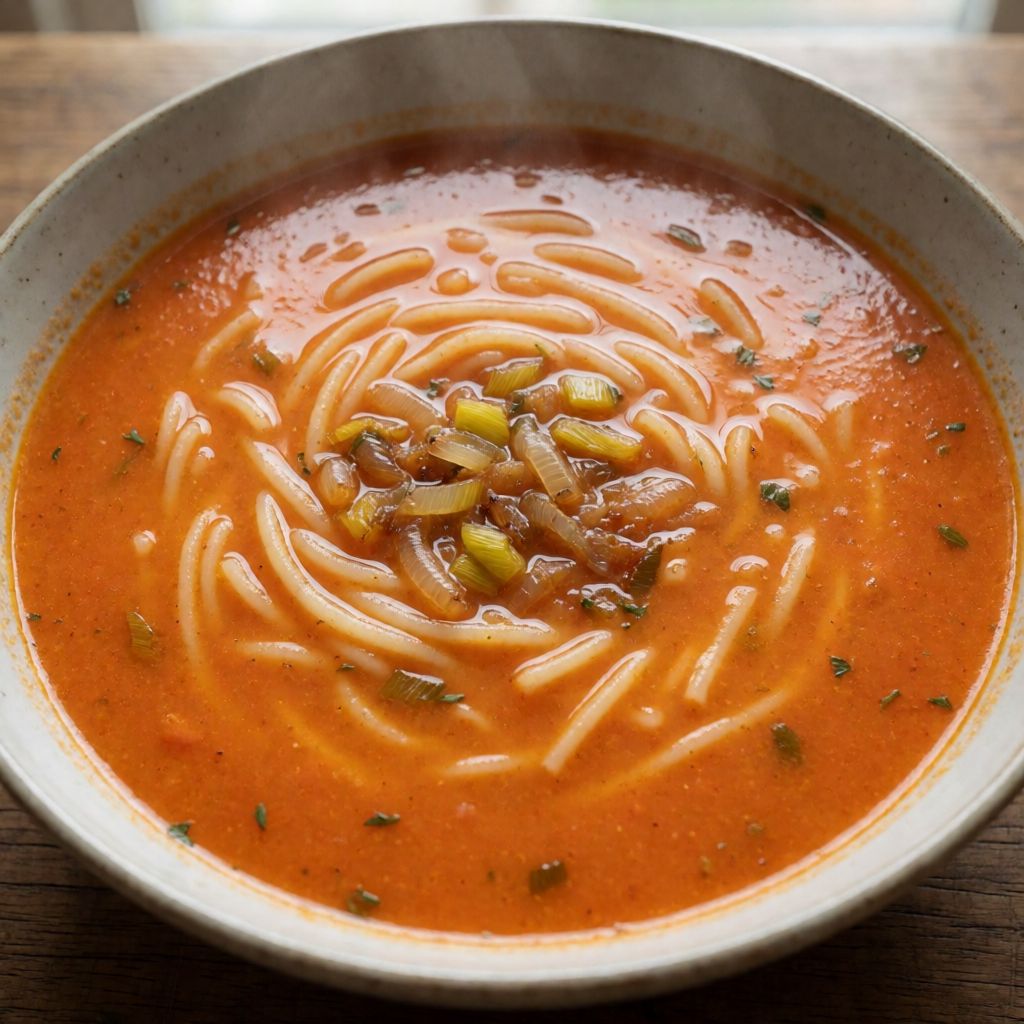
 AI photo
Tomato Soup with Noodles and Cheese Toasts
A warming tomato soup with noodles, finished with cheese toasts for dipping.
Labels are worked out automatically from the ingredients and can be wrong. Check the packaging if it matters to you.
Ingredients
- 2 pcs Onion finely chopped
- 2 clove Garlic finely chopped
- 1 pcs Leek thinly sliced
- 1 tsp Paprika
- 1 tsp Cumin
- 0.5 tsp Curry powder medium heat
- 3 pcs Potato coarsely grated
- 3 pcs Carrot coarsely grated
- 1200 g Canned chopped tomatoes peeled
- 100 g Tomato purée concentrated
- 1 tsp Dried thyme
- 1 l Stock
- 100 g Soup noodles
- 50 ml Double cream
- 2 tbsp Olive oil
- 1 tsp Salt
- 100 ml Crème fraîche
- 100 ml Soured cream 18%
- 1 bunch Thyme fresh
- 8 pcs Bread sliced
- 1 clove Garlic
- 125 g Mozzarella fresh
- 1 pinch Thyme for sprinkling, fresh













Steps
Heat the oil in a saucepan and fry the onion, garlic and leek over medium heat until soft.
Add the paprika, cumin and curry powder and fry for a few more minutes, stirring.
Add the potatoes and carrots, chopped tomatoes, tomato purée, thyme and stock.
Let it simmer for 15-20 minutes.
18 minBlend the soup with a stick blender until completely smooth.
Season with the cream, salt and pepper to taste.
Add the noodles and simmer for a few minutes until soft.
Rub the bread slices with the cut garlic clove and top with slices of fresh mozzarella.
Bake the toasts in a preheated oven at 200°C until the cheese has melted.
Sprinkle with fresh thyme leaves.
Pour the hot soup into deep bowls, add a good spoonful of crème fraîche and sprinkle with fresh thyme leaves.
Serve the hot cheese toasts alongside the soup.
This is a soup that pretends to be simple and then quietly asks for three things you might not have planned on: grated vegetables, a blender, and a grill or oven running at the same time as the hob. It's tomato soup the way it's done when someone wants body and sweetness without hours of reduction — the grating does the work that long simmering usually does.
What decides whether it works is the grate, not the chop. Potato and carrot go in coarsely grated, not diced, because grated vegetable surface breaks down into the liquid in fifteen minutes flat, thickening the soup from the inside instead of you standing there mashing it later. Dice them and you'll get a thin tomato broth with crunchy bits still swimming in it after twenty minutes — technically cooked, not technically a soup.
The spice stage — paprika, cumin, curry powder fried for a minute before anything wet goes in — is not decoration. Those are all dry, oil-soluble spices; their flavour compounds need a few minutes in hot fat to open up. Skip this and dump them in with the tomatoes and you get a soup that merely smells of cumin rather than tastes of it. Some say spices are spices, order doesn't matter — no, because water-based liquid stops that opening-up cold.
And then the toasts: this is really two separate cooking stations running at once, hob and oven, which on an ordinary British kitchen with one oven and one grill-top means timing the toasts to go in once the soup's into its simmer, not before, not after — mozzarella sitting on hot bread waiting ten minutes is a sad, rubbery thing.
Onion, garlic, leek: this trio is the base, and it's fried gently until "soft" — meaning translucent, collapsed, no longer squeaking against the spoon, not browned. Browning here means bitterness fighting the sweetness you're trying to build with the tomato. Leek earns its place for a milder, slightly vegetal sweetness that plain onion doesn't give you; if you haven't got one, use an extra onion and don't worry about it.
The canned tomatoes carry the acid and bulk; the concentrated purée is there purely for depth — it's tomato with the water driven off, so a small amount punches far above its weight. If your tomatoes are watery or underripe-tasting (which tinned ones from a bad batch can be), lean harder on the purée rather than adding more tins — you're correcting flavour concentration, not volume.
Stock matters more than people think in a soup this heavily spiced: a thin stock cube dissolved in water will taste of salt and little else once it's fighting paprika and cumin for attention. Use a stock with actual body — a decent vegetable or chicken stock — because it's the quiet carrier underneath everything else, not a flavour in its own right.
The cream added before the noodles is there to round off the acidity of the tomatoes, not to make the soup "creamy" in a heavy sense — 50ml in over a litre of soup is a correction, not a dish. The noodles go in last and only need "a few minutes until soft" because they're already partly cooked soup-side by the time they hit a near-boiling liquid; leave them in from the start and they'll have disintegrated by the time you serve.
For the toasts, any firm cheese that melts without weeping water would do if you're out of mozzarella — mozzarella's chosen for the stretch and mild milkiness that doesn't compete with the garlic rubbed into the bread. The garlic clove rubbed raw onto toasted bread, rather than cooked into anything, gives you sharp garlic aroma sitting on the surface rather than mellowed garlic cooked through — two different jobs, don't confuse them.
Crème fraîche spooned on at serving, soured cream used earlier or alongside — these do slightly different things: crème fraîche holds its shape and tang on top of hot soup without thinning out, soured cream is lighter and more likely to split if the soup's too hot when it hits it. If you've only got one of the two in the fridge, use whichever one you've got for both jobs; the soup won't collapse over it.
This isn't a fifteen-minute supper despite the short simmer time quoted — the real patience goes into frying the aromatics properly at the start and not rushing the spices. Rush those two minutes and no amount of simmering afterward buys the flavour back.