
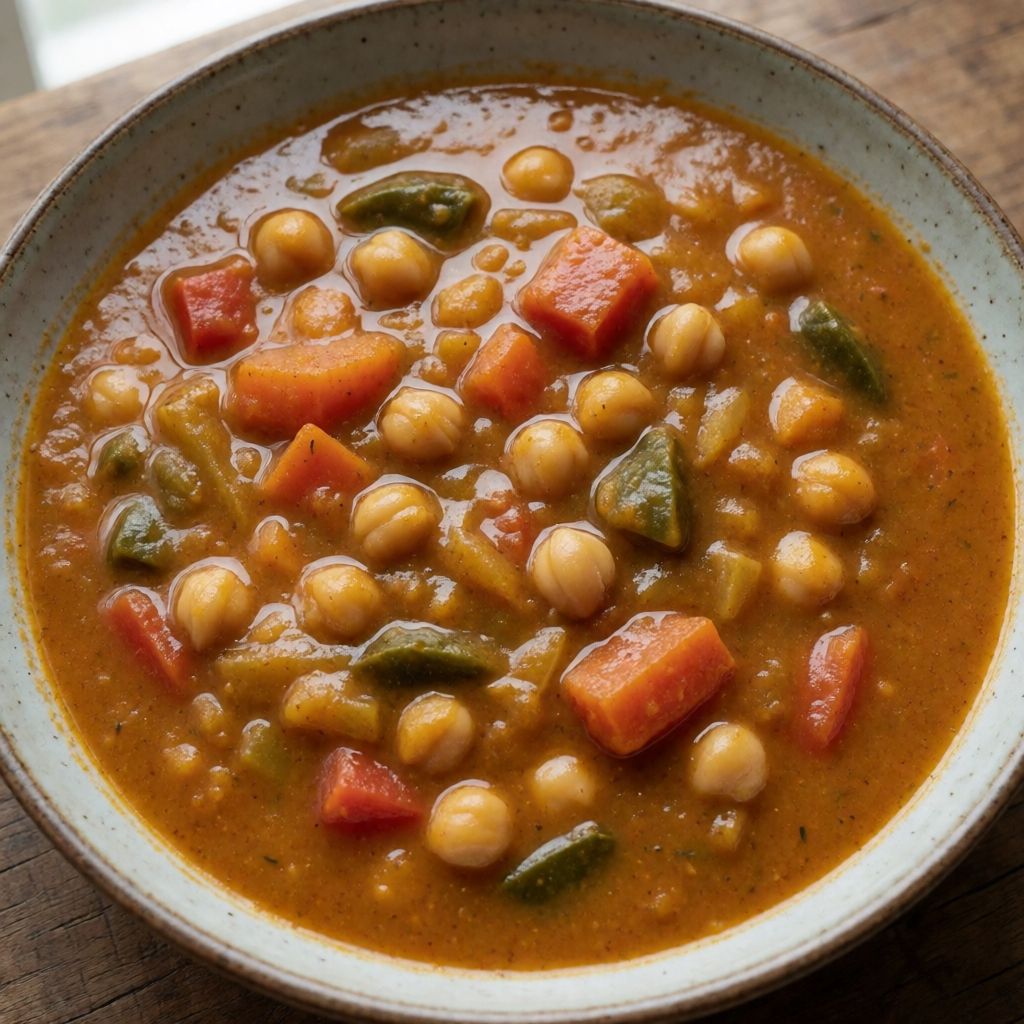
 AI photo
Vegetable Stew with Chickpeas
A warming spiced vegetable stew with pumpkin, carrot, broccoli, courgette and chickpeas, finished with crème fraîche and parsley.
Labels are worked out automatically from the ingredients and can be wrong. Check the packaging if it matters to you.
Ingredients
- 2 tsp Ground cumin
- 1 tsp Ground coriander
- 1 tsp Ground cardamom
- 1 tsp Ground ginger
- 0.5 tsp Cayenne pepper
- 1 tsp Ground cinnamon
- 1 pcs Red onion finely chopped
- 2 clove Garlic finely chopped
- 400 g Pumpkin cut into cubes
- 4 pcs Carrot cut into cubes
- 800 g Tinned chopped tomatoes
- 300 ml Stock
- 1 pcs Broccoli cut into florets
- 1 pcs Courgette cut into cubes
- 1 can Chickpeas drained and rinsed
- 0.5 pcs Lemon juice
- 1 tbsp Olive oil
- Salt
- Black pepper freshly ground
- 100 ml Crème fraîche
- 1 bunch Parsley
- 300 ml Rice if you'd like a heartier dish






















Steps
Tip the ground cumin, coriander, cardamom, ginger, cayenne pepper and cinnamon into a dry, heated pan and warm through, stirring, until fragrant.
Lower the heat, add the red onion, garlic and oil, and fry gently until the onion has softened.
Add the pumpkin, carrot, chopped tomatoes and stock.
10 minCover and simmer gently for 10 minutes.
10 minAdd the broccoli and courgette to the pan and simmer for a further 10 minutes.
10 minAdd the chickpeas and heat through well.
Season with lemon juice, salt and freshly ground black pepper to taste.
Serve in deep bowls with crème fraîche and parsley.
If you'd like a heartier dish, serve with rice.
This is a dry-spiced vegetable braise — pumpkin, carrot, broccoli, courgette and chickpeas sat in a loose tomato stock, carried by six ground spices and finished with lemon and crème fraîche. Nothing here is rare or expensive. What decides whether it works is the order you put things in, and whether you let the spices do their one real job before anything wet touches the pan.
That first step — tipping dry spice into a hot, empty pan — isn't theatre. Cumin, coriander, cardamom, ginger, cayenne, cinnamon are all dried and ground; most of their smell is locked in oil that needs heat to wake up, not water. Thirty seconds in a dry pan, stirring so nothing sits still and scorches, and you get a smell that tells you they're ready — a shift from "spice tin" to something rounder and warmer. Skip this and the same spices will still flavour the stew, just thinner, more like dust than perfume. Some say toasting spices is for people who like extra washing-up — no, because the alternative is a curry-shaped stew that tastes of nothing in particular.
Then the pan has to cool its temper before onion goes in. Spices go dry and hot; onion goes in on a gentler flame, with the oil now, so it softens rather than catches — you're not browning here, you're melting it down until it goes soft and loses its raw bite, translucent at the edges rather than coloured. This isn't about following a rule; it's that burnt spice turns bitter fast, and a bitter base can't be fixed later, only masked.
Chickpeas go in last and only need heating through — they're already cooked, from the tin, so boiling them again for ten minutes buys you nothing but mushy chickpeas and a waste of gas. If you're starting from dried ones instead, soak and cook them separately first; they're not built to go raw into a twenty-minute stew and come out edible.
Pumpkin: look for dense, heavy-for-its-size flesh — a watery, stringy pumpkin will fall apart into the stock instead of holding a cube shape. No pumpkin in the shop in a British autumn when the squash display is all butternut? Use butternut — same starchy density, same behaviour in a braise. Carrot needs no substitute; it's doing a textural job here, the thing that still has a bit of give when everything else has gone soft — this is also your doneness check for stage one: when the carrot bends rather than snaps under a fork, the long simmer is done, not before.
The crème fraîche at the end isn't decoration — it's there to cool the spice and round off the acid from the tomatoes, since crème fraîche has enough fat and tang of its own to sit on top of a hot, spiced stew without splitting the way thin cream would. If you don't have it, a dollop of plain yoghurt does the same cooling job, just with less richness; soured cream is the closer stand-in weight-for-weight.
Oil: "any oil with no smell of its own" is the test, because the spices are meant to be the only smell in the pan — a fruity extra-virgin olive oil competes with the cumin instead of carrying it, so use a milder olive oil, or a neutral oil like sunflower if that's what's in the cupboard; you're not frying for flavour here, you're frying to stop things catching.
Stock: vegetable or chicken, whichever you've got — it's volume and savoury depth, not a defining character of the dish, so don't go out and buy a specific one for this.
This is a weeknight dish built for four, and it holds up fine for lunch the next day since the spices only get friendlier with an overnight rest in the fridge. If you want it heartier, rice alongside is the obvious move — it's a stew, not a sauce, so it won't cling to rice the way a thicker curry would, but it'll fill the bowl and stretch it further, which matters if you're feeding people with roast-dinner appetites on a Tuesday. Twenty minutes total cooking is honest — it's not a dish that improves by rushing it, but it also doesn't ask for the patience a proper braise does; the only patience it wants is in that first minute with the dry spices, standing at the stove instead of walking off to do something else.