
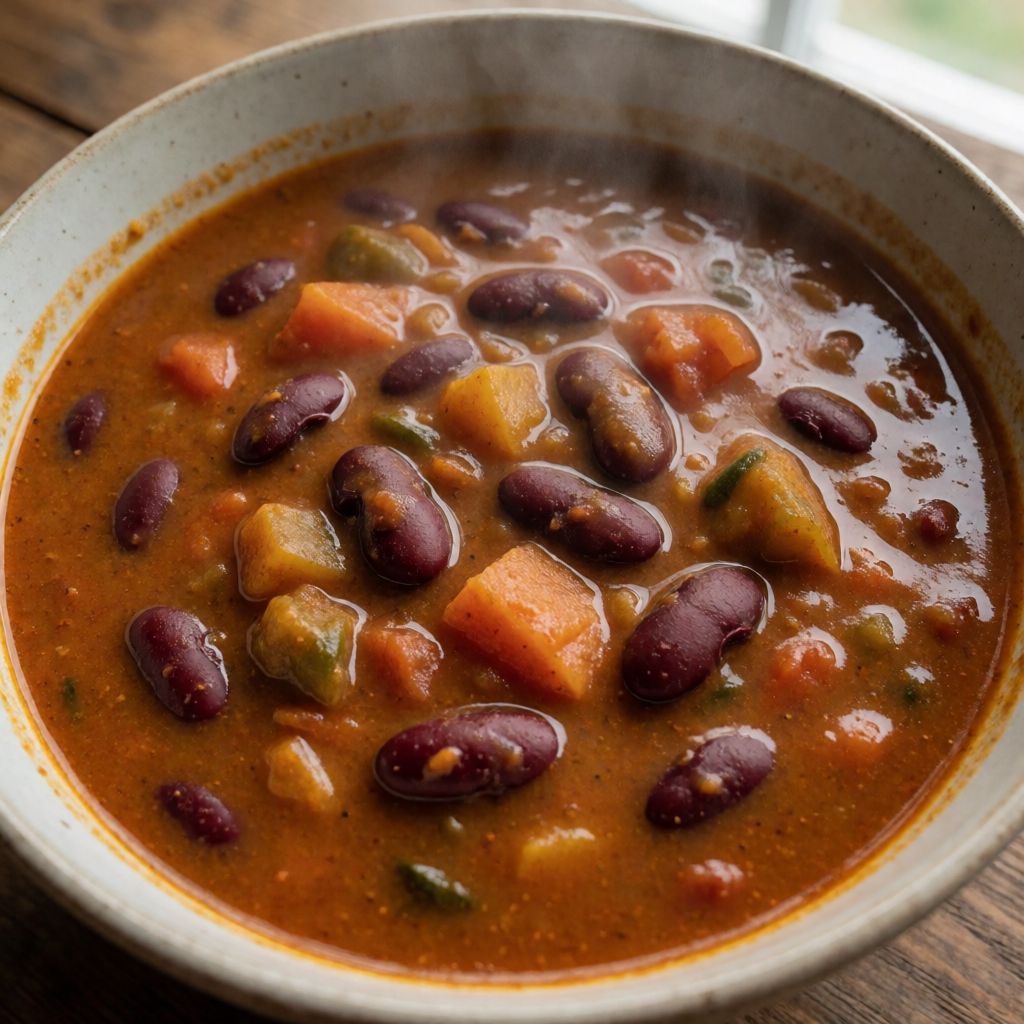
 AI photo
Kidney Bean and Vegetable Stew
A warming kidney bean and vegetable stew with gentle spices, finished with a touch of dark chocolate.
Labels are worked out automatically from the ingredients and can be wrong. Check the packaging if it matters to you.
Ingredients
- 2 tsp Curry powder medium heat
- 2 tsp Cumin
- 0.5 tsp Cardamom
- 0.5 tsp Cinnamon
- 0.5 tsp Smoked paprika
- 2 tsp Ground coriander
- 3 pcs Onion finely chopped
- 4 clove Garlic finely chopped
- 1 tsp Ginger finely grated
- 1 pcs Courgette coarsely grated
- 3 pcs Celery stalks, coarsely grated
- 400 g Chopped tomatoes tinned
- 300 ml Stock
- 2 can Kidney beans drained and rinsed
- 1 pcs Pepper diced
- 250 g Sweetcorn fresh, frozen or tinned
- 25 g Dark chocolate
- 1 tsp Olive oil for frying
- Salt to taste
- Black pepper to taste
- 100 ml Crème fraîche
- 1 bunch Coriander fresh, a handful
- 125 g Tortilla chips
- 50 g Red onion sliced into rings, pickled if possible
- 150 g Sweetcorn cooked
- 1 pcs Avocado

























Steps
Put the curry powder, cumin, cardamom, cinnamon, smoked paprika and ground coriander into a dry pan and heat well, stirring, until fragrant
2 minLower the heat, add the onion, garlic, ginger and oil and fry until the onion is soft
6 minAdd the courgette, celery, chopped tomatoes and stock, cover and simmer for at least 30 minutes, or 1 hour if you have time
30 minTowards the end, add the kidney beans, pepper and sweetcorn and heat through well for a further 5 minutes
5 minSeason with the dark chocolate, salt and black pepper to taste
1 minServe in deep bowls with the toppings (crème fraîche, tortilla chips, red onion, cooked sweetcorn and avocado) in small bowls so each guest can add them at the table as they like
This is a chilli con carne with the meat taken out and the gap filled by beans, grated vegetables and a spoon of chocolate — a stew that works because it builds flavour in three separate layers before it ever sees liquid, not because of any one clever ingredient.
Layer one is the dry spices hitting a hot, empty pan. No oil yet. That's deliberate: spices are mostly oil-soluble aromatic compounds sitting in a dry powder, and a few seconds of real heat on bare metal wakes them up — you'll smell the shift, a sort of toasted, warm smell replacing the flat "spice jar" smell. Do it in oil from the start and you get the same spices, just quieter. Do it too long and dry and you get the bitter, scorched smell instead — that's the one failure point here, so your nose is the only timer that matters, not the "2 min" on the label.
Layer two is the onion, garlic and ginger going in once the pan's cooled a touch — the oil joins now, because it's a carrier, not a flavour. Onion first, soft and translucent, no colour: this is a stew base, not a caramelised one, so you stop before gold turns to brown. Garlic and ginger burn fast and turn bitter, which is why they go in with the onion rather than before it — nothing to protect them otherwise.
The beans and corn go in near the end, not the start, for the opposite reason to the vegetables: they're already cooked (tinned, or close to it), so all they need is to come up to temperature and pick up the sauce around them. Simmer them the full 30 minutes with everything else and they'll just go grey and soft, losing the bit of bite that tells you it's a stew and not a mush. Same logic with the pepper — it goes in raw-ish, keeping some structure, some pepper taste, rather than dissolving into the background.
The chocolate at the end is the one bit people laugh at, then stop laughing at. Some say — no, because it's not there to make the stew taste of chocolate, it's there because dark chocolate is bitter and slightly sweet at once, and both of those round off the sharp acidity of tinned tomatoes the way a pinch of sugar does in a tomato sauce. You're not tasting chocolate in the finished bowl; you're tasting a sauce that no longer tastes thin or sour. Any dark chocolate with little milk and sugar does the job — 70% plus is the rough marker, because milk chocolate just adds sweetness without the bitter counterweight.
Curry powder here is doing a job, not a cuisine — it's a ready-mixed shortcut for warmth and colour, and "medium heat" just means don't reach for the hottest one in the cupboard if you want the toppings (crème fraîche, avocado) to be able to cool things down rather than compete. If you don't have it, your own mix of ground cumin, coriander, turmeric and a pinch of chilli gets you to roughly the same place — curry powder is a formula, not a sacred object.
Stock is just liquid with some savoury depth already dissolved in it — any stock with no strong character of its own works, vegetable or chicken, cube or fresh; water plus a bit more salt is the honest fallback, it'll taste flatter but it won't taste wrong.
The toppings aren't garnish for the photo — they're the part of the dish that lets four different people eat four slightly different stews from the same pan. Crème fraîche cools the spice on the tongue with fat, avocado does the same with a milder fat and a different texture, red onion (pickled if you've the patience — vinegar and twenty minutes is all that takes) cuts back through both with acid, tortilla chips give the one crunch in an otherwise soft, spoonable dish. Put them in small bowls on the table rather than stirring them in, and you've turned one stew into as many meals as you have guests — that's not tradition for its own sake, that's just sensible when people's heat tolerance varies.
Patience is the ingredient the recipe keeps asking for without naming it: the toast on the spices, the slow give of the vegetables under a lid, the extra half hour if you have it rather than the bare minimum thirty. None of it is hard work. All of it is waiting, which on a Sunday — with a roast already teaching you that low and slow beats hot and fast — shouldn't feel like an unfamiliar demand.