
 AI photo
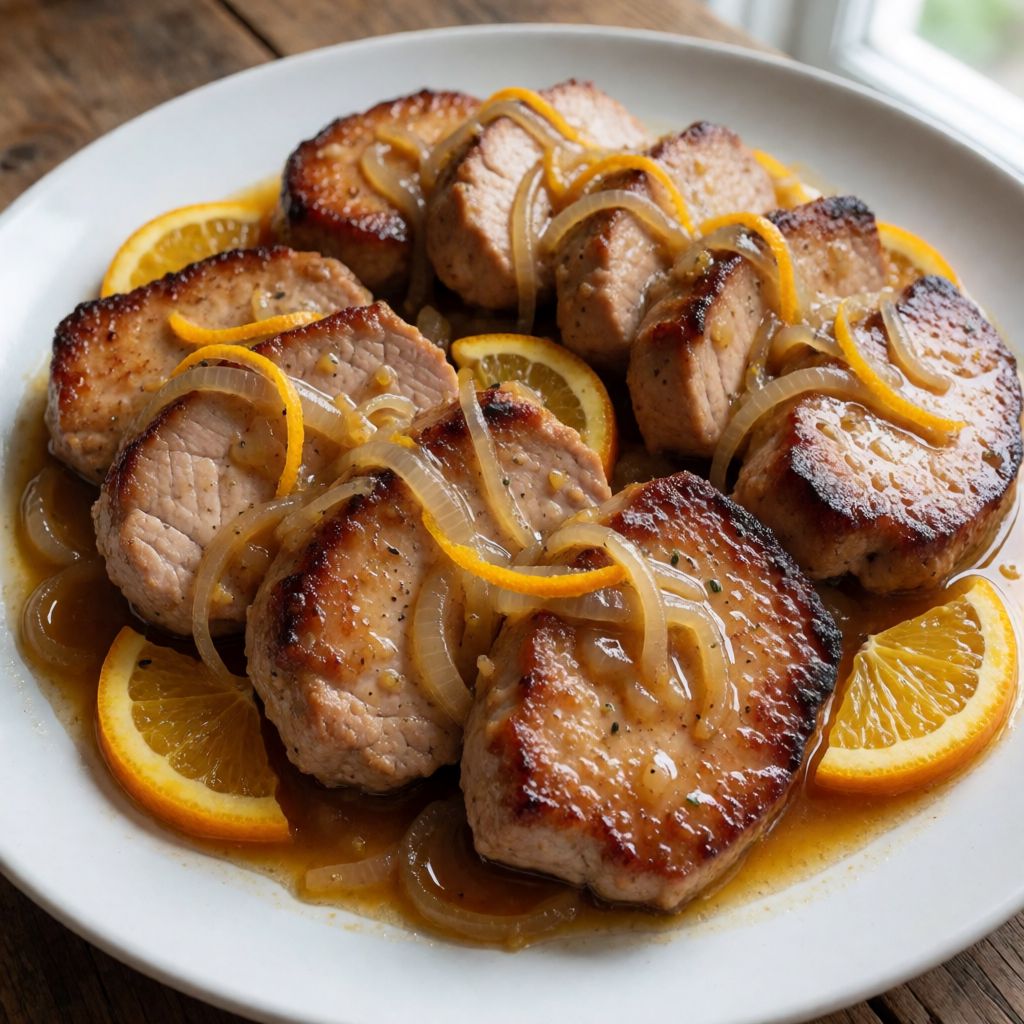
Pork Loin with Orange
Pan-fried pork loin finished with white wine and fresh orange slices for a bright, savoury dinner.
Labels are worked out automatically from the ingredients and can be wrong. Check the packaging if it matters to you.
Ingredients
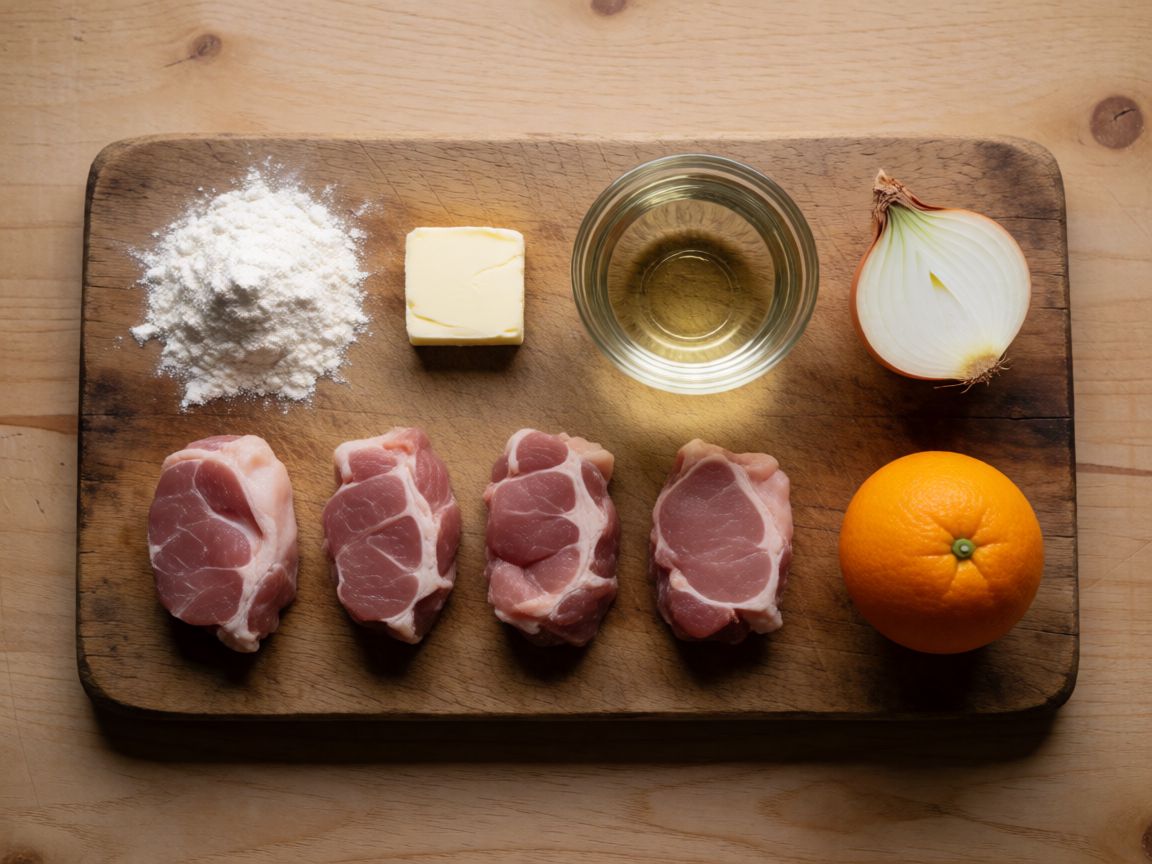
- 50 g Plain flour
- 1 pcs Butter 1 slice
- 1 tbsp Olive oil
- 120 ml White wine
- 4 pcs Pork loin
- 1/2 pcs Onion
- 1 pcs Orange
- 1 pinch Salt to taste
- 1 pinch Black pepper to taste





Steps
Coat the meat in flour and set aside. Finely chop the onion, and slice the orange into rounds.
In a non-stick pan, melt the butter, add the olive oil and onion, and fry gently until soft.
Add the floured pork loin and fry on both sides until golden, then pour in the white wine and let it reduce.
Cook for about 10 minutes, turning the pieces halfway through; the pork should reach an internal temperature of 70°C at its thickest point.
10 minAdd the orange slices and any remaining juice.
Cook for a further 3 minutes on low heat, seasoning with salt and pepper to taste.
3 min
Four thin pork loin medallions, dusted in flour, fried with onion, finished with wine and orange. The flour is doing the heavy lifting here, not the meat alone — it's a crust management decision. A floured surface in hot fat forms a seal fast, and that seal is what gives you a pan sauce instead of a puddle of grey juice. Skip the flour and you're just poaching pork in wine.
What decides whether this works is heat control on an ordinary hob, where "fry until golden" is doing more than describing colour. You want the butter-and-oil mix hot enough that the pork sizzles the second it lands, not simmers. Butter alone burns before pork cooks through; oil alone fries but gives you nothing to taste. Together, the oil raises butter's smoke point just enough to survive the frying stage, and the butter brings flavour oil can't. That's the whole reason for mixing the two — not tradition, chemistry.
Thin loin cooks fast, which is why this is a weeknight dish and not a Sunday roast substitute. A roast joint rests because its centre is still catching up with its crust long after you've pulled it from the oven; these medallions are thin enough that there's no lag — pan heat reaches the centre in minutes, so there's no resting stage worth mentioning. The 70°C internal mark is your actual finish line, not a clock. A probe thermometer earns its keep here; without one, cut into the thickest piece and look — no pink thread running through, juice running clear, not milky-pale and weeping.
Pork loin, not shoulder or belly — loin is lean and thin-cut here, which is exactly why it fries rather than braises. A fattier cut would need longer, gentler heat to render properly; loin would just dry out waiting for that. If your butcher only has thicker chops, bash them flatter with the base of a pan between two sheets of baking paper — you're recreating the thinness that makes the fast-fry method work at all.
Flour: plain, 50g, nothing fancy. Its job is to form a thin, pale crust that then thickens the wine into something that clings to the meat rather than running off the plate. Any flour that browns in fat and doesn't bring its own strong flavour will do — cornflour works in a pinch but gives a glassier, less forgiving crust. Don't flour the meat until just before it hits the pan; flour left sitting on wet pork goes gluey, not crisp.
Butter plus olive oil, not one or the other — covered in short, but worth repeating why proportion matters: too much butter and your pan is smoking before the pork's even floured; too much oil and the fond — those browned bits stuck to the pan after frying — tastes thin when you deglaze it with wine. "Any neutral oil" is the real rule if you don't have olive oil to hand: sunflower, vegetable, anything without its own strong smell, because olive oil here is mostly there for its higher smoke point, not its flavour at this stage.
The onion goes in before the meat and is fried "gently" — meaning you're not colouring it hard, you're softening it, coaxing the water out of its cells until it goes translucent and sweet rather than sharp. Rush this with high heat and you get caramelised edges and a raw, biting centre — wrong texture for a dish that wants the onion to melt into the sauce, not announce itself as a bite.
White wine does two jobs: it deglazes the pan — lifting that fond with liquid and heat so none of the flavour from frying stays stuck to the metal — and it reduces, meaning the alcohol and water cook off while the flavour concentrates. "Reduce" here is a texture cue, not a timer: watch the liquid go from thin and watery to coating the back of a spoon. If you don't drink wine or don't have any open, a splash of cider vinegar loosened with water and a pinch of sugar gets you acidity and some body, though it won't have wine's depth — that's a substitution made under honest constraints, not an equivalent.
The orange is sliced into rounds, pith and all, which matters: pith left on slow-cooked for too long turns bitter, which is exactly why this step is three minutes on low, not fifteen. You're warming the orange through and letting its juice marry into the sauce, not cooking it down. If oranges are out of season or you only have the bitter ones, a sweeter variety with a squeeze of extra juice at the end corrects the balance — the point is sweetness against the wine's acidity, however you get there.
Salt and pepper go on last, after the sauce has had its chance to concentrate — season too early and you're seasoning liquid that's about to shrink, which means you oversalt by the time it's reduced. Taste before you finish, not before you start.