
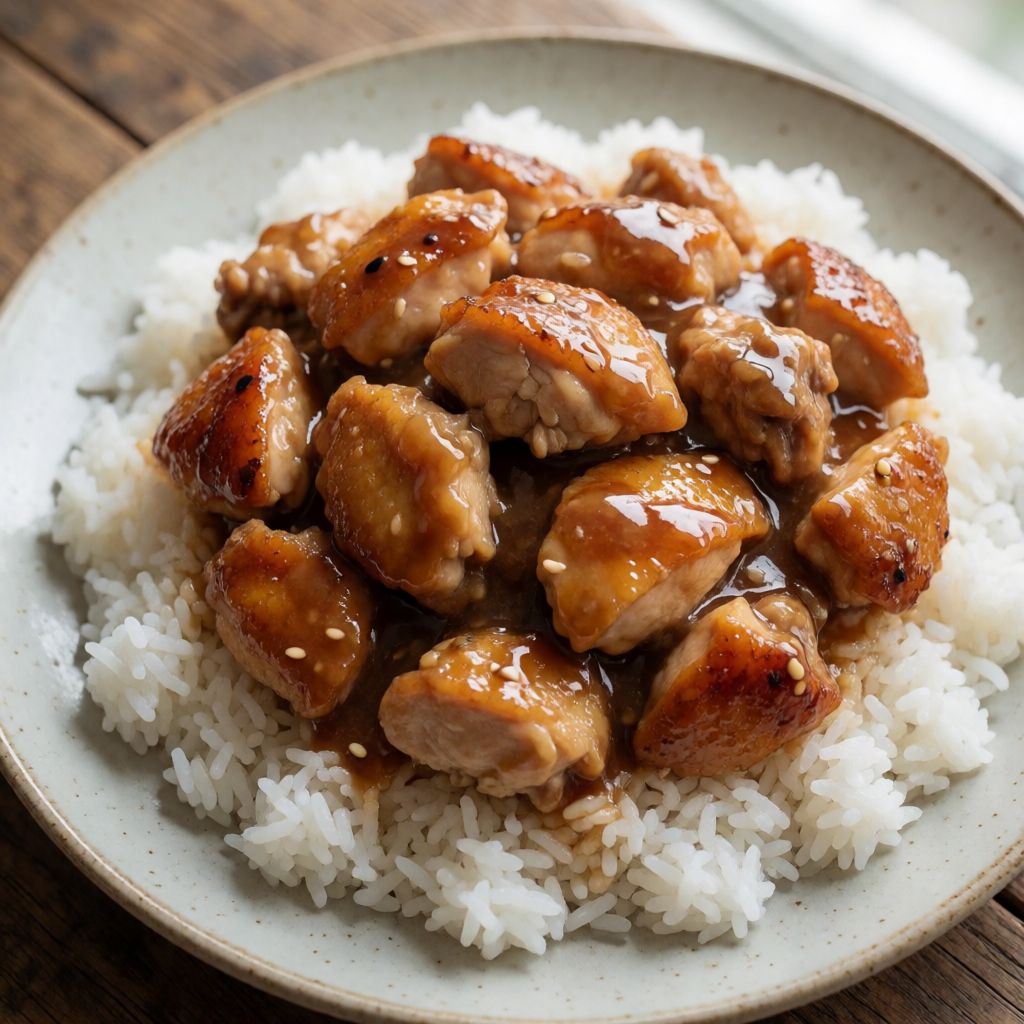
 AI photo
Sesame Chicken with Rice and Ginger Yoghurt
A quick sesame chicken with basmati rice, wilted spinach and a cooling ginger yoghurt.
Labels are worked out automatically from the ingredients and can be wrong. Check the packaging if it matters to you.
Ingredients
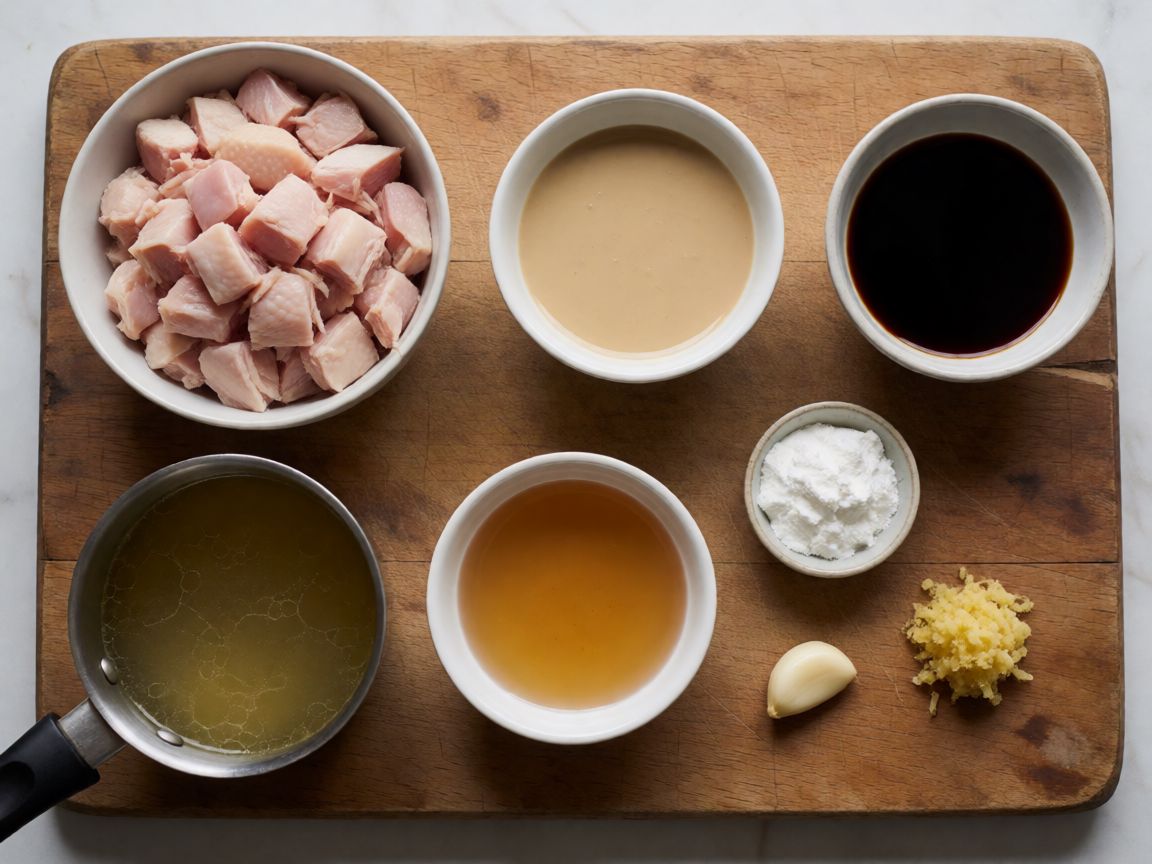
- 400 g Whole chicken diced
- 2 tbsp Tahini
- 2 tbsp Soy sauce
- 2 tbsp Apple cider vinegar
- 100 ml Stock
- 1.5 tsp Cornflour
- 1 clove Garlic crushed
- 1 tsp Ginger grated
- 1 tbsp Brown sugar
- 40 g Sesame seeds
- 2 tbsp Sesame oil or another oil for frying
- 300 ml Basmati rice
- 2 pcs Leek thinly sliced into rings
- 1 tsp Ginger grated
- 1 clove Garlic crushed
- 100 g Spinach
- 100 ml Yoghurt
- 1 tsp Ginger grated
- 1 tbsp Sriracha
- Salt to taste
- Black pepper freshly ground, to taste
- 2 pcs Spring onion thinly sliced
- 15 g Sesame seeds



















Steps
Cook the rice according to the packet instructions.
Heat the sesame oil in a frying pan and fry the chicken until golden brown.
Mix the sesame chicken ingredients together and add them to the pan with the chicken.
Heat through well and let it simmer for 6-8 minutes, until the chicken is tender.
7 minHeat another pan with oil and fry the leek, ginger and garlic until soft.
Add the spinach and heat until just wilted.
Mix the yoghurt with ginger and sriracha, and season with salt and pepper to taste.
Divide the rice among deep bowls with the sesame chicken and vegetables. Sprinkle with spring onion and sesame seeds, and drizzle with the ginger yoghurt.
This is a stir-fry wearing a sauce that thinks it's a glaze. The chicken fries hard and dry first, then gets dropped into a liquid that's been thickened with a spoonful of cornflour — and that's the whole trick of the dish. Tahini, soy, vinegar and stock reduce around the meat until they cling rather than pool, and the cold yoghurt on top exists purely to interrupt that richness. Get the sequence wrong — sauce in before the chicken has colour — and you've boiled chicken in a vaguely Asian broth. Fine to eat, but not this dish.
What decides it is the browning. Diced chicken thrown into a crowded pan steams instead of frying — it sweats out water and sits grey in its own puddle. You need the chicken in a single layer, with room between pieces, in oil that's properly hot before it goes in. Some say you can tell oil is hot enough by how it shimmers. No — shimmer is just thin oil moving; drop one piece in and listen: a hard, immediate hiss means you're ready, silence means wait.
The second pan — leek, ginger, garlic, then spinach — is doing something different: it's not for flavour depth, it's for texture contrast against the sticky chicken and soft rice. Leek wants to go soft and translucent, not browned; spinach wants barely a minute, enough to collapse, not enough to weep grey water into the bowl.
Tahini is the backbone, not a seasoning — it's what gives the sauce body before the cornflour even does its job, and it's why this tastes rounder than a basic soy-and-vinegar stir-fry. If you don't have it, any seed or nut butter with a bitter, roasted edge — like a light peanut butter — will stand in, though you lose the sesame echo that the seeds on top are meant to repeat. Don't reach for a sweet nut butter; it'll push the sauce toward dessert.
Soy sauce and apple cider vinegar are doing opposite jobs that need each other — soy for salt and savoury weight, vinegar to cut the fat from the tahini and the oil so the sauce doesn't sit heavy on the tongue. Any light vinegar with a clean, non-wine character works instead of cider vinegar — rice vinegar is the obvious swap and arguably closer to the dish's spirit, since this is built from a Chinese-American sauce logic even if the yoghurt pulls it sideways into something else.
Cornflour is there to prevent one specific failure: a thin, runny sauce that slides off the chicken and pools at the bottom of the bowl instead of coating it. Mix it with a little of the cold stock first — never straight into the hot pan — or it clumps into little gel beads that never fully dissolve. This is the step people skip because it feels fussy, then wonder why their sauce never thickens properly.
Ginger appears three times and each use is different enough to matter: in the sauce it's background warmth cooked down with everything else; with the leek and spinach it's sharper, more present, because it hasn't had time to mellow; in the yoghurt it's raw and bright, there to wake the whole bowl up at the end. Grate it fresh each time rather than using one batch for all three — the texture and bite change the longer it sits out.
Basmati rice specifically because it stays separate and light under a wet, sticky sauce — a stickier short-grain rice would turn the whole bowl into a single clump. If that's what's in the cupboard, rinse it hard before cooking to wash off surface starch, which at least gets you partway there.
The yoghurt and sriracha mix isn't a garnish, it's the counterweight to the richness of the tahini-sauced chicken — cold, sharp, a little fierce. Use a plain, thick yoghurt rather than a thin drinking one, or it just runs off into the sauce instead of sitting as its own ribbon across the top. If sriracha isn't to hand, any hot sauce with vinegar in it — not a dry chilli powder — keeps the same sharp-hot balance; a dry spice alone won't cut through the yoghurt the same way.
A wide frying pan stands in fine for a wok here — you're not tossing over high flame the way a kazan or wok setup allows, you're searing in batches if your pan or your hob's output is small. An ordinary UK hob rarely puts out the fierce, sustained heat professional burners do, so don't chase that — just don't crowd the pan, and let each batch actually brown before it moves to join the sauce.