
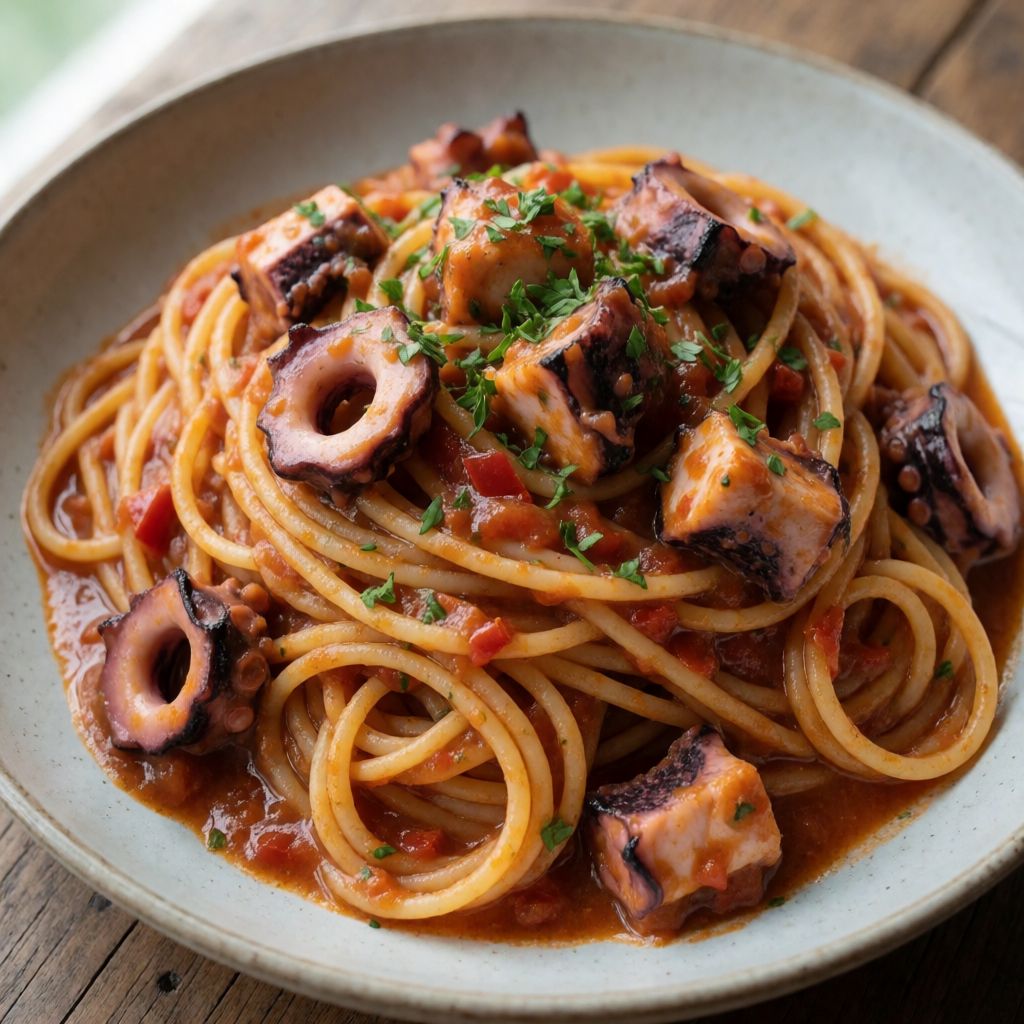
 AI photo
Spaghetti with Baby Octopus Sauce
Spaghetti tossed in a rich tomato and white wine sauce with tender baby octopus, garlic and chilli.
Labels are worked out automatically from the ingredients and can be wrong. Check the packaging if it matters to you.
Ingredients
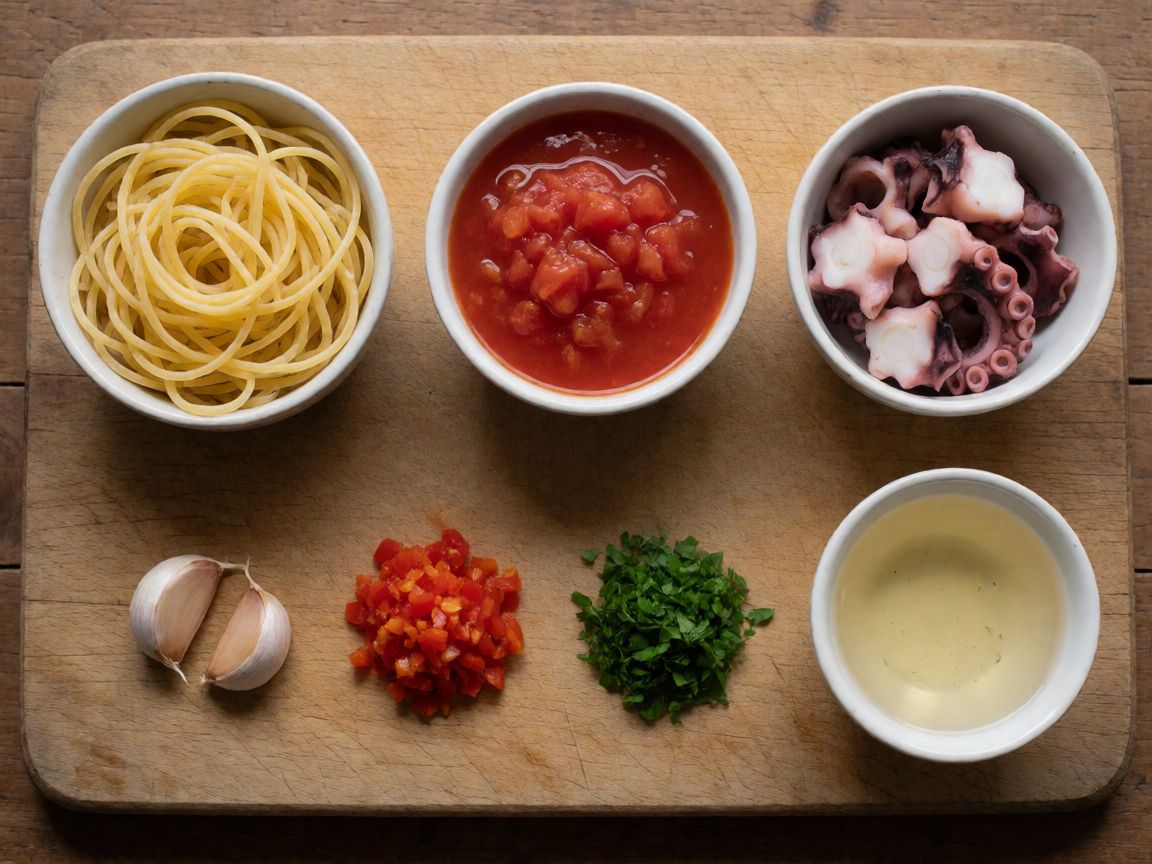
- 400 g Spaghetti
- 200 g Canned Chopped Tomatoes
- 500 g Baby Octopus
- 2 clove Garlic
- Fresh Chilli Pepper to taste
- Parsley to taste
- 2 tbsp Olive Oil
- 125 ml White Wine
- pinch Salt to taste








Steps
Heat the olive oil in a pan and fry the garlic and chilli pepper until golden, then remove them.
Add the baby octopus and fry for a few minutes, then pour in the white wine and let it evaporate completely.
Cover with a lid and cook over low heat.
30 minAdd the canned chopped tomatoes, season with salt to taste and cook. Doneness: 63°C at the thickest point.
Meanwhile, cook the spaghetti until al dente and drain.
Transfer the spaghetti into the pan with the octopus sauce and mix well.
Sprinkle generously with parsley and serve immediately.
Octopus sauce for pasta is really a lesson in patience disguised as a seafood dish. The whole point: baby octopus is mostly muscle built for grabbing rocks against the tide, so it's dense, springy, and will turn to rubber the moment you treat it like a prawn. Thirty seconds too hot, too fast, and you get something you could resole a shoe with. The fix isn't a trick — it's time, low heat, and a lid.
Some say octopus needs a cork thrown in the pot "to tenderise it." No — there's no enzyme in cork that does anything to muscle fibre. What actually tenderises octopus is slow, moist heat breaking down collagen into gelatine, same as a shin of beef in a stew. The cork is folklore from fishermen with time on their hands and a bottle already open. Harmless, but it's the low simmer doing the work, not the bottle stopper.
So the shape of this dish is: hard sear to build flavour on the outside, a splash of wine to lift the pan and start pushing acidity in, then a long covered braise where the octopus basically cooks itself tender in its own juice and the tomato. Only at the end does pasta even enter the room. You're not multitasking two fussy things — you're running a slow background process and then doing the five-minute sprint of boiling spaghetti near the finish.
Doneness here isn't a clock, it's texture: push a fork into the thickest tentacle and it should give, not resist — think of a well-bent carrot, not a raw one. If it still fights you, it needs more time under the lid, not more heat.
Baby octopus — fresh if your fishmonger has it, frozen is honestly fine and sometimes better, because freezing ruptures the muscle fibres a bit and gives you a head start on tenderness, the same reason squid rings are easier after a stint in the freezer. If buying fresh, you want firm, glossy skin, no sliminess, and a sea smell, not a fishy one — fishy means it's been sitting. UK supermarkets will mostly sell it frozen in bags; that's not a compromise, that's the normal way most kitchens, professional or not, actually get it.
Garlic and chilli get fried in the oil and then thrown away — that's not wastefulness, that's the entire technique. You're using them as a flavour filter: infuse the oil, remove the solids before they burn and turn bitter, because garlic left in a hot pan for the full fifty minutes will go from sweet to acrid and you can't get that back. If you want the garlic in the final dish for texture, add a second clove later with the tomatoes, raw heat already spent.
The olive oil here just needs to be something that can take a sear without smoking and that you don't mind the faint taste of — any oil with little flavour of its own does the carrying job, extra virgin if you like its peppery note, a plainer vegetable or sunflower oil if you want the octopus and tomato to speak alone. Don't reach for something cold-pressed and expensive to fry garlic in; it's wasted on heat.
The white wine isn't a flavour so much as a tool: it deglazes whatever's stuck to the pan from the sear, and its acidity starts breaking down surface proteins on the octopus before the tomato ever arrives. "Let it evaporate completely" matters — if you rush this and add tomato while there's still raw alcohol in the pan, you get a harsh, boozy edge that no amount of simmering fully cooks off, because by then it's trapped under tomato and reducing differently.
Canned chopped tomatoes do the job of a fresh tomato without the seasonal gamble — in a UK kitchen in February you are not getting a ripe, sweet tomato, and a tinned one, picked and canned at peak ripeness somewhere sunnier, is simply the more honest ingredient most of the year. Use whole peeled and crush them yourself if that's what's in the cupboard; the sauce doesn't care about the shape, only the acidity and body.
On your hob: a kazan holds heat evenly and slowly, a domestic saucepan with a thin base does not — it'll have hot spots, so keep the heat low enough that you see the barest shiver on the surface, not a rolling simmer, and check in now and then rather than trusting the dial. If you don't have a lid that fits, a plate sat on top does the same job of trapping the steam that's doing the actual tenderising — you lose the octopus's flavour to steam escaping into your kitchen otherwise, and the sauce dries out and catches before the meat is ready.
Parsley at the end isn't decoration, it's the fresh, green, slightly bitter counterpoint to a sauce that's been cooking for the best part of an hour — add it too early and the heat kills the brightness you added it for. And don't let the spaghetti sit around waiting once it's drained; pasta left idle keeps cooking and sticking, so time the pot so it finishes as the sauce is ready, not before.