
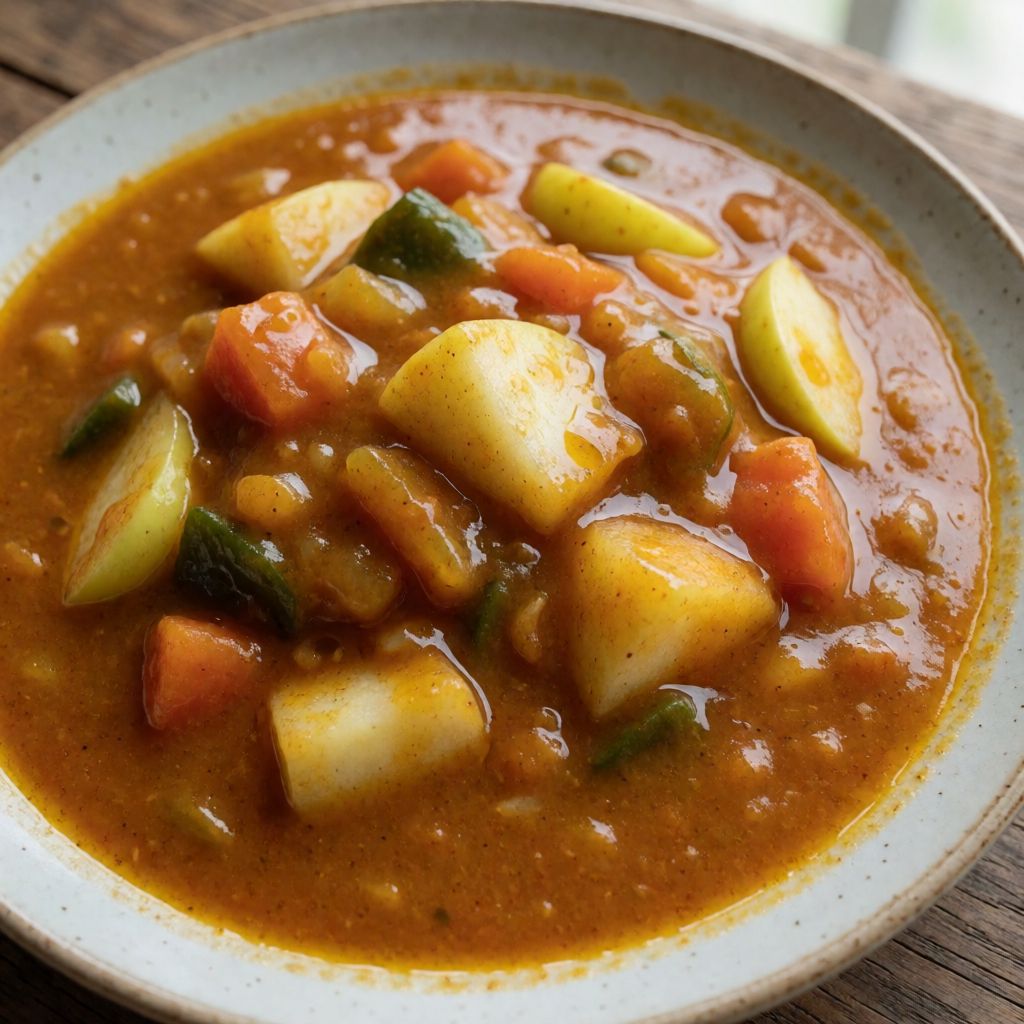
 AI photo
Vegetable Curry with Apple
A warming vegetarian vegetable curry with apple, served with rice and a spread of toppings for everyone to add at the table.
Labels are worked out automatically from the ingredients and can be wrong. Check the packaging if it matters to you.
Ingredients
- 1 tbsp Curry powder medium heat
- 1 tsp Cumin ground
- 1 tsp Ground coriander
- 1 pcs Onion finely chopped
- 2 clove Garlic finely chopped
- 1 tsp Red curry paste
- 1 tsp Turmeric ground
- 250 g Cauliflower small florets
- 75 g Carrot coarsely grated
- 250 g Courgette coarsely grated
- 1 pcs Apple coarsely grated
- 400 ml Vegetable stock
- 50 ml Double cream
- ½ pcs Lemon juiced
- 1 tbsp Olive oil for frying
- Salt
- Black pepper freshly ground
- 300 ml Basmati rice cooked according to pack instructions
- 30 g Desiccated coconut
- 30 g Raisins
- 2 pcs Banana sliced
- 50 g Peanuts salted
- 1 bunch Parsley finely chopped























Steps
In a dry frying pan over medium heat, toast the curry powder, cumin and coriander until fragrant.
2 minAdd the onion, garlic and oil, and fry until the onion softens.
4 minAdd the curry paste, turmeric, cauliflower, carrot, courgette, apple and vegetable stock to a pot and stir well.
Cover and simmer for about 5 minutes, until the cauliflower is tender.
5 minTransfer the mixture to a blender and blitz until the sauce is creamy.
2 minReturn to a clean pot and adjust the taste with cream, lemon juice, salt and pepper.
2 minIf needed, thin with a little more vegetable stock if the sauce is too thick.
1 minServe the rice and curry sauce in bowls, with all the toppings laid out on a platter so everyone can finish their own dish at the table.
This is a blended vegetable curry — not the chunky, sauce-clinging-to-vegetable-pieces kind, but one where the vegetables disappear into the sauce itself and become the sauce. That's the whole trick of it, and it's why step 5 matters more than any of the spicing: you're not simmering vegetables in a curry, you're making a vegetable purée that happens to be spiced like one. Whether it works depends entirely on getting that purée smooth and thick enough to coat rice rather than run off it.
The apple is the quiet engineer here. Raw apple grated into a curry sounds like someone's dietary compromise, but its job is pectin and sugar — it thickens the blended sauce slightly and takes the aggressive edge off the turmeric and curry paste without anyone tasting "apple" specifically. You'd never guess it's there; you'd only notice if it were missing, because the sauce would taste flatter and thinner.
Toasting the dry spices first, before any liquid touches them — that's not ritual, it's chemistry you can smell. Curry powder, cumin, coriander are all dried and a little stale by the time they reach your cupboard; a dry pan wakes the oils back up. Some say spices go straight into the oil with the onion and that's fine too — but a few seconds in a bare hot pan first gets you a rounder, less raw-tasting result, and you'll know it's done the moment the kitchen suddenly smells like a different room.
Start with the spices, because that's where most home curries go wrong before anyone's even added a vegetable. Curry powder is a blend — turmeric, coriander, cumin, chilli, whatever the brand decided — and blends lose their top notes fastest, the way ground coffee goes flat faster than beans. Toasting it dry, no oil, in a hot pan for those first couple of minutes isn't decoration, it's rescue: heat drives the volatile oils back out of the powder so you actually taste something instead of just colouring the dish orange. You'll know it's working because the smell changes — goes from "dusty tin" to something that makes you lean over the pan. If it starts smelling burnt or bitter instead, you've gone too far and there's no fixing that batch; start again, lower heat.
The onion and garlic go in with the oil next, and here's a real kitchen limit worth being honest about: in a UK flat you're almost certainly working on an electric or induction hob in a flat-bottomed pan, not a wok or kazan with fierce, uneven heat from below. That's fine — it just means "medium heat" has to mean something concrete: hot enough that the onion hisses and starts losing its rigidity within a minute, not so hot it colours before it softens. You want the onion to go translucent and slightly floppy, not browned — browning here would mean caramelised sugars fighting with the spice flavours later, and since this whole sauce gets blended, you don't want a muddy, bitter undertone hiding in it.
Oil choice matters less than people think for flavour here, because the spices dominate completely — so any neutral oil with no smell of its own works: sunflower, vegetable, groundnut. Olive oil is specified and it'll do the job, but it's really there for frying convenience, not for any olive character you're meant to taste through turmeric and curry paste.
The vegetables — cauliflower, carrot, courgette — are chosen for a shared trait: they all turn soft enough to blend within the same short simmer, without any one of them collapsing to mush while another's still raw. Cauliflower is your timer here, not the clock: when a floret yields to a knife point with almost no resistance, you're there, and five minutes is just the average time that takes, not a deadline. If you're cooking from a fridge-cold pot or your hob runs cooler, it'll take longer, and that's fine — better a slightly longer simmer than a blender full of raw cauliflower lumps that taste of nothing but cabbage.
Blending is the one piece of equipment-based honesty worth saying plainly: a stick blender in the pot works, but a jug blender gives a smoother result because the blade sits in deeper liquid and doesn't just chop air at the surface. Either way, let the mixture cool slightly first — hot liquid in a sealed jug blender builds pressure and can blow the lid off, which is a genuinely common domestic kitchen accident, not an old wives' tale.
Cream, lemon juice, salt and pepper at the end are adjustment, not ingredients in the structural sense — this is the point where you taste and correct, because blending concentrates flavour unevenly and you won't know if it needs acid or fat until it's smooth. Double cream specifically softens the turmeric's slight bitterness and rounds the chilli heat; if you don't have it, any cream or even coconut milk does the same fat-carrying job, though coconut milk will nudge the flavour toward the toppings already on your platter — coconut, banana, raisins — which isn't a bad direction at all.
Those toppings — coconut, raisins, banana, peanuts, parsley — exist because this dish borrows its serving logic from British curry-house tradition of the 1970s and 80s, where a fairly simple spiced sauce was dressed up at the table with a spread of small bowls, partly for visual abundance and partly because it let one sauce feed very different tastes without anyone having to cook two versions. Banana in a curry context unsettles some people — "fruit doesn't belong in a savoury dish" — but it's doing exactly what the apple did earlier in the pot: sweetness against chilli heat, textural contrast against a smooth sauce. The peanuts are the only crunch in the whole dish once the vegetables are blended, so don't skip them for texture's sake even if you adjust everything else.
And the only ingredient actually asking for patience here is the simmer — not because five minutes is long, but because rushing it to save two minutes means blending underdone cauliflower, and no amount of cream fixes a sauce that still tastes of raw brassica.