
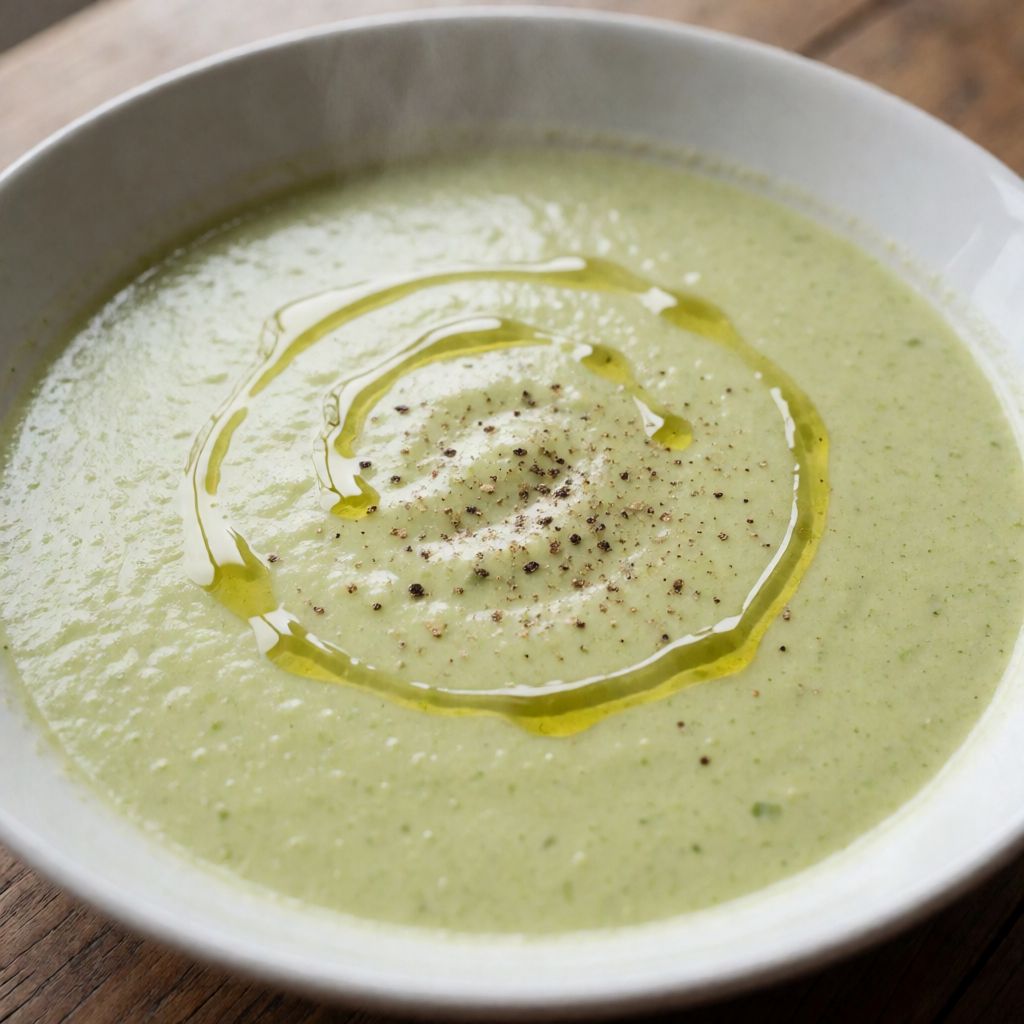
 AI photo
Celery Cream Soup
A light, silky soup made with celery, onion and olive oil — simple and comforting.
Labels are worked out automatically from the ingredients and can be wrong. Check the packaging if it matters to you.
Ingredients






Steps
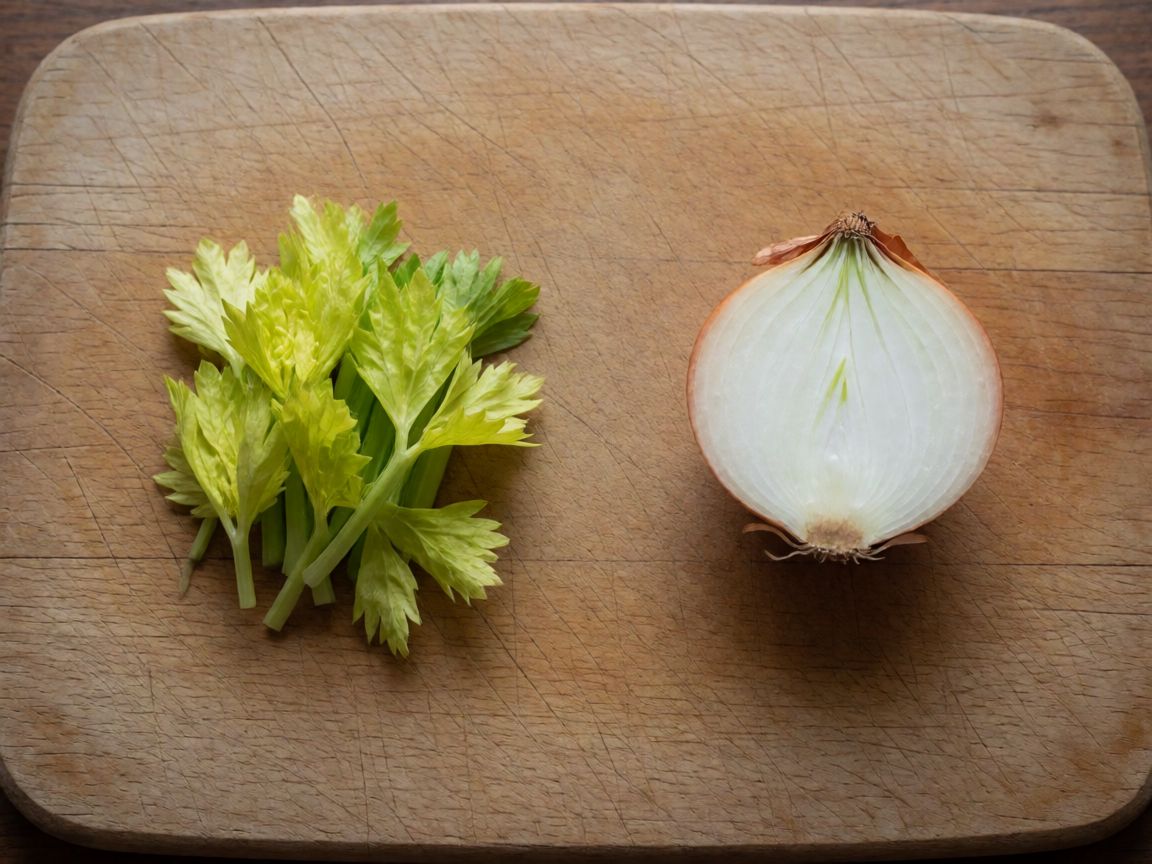
Rinse the celery under running water, remove the tough base and stringy fibres, then cut it into small pieces along with the leaves.
Finely chop half the onion and fry it in a little olive oil until golden.
Add the celery, pour in the water and cook for about 20-25 minutes.
23 minBlend everything with a stick blender until smooth and even.
Season with salt and black pepper to taste, and serve warm.
A celery cream soup is really just two things pretending to be a dish: a sweated onion for backbone, and celery boiled until it gives up its structure, then blitzed into something smooth enough to drink from a mug. No cream in it, despite the name — the "cream" is the celery's own fibre, broken down by heat and water until the blender can turn it into silk. That's the whole trick, and it's why the two steps before blending matter more than anything after.
What decides whether this works is not timing to the minute — it's whether the celery has actually softened all the way through. Some say you can rush a soup like this by chopping the celery finer. No — fine chopping speeds the outside, but the stringy fibres running through celery stalks are tough right to the core, and if the middle's still got bite, your blender will leave threads in the soup no amount of spinning fixes. You want the pieces to go from crisp-pale to soft and slightly translucent, yielding to a fork without resistance. That's your cue, not a clock.
The onion fried first isn't decoration — it's the only source of real savoury depth in a soup that otherwise has just two watery vegetables and water itself. Golden, not brown: push it past gold into brown and you get bitterness that no amount of salt will talk you out of, because bitter compounds don't dissolve away, they just sit there arguing with everything else in the pot.
Celery is the whole dish, so don't skimp on trimming it. The base end is where the stalk was cut from the root — it's woody, almost like chewing a green pencil, and it won't break down in twenty minutes no matter how long you leave it. Cut it off. The fibrous strings running along the outer edge of each stalk are the plant's plumbing — they carried water up from the root — and they're built to resist exactly the kind of softening you're trying to do. A vegetable peeler run along the back of each stalk strips most of them off in seconds; skip this and you'll taste it later as faint threads caught between your teeth, however smooth the rest looks. Keep the leaves — they're more concentrated in flavour than the stalk and the blender doesn't care about leaf versus stem.
Onion: any will do, but a standard yellow or white onion gives you the most sugar to caramelise into gold, which is the whole point of frying it first. Red onion works but tastes sharper raw and takes longer to mellow. You're only using half here — save the other half for something else, or slice it thin raw over the finished soup if you want a bit of bite on top.
Olive oil "to taste" really means: enough to coat the bottom of the pan and stop the onion sticking, nothing more — this isn't a soup where the oil itself is a flavour you're chasing, it's a medium. Any oil with no smell of its own will do the same job — sunflower, a mild rapeseed, whatever's in the cupboard. Save a flavourful extra virgin for drizzling over the bowl at the end if you want that grassy top note; heat kills its character anyway, so there's no reason to cook with the good stuff.
Water is literally doing two jobs — cooking the celery and becoming the body of the soup — so if your tap water tastes of anything unpleasant, it'll be in the final bowl, concentrated. Some kitchens reach for stock here instead, and that's a fair swap if you want more savoury weight, but it's not what makes this soup work; the celery and onion are already doing that.
Salt and pepper go in at the end, after blending, not before — season a liquid before you know its final volume and you're guessing twice. Taste it warm, since cold mutes salt and you'll oversalt trying to compensate.
Patience here isn't really about the clock — it's about trusting the fork-test over the timer, because stove heat varies more at home than any recipe admits, and a domestic hob running a touch cooler than you think will quietly add five minutes nobody wrote down.