
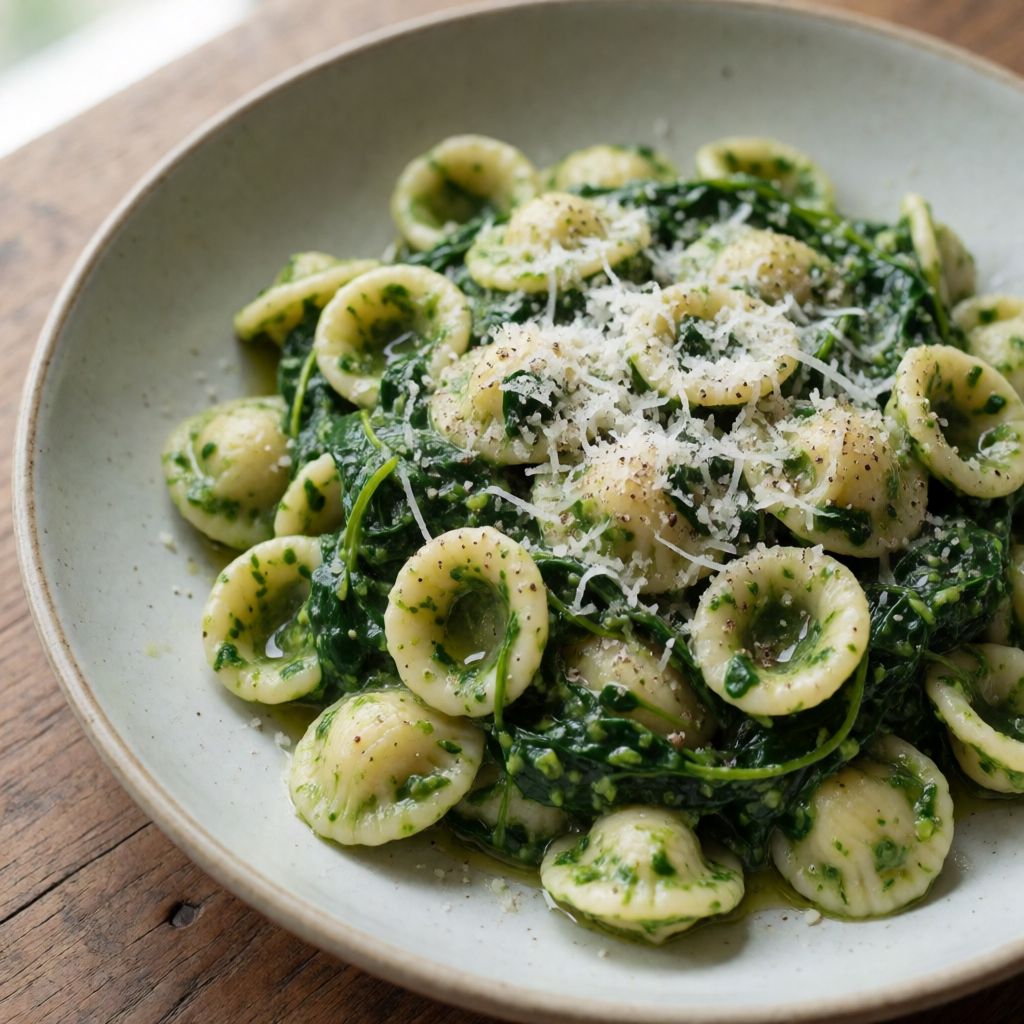
 AI photo
Orecchiette with Rocket Sauce
A quick pasta with a vibrant rocket sauce, blended with pine nuts, garlic, anchovies and capers.
Labels are worked out automatically from the ingredients and can be wrong. Check the packaging if it matters to you.
Ingredients
- 200 g Rocket
- Salt to taste
- Black pepper to taste
- Olive oil to taste
- 1 clove Garlic
- Pecorino Romano to taste
- 40 g Pine nuts
- 2 pcs Anchovies
- 1 tsp Capers in apple cider vinegar
- 400 g Orecchiette









Steps
While the orecchiette cook in salted boiling water, combine the rocket, a pinch of salt, pine nuts, garlic, capers and anchovies in a blender.
Pour in the olive oil in a thin stream and blend until you have a smooth, loose sauce.
In a sauté pan, quickly toss the pasta with the sauce for a few minutes, then add the Pecorino Romano and black pepper.
Serve immediately, sprinkling with extra Pecorino Romano if you like.
This is pesto logic, not a sauce recipe: something bitter and green, something fatty, something salty, blitzed until a spoon leaves a trail instead of a puddle. Rocket stands in for basil here, and it works because the two share the same job — a leaf with a sharp, slightly peppery bite that cuts through fat instead of hiding under it. Orecchiette earns its place too: those little ears aren't decorative, they're built to hold a loose, clingy sauce in their cup rather than let it slide to the bottom of the bowl the way a flat sauce would off tagliatelle.
What decides whether this works is restraint in two places. First, the blender: you want it smooth enough to coat, not so smooth it turns to green paste with no texture left — a few seconds too long and the rocket's chlorophyll turns bitter and grassy instead of peppery, because you've bruised the leaf past the point where its oils are pleasant. Second, the pan at the end: this is a toss, not a simmer. The sauce is raw-finished, warmed through by contact with hot pasta and a hot pan, not cooked — cook it properly and the garlic turns acrid, the anchovy loses its silkiness and just tastes of fish.
Some say rocket pesto needs to be bright green and the moment it looks khaki it's ruined — no, because that colour shift is mostly oxidation from air meeting cut leaf, not spoilage, and a squeeze of acid or just eating it promptly solves it. It's a dish for a weeknight, not a dinner party photograph.
Rocket itself is the whole point and also the risk. Young, tender rocket is peppery without being aggressive; let it bolt and go tough — which happens fast once it flowers — and it turns properly hot and fibrous, more mustard than salad leaf. For 200g feeding four as a pasta course, you want the softer bagged kind, not the wild, woody stuff from an allotment in August. If rocket genuinely isn't around, baby spinach with a pinch of mustard powder gets you something edible, though you lose the pepper entirely — it's a stand-in, not an equivalent.
The anchovies aren't there to taste of fish — two fillets dissolved into a blended sauce for four people disappear as "fish" and reappear as savoury depth, the same trick they pull in a proper Caesar dressing. This is what capers do for food in general: not a prominent flavour of their own, but a way of making salt taste complex instead of flat, like MSG does if you don't have anchovies, you can skip them, but the sauce will taste thinner, one-dimensional in its saltiness — reach for a few extra capers or a stronger pecorino to compensate, not more plain salt.
Pine nuts bring fat and a soft crunch, and they're the most skippable ingredient here on cost grounds alone — they've always been pricey because the pine cones that hold them take two to three years to mature and have to be hand-harvested, which is exactly why cheaper nuts crept into cheaper versions of every pesto. Toasted walnuts or blanched almonds do the same structural job — fat plus bite — for a fraction of the price; just taste as you go, since each nut brings its own background flavour.
Garlic: one clove, raw, blended straight in — no need to cook it first here since the heat at the end is brief and gentle enough not to scorch it. If raw garlic repeats on you, you can sweat it very gently in a little of the olive oil first until it just loses its rawness, not colours, then let it cool before blending — colouring garlic is where bitterness comes from, not garlic itself.
For the oil: what you want is something with no flavour loud enough to fight the rocket — "olive oil to taste" in the ingredient list is really shorthand for "a neutral-ish fat, however much the blender needs to turn thick into pourable." A mild, everyday olive oil works; a heavily peppery, grassy extra virgin will double up on the rocket's bitterness rather than cushioning it, so save the good stuff for drizzling at the table, not for blending in.
The pecorino does two jobs at once: salt and a sharp, sheepy tang that rocket alone doesn't give you. Parmesan is the obvious substitute and perfectly fine — you lose some of that gamier edge but gain nothing but convenience, which on a Tuesday is a fair trade.
And patience, even in twenty minutes, still has a job: don't rush the oil into the blender. Pour it in a thin stream, not all at once, the same way you'd build a mayonnaise — add it too fast and the sauce splits into oily puddle and dry paste instead of emulsifying into something that actually clings to pasta. That slow pour is the one place in this whole quick dish where going faster costs you the texture you're trying to get.