
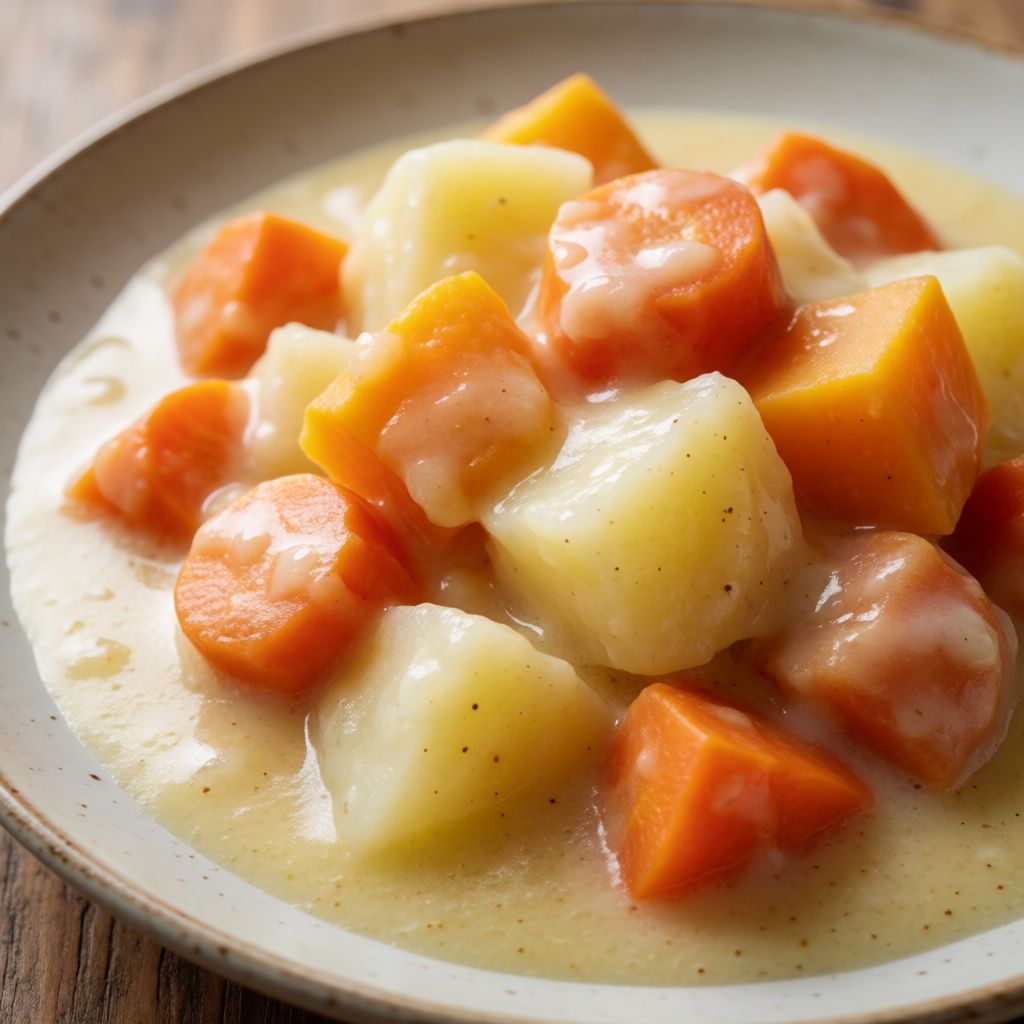
 AI photo
Root Vegetables in Coconut Milk
A warming, spiced coconut milk stew with potato, carrot and sweet potato — a simple, comforting side dish.
Labels are worked out automatically from the ingredients and can be wrong. Check the packaging if it matters to you.
Ingredients
- 1 tsp Cardamom
- 2 tsp Cumin
- 2 tsp Ground coriander
- 400 g Potato diced
- 500 g Carrot diced
- 400 g Sweet potato diced
- 2 pcs Red onion finely chopped
- ½ pcs Red chilli finely chopped
- 3 clove Garlic finely chopped
- 1 tbsp Ginger grated
- 800 ml Coconut milk
- 1 tbsp Sesame oil or another oil for frying
- Salt
- Black pepper freshly ground
- 100 g Spinach roughly chopped
- 30 g Cashews for sprinkling
- 100 ml Crème fraîche 18%
















Steps
Toast the cardamom, cumin, coriander and a little black pepper in a dry pan until fragrant.
2 minReduce the heat and add the potato, carrot, sweet potato, red onion, chilli, garlic, ginger and sesame oil.
4 minStir together and cook for a few minutes.
Add the coconut milk, stir, and cover the pan with a lid.
1 minSimmer the root vegetables gently for 20 minutes, until tender.
20 minSeason with salt and black pepper to taste.
1 minScatter the roughly chopped spinach over the top, finish with crushed cashews and a spoonful of crème fraîche, and serve with bread if you like.
This is a braise, not a curry, even though it looks like one. Three root vegetables with different densities go into the same pan, in the same cut, and come out tender together because coconut milk simmers low and slow rather than boiling hard — the liquid holds them just under a hundred degrees, which is exactly what potato, carrot and sweet potato need to soften without collapsing into mush.
What decides whether this works is the dry toast at the start. Cardamom, cumin and coriander in a bare pan, no oil, for two minutes — you're not cooking them, you're waking up oils that are sealed inside the seed coat. Skip this and the spices taste flat and powdery in the finished dish, because raw ground spice just sits in fat and never actually opens up. Some say toasting spices burns them easily — true only if you leave the pan on full heat and walk off. Watch the colour, smell for the change from raw to warm and nutty, and you've got maybe thirty seconds of grace either side.
The vegetables go in while the pan is still hot from toasting, not after it's cooled — that's the heat doing a second job, starting to soften the onion and coat everything in spice before any liquid arrives. Then coconut milk, a lid (your own pan lid or a plate balanced over it, both work), and patience. Twenty minutes is the lower bound, not a deadline — a sweet potato chunk that still resists a fork needs another five, and nothing about this dish is ruined by that.
Potato, carrot, sweet potato: cut them to roughly the same size and you avoid the real failure here, which isn't "overcooked" or "undercooked" but uneven — soft carrot sitting next to a potato cube still raw in the middle. Dice them close to each other in size and they'll finish together, because it's surface-to-core distance that governs cooking time in a braise like this, not the vegetable itself.
Coconut milk: use the full-fat tinned kind, the one that separates into a thick cap and thinner liquid when it sits. That fat is what carries the toasted spice flavour and what keeps the sauce from going watery once the vegetables release their own liquid. A "light" coconut milk will cook thin and taste of nothing much — if that's all you have, reduce it a little longer uncovered at the end rather than trust it to thicken on its own.
Red chilli and ginger go in raw and finely chopped, not cooked separately — they soften into the sauce over the twenty minutes and lose their rawness without losing their heat and bite, which is the point of chopping fine rather than slicing. Garlic the same: fine chop, not crushed to a paste, so it melts into the base instead of burning onto the pan before the coconut milk arrives.
Sesame oil here is for its own flavour, which is unusual for me to let stand, since normally I'd tell you to use something with no smell of its own. If you don't have it, a neutral oil — sunflower, groundnut — does the job of carrying heat to the vegetables just fine; you'll just lose the faint nuttiness sesame adds underneath the spices.
Spinach and cashews go on at the very end, off the heat or close to it. Spinach cooked into the braise would turn to dark mush and bleed its colour into the sauce; scattered on top it wilts from the dish's own heat in under a minute and keeps its green. Crush the cashews rather than leave them whole — crushed, they catch moisture from the crème fraîche and soften slightly at the edges while staying crisp in the centre, which is a better contrast against a soft braise than a whole nut rattling around.
Crème fraîche at 18% fat is thick enough to sit as a spoonful on top rather than melt straight into the sauce — that's the texture you want, a cool, sharp dollop against the warm spiced coconut underneath. Soured cream works the same way if that's what's in the fridge; yoghurt is thinner and will slump and mix in faster, which isn't a disaster, just a different, looser finish.