
 AI photo
Tuna Pasta with Sugar Snap Peas
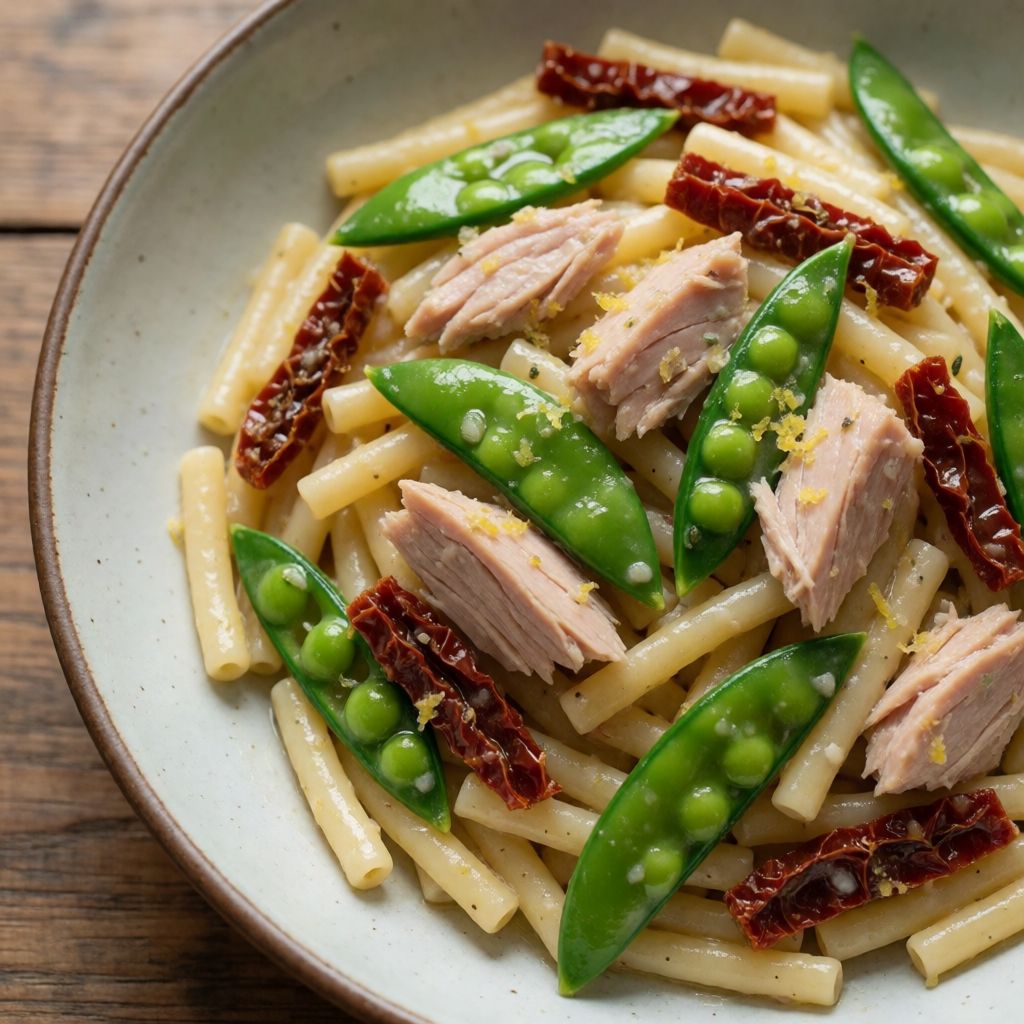
A fresh pasta salad with seared tuna, crisp sugar snap peas and sun-dried tomatoes.
Labels are worked out automatically from the ingredients and can be wrong. Check the packaging if it matters to you.
Ingredients
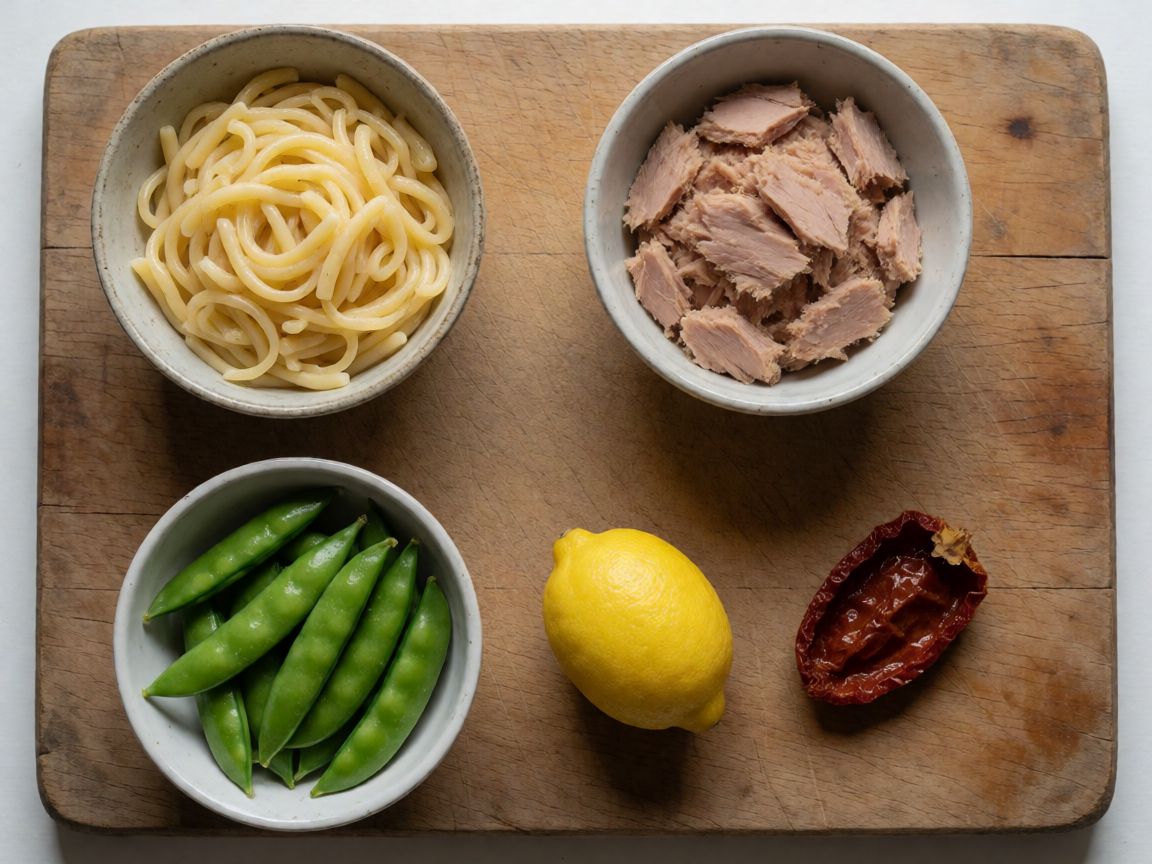
- 400 g Short pasta
- 200 g Tuna
- 200 g Sugar snap peas
- 1 pcs Lemon
- 1 pcs Sun-dried tomatoes
- Salt to taste
- Olive oil to taste
- Black pepper to taste
- Coarse salt to taste






Steps
Bring a large pot of water to the boil, add coarse salt and cook the pasta until al dente.
Cool the pasta to room temperature, tossing with a little olive oil.
Sear the tuna on a hot griddle for about 2 minutes, then dice into small cubes.
2 minWash the sugar snap peas thoroughly, trim the ends and boil for a few minutes in salted boiling water.
Drain the sugar snap peas and cut into medium-length pieces.
Add the sugar snap peas and tuna to the cooled pasta.
Make a dressing from lemon juice, olive oil, salt and black pepper, then pour it over the pasta.
Add the chopped sun-dried tomatoes and toss to combine.
This is a cold pasta salad built on a contradiction: you cook three things hot — pasta, tuna, peas — and then deliberately let the heat go to waste before anything meets the dressing. That's the whole mechanism. Olive oil and lemon juice don't want to cling to a hot surface; they slide off and pool at the bottom of the bowl. Cool the components first and the oil coats instead of running, the lemon seasons instead of steaming off. Patience is an ingredient here, and it's the only one that costs nothing but time.
The tuna is seared, not cooked through — about two minutes on a screaming-hot griddle or the heaviest pan you own, just enough to set a crust and leave the centre pink and soft. Some say tuna for a salad should be tinned and that's that. No — tinned tuna is a different dish, already cooked through and oil-cured; seared fresh tuna gives you a contrast of textures, crust against raw-ish middle, that tinned fish simply can't. If you only have tinned, use it, but don't sear it — there's nothing left to sear.
The sugar snap peas go into boiling salted water for a few minutes, no longer than it takes for the raw squeak to leave them — you want a bite still there, a point where the pod bends but doesn't go limp. Overcook them and you lose the one thing fresh vegetables bring to a dish of starch and fish: snap. Taste one. That's the timer, not the clock.
Short pasta is the right shape because this dish has no sauce clinging to anything — it has bits of tuna, snap pea, sun-dried tomato sitting among the pieces, and you want a shape with a hollow or a twist to catch them: fusilli, penne, conchiglie. Long pasta would just slide past everything on the fork. 400g for four people is a generous main-course portion, not a starter — in a British kitchen that's roughly one full standard packet for a family meal, nothing to weigh out specially.
Tuna: buy a steak thick enough to sear without cooking through in the two minutes it's on the heat — thin cuts go grey all the way before a crust forms. A heavy griddle pan does this better than a non-stick frying pan because it holds its heat when the cold fish hits it; a thin pan loses temperature on contact and you end up steaming the fish instead of searing it. No griddle marks needed, no decoration — the point is the crust, not the stripes.
Sugar snap peas want trimming at both ends because the stringy seam along the pod is the one part that doesn't soften in the time it takes the rest to cook — leave it on and you get a fibrous thread caught in your teeth in an otherwise tender bite. This is a small step people skip and then blame the vegetable for being tough, when it was the trim they missed.
Lemon and olive oil are the dressing, and here "olive oil" means any oil with no flavour loud enough to fight the fish — a light, fruity olive oil, not a heavily peppery one that would compete with the black pepper already in the bowl. If you've only got a robust single-estate oil meant for dipping bread, cut it with something neutral, or save it for another day. Lemon juice should be fresh-squeezed; bottled juice has a flat, slightly bitter edge from processing that a crisp vegetable salad shows up immediately.
Sun-dried tomatoes bring salt and a concentrated, almost caramelised sweetness that plain fresh tomato can't — they're tomato with the water economy removed, which is exactly why they were invented: a way to keep summer tomatoes edible through winter before anyone had a freezer. Use the ones in oil rather than the dry, leathery bagged kind — the oil-packed ones are already softened and won't fight your teeth the way a rehydrated dry one can if it wasn't soaked long enough.
Coarse salt in the pasta water isn't about flavouring the finished dish directly — it's there because the water needs to taste like the sea for the pasta itself to pick up any seasoning at all as it swells and absorbs. Table salt works too, you just use less of it, since it's denser and saltier gram for gram. There's no need to buy a special coarse salt for this if you don't already have one — adjust by taste, not by the label on the box.
·