
 AI photo
Rocket Pesto Pasta with Lemon
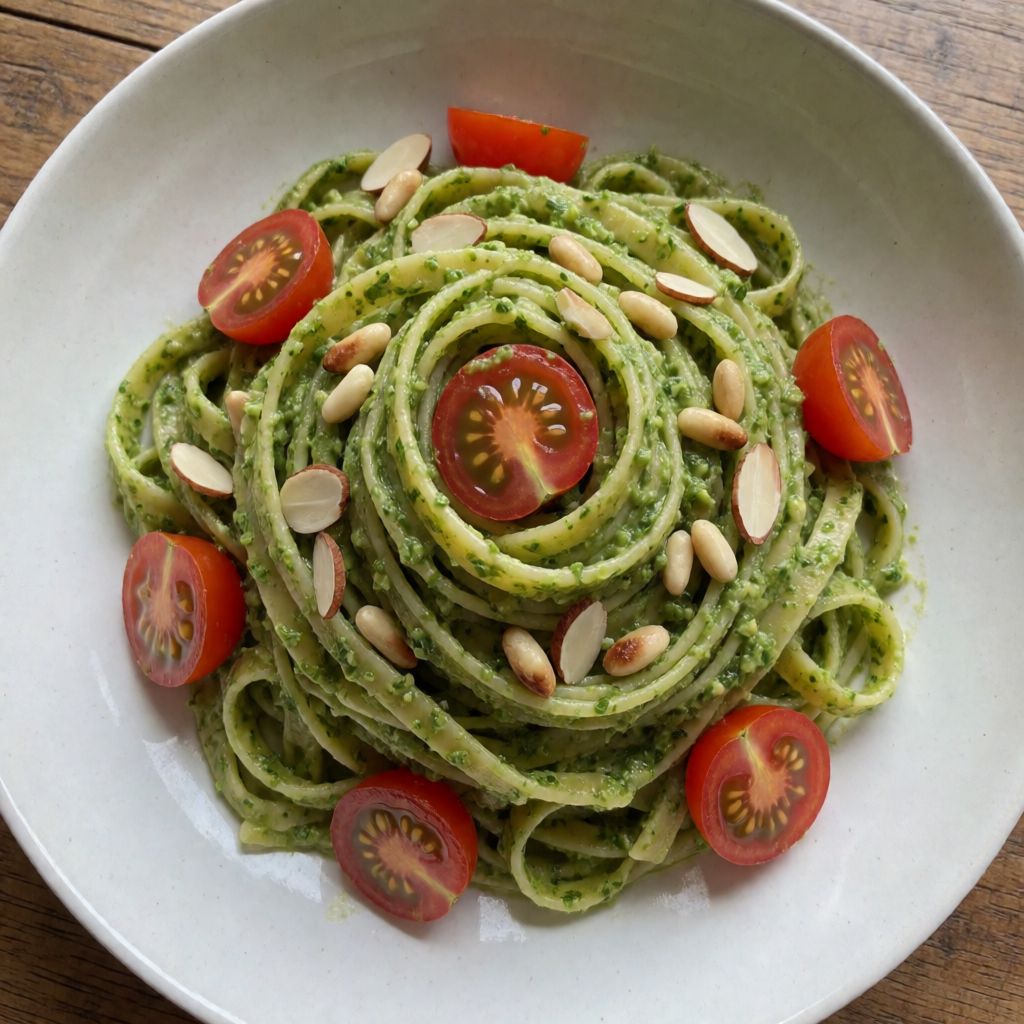
A fresh pasta with rocket, lemon and roasted cherry tomatoes, finished with toasted almonds.
Labels are worked out automatically from the ingredients and can be wrong. Check the packaging if it matters to you.
Ingredients










Steps
Wash and halve the cherry tomatoes, then arrange them on a baking tray lined with baking paper.
Add salt, sugar and olive oil, then roast in an oven preheated to 120°C.
120 minTransfer the rocket to a blender, add the Parmesan, pine nuts, lemon juice and a pinch of salt.
Blend, gradually pouring in the olive oil in a thin stream, until all the ingredients combine into a smooth, creamy pesto.
Cook the pasta in boiling water for the time stated on the packet, until al dente, then drain.
Combine the pasta with the pesto, mix well, adding a spoonful of pasta water if needed.
Plate up and finish with the roasted tomatoes and toasted almond flakes.
This isn't really pesto alla genovese wearing a disguise — it's a cold, raw sauce built on rocket instead of basil, which means it works on a different logic entirely. Basil pesto is sweetish and gentle; rocket is peppery and a bit bitter, so the whole dish leans into that bite rather than smoothing it over. The lemon isn't decoration — it's the acid that cuts the bitterness of the leaf and keeps the olive oil from tasting flat and greasy on the tongue.
What decides whether this works is two unrelated things happening at once: a slow-roasted tomato in the background, and a raw blended sauce at the front. The tomatoes spend two hours at a temperature too low to brown or caramelise in the usual sense — 120°C is really just slow dehydration. You're pushing water out of the tomato without pushing flavour out with it, so what's left behind is concentrated, almost jammy, with none of the wateriness raw cherry tomatoes have. Some say low-and-slow is about "developing flavour" like it's magic — no, it's simply evaporation: you're doing to the tomato in your oven what the sun does on a washing line, just faster and with salt and sugar helping draw the moisture out.
Pasta: 400g for four people is the honest ratio — about 100g a head, which is restaurant-portion rather than "feed a hungry builder" portion, because this pasta is meant to carry a strong sauce, not fill a plate on its own. Any shape with surface texture — fusilli, penne, orecchiette — holds pesto in its folds better than something smooth like spaghetti, where the sauce mostly slides off onto the plate.
Cherry tomatoes: small ones roast faster and more evenly than halving a big tomato, which stays wet in the middle long after the outside's gone leathery. The sugar isn't there to make them taste "sweet" — it's there to balance the acidity that gets more concentrated as the water leaves, the same way adding a pinch of sugar to a tomato sauce stops it tasting sharp. Watch for the tomato going from plump and glossy to slightly shrunken and matte at the edges, with the skin starting to wrinkle like a raisin — that's the water gone, not a clock telling you so. Two hours is a lower bound; your oven, your tray, how wet your tomatoes were to start with, all shift it.
Rocket: buy it young and peppery-fresh, not the bag that's been sitting a week going yellow at the edges — bitterness in old rocket isn't the good, complex kind, it's just decay. If you can't find rocket, baby spinach with an extra squeeze of lemon gets you something close in texture, though you lose the pepperiness that's really the point of the dish; watercress is nearer in character if you want to keep that bite.
Pine nuts: expensive because they're slow to grow and painstaking to harvest by hand from the cone — that's the whole reason they cost what they do, nothing mystical about it. Toast them lightly in a dry pan first if you want more flavour for your money, watching for them turning from pale to light gold — go past gold and they're bitter, because the oils in them scorch fast. Almonds, flaked, do a similar job in the pine nut family — nutty fat with a bit of crunch — and are the cheaper stand-in if pine nuts feel like too much for a Tuesday.
Parmesan: it's doing double duty — salt and a savoury depth (umami, if you want the word) that thickens the pesto as much as it flavours it, because the protein in a hard, aged cheese helps bind the emulsion. A other firm, well-aged hard cheese can substitute, but a soft or young one won't behave the same way in the blender — it won't give you the same grainy-binding texture.
Lemon: juice for acid in the pesto, and don't skip it thinking the olive oil alone will taste "clean" — oil without acid against it just tastes heavy on the tongue, however good the oil is. Olive oil itself: look for one with no strong flavour of its own fighting the rocket — "extra virgin" on a label tells you about processing, not about whether it suits this dish, so taste it on a spoon first if you can.
A spoonful of pasta water at the end isn't tradition for tradition's sake — it's starch and warm water loosening a sauce that's gone stiff from sitting, letting it coat the pasta again instead of clumping on top of it. And the two hours in the oven is the one ingredient most people forget they're paying for: patience. There's no shortcut that gets you the same depth of flavour from a raw tomato in twenty minutes — you either give it the time or you serve a different dish.
·