
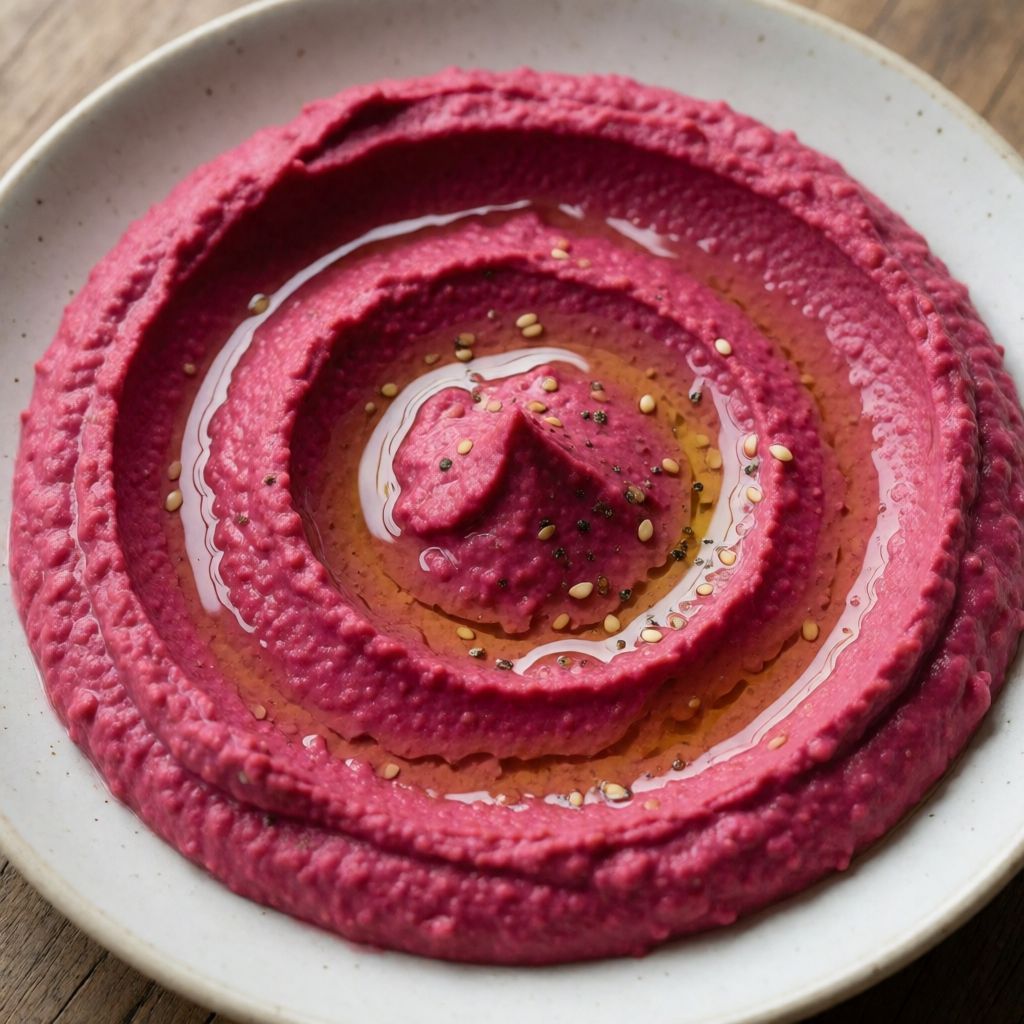
 AI photo
Beetroot Hummus
A vibrant pink dip made from boiled beetroot blended with chickpeas, tahini and horseradish.
Labels are worked out automatically from the ingredients and can be wrong. Check the packaging if it matters to you.
Ingredients
- 200 g Beetroot
- 1 can Chickpeas rinsed and drained
- 1 tbsp Tahini
- 10 g Horseradish finely grated
- ½ pcs Lemon
- 2 tbsp Lemon Juice
- 2 clove Garlic
- 1 tsp Cumin
- 2 tbsp Olive Oil
- 1 tsp Salt
- 1 tsp Black Pepper








Steps
Scrub the beetroot clean and boil in their skins for 30 minutes.
30 minRinse the beetroot under cold water.
Let them cool slightly, peel and cut into smaller pieces.
10 minBlend the beetroot, chickpeas, tahini, lemon juice, garlic, cumin and horseradish in a blender until creamy.
3 minSeason with lemon juice, salt and pepper, and add a little olive oil if needed for the right consistency.
2 min
Beetroot hummus is the Levantine idea wearing a different root. Take the chickpea-tahini base everyone knows, swap half the body for boiled beetroot, and you get something pink, a bit sweet, a bit earthy, with horseradish doing the job that extra garlic usually does — waking it up. It's not a health-food stunt dressed as hummus; it's the same mechanism, just with a vegetable that brings its own sugar and colour instead of relying on the chickpea alone.
What decides whether it works is moisture control, not flavour. Beetroot, once cooked, holds a lot of water inside its cells — more than chickpeas do. If you blend it in wet and hot, you get soup, not spread. So the beetroot needs to actually cool and firm up a little before it meets the blade; warm veg purées thinner because heat keeps the cell walls loose. Let it sit those ten minutes, don't rush it under cold water and straight into the jar.
The other hinge is the horseradish. Fresh grated horseradish loses its sting fast once cut — the compound that makes it sharp is volatile and starts fading the moment air hits it. So you want it grated close to blending, not sitting out. Its job here isn't to be noticeable as horseradish; it's to cut through the beetroot's sweetness so the whole thing doesn't taste like dessert.
Boiling the beetroot in its skin, not peeled, is not fussiness — it's economics of mess. Peel it raw and you're scrubbing pink off your worktop and your hands for an hour; boil it whole and the skin slides off under cold water with your thumb, no knife, no stained fingers, no beetroot juice migrating into everything else on the board. The skin also keeps the sugars and colour inside while it cooks instead of leaching into the water, so you lose less flavour to the pot.
Chickpeas from a can, rinsed and drained, are the sensible choice for one serving — dried chickpeas need soaking overnight and an hour or more of simmering to go soft enough to blend smooth, and for a small batch that's a lot of commitment for not much return. Rinsing matters because the canning liquid is thick with starch and salt that will throw off both your texture and your seasoning if it goes in with the peas.
Tahini is sesame paste, and its job is fat plus a faint bitterness that stops the whole thing tasting one-note sweet from the beetroot. If you have none, a mild nut butter — cashew, for instance — will give you the creaminess without the bitterness; it changes the dish slightly but won't break it. What tahini should not be replaced with is peanut butter, which brings its own strong flavour that fights the beetroot rather than supporting it.
Lemon does two jobs here, not one, which is why the ingredient list splits it into juice and a half-fruit. The juice is for acid balance — beetroot and chickpeas are both quite flat and sweet-savoury, and without acid the hummus tastes heavy, almost muddy. Taste and add gradually at the end rather than all at once up front, because how much you need depends on how sweet your particular beetroot turned out — no two batches are identical, which is exactly why the recipe tells you to season to taste rather than giving you a fixed final number.
Garlic goes in raw, which in a cooked dip is doing real work: raw garlic keeps its sharp bite, where cooked garlic would go soft and sweet and disappear next to the beetroot. Two cloves is a reasonable floor for the quantities here — go lighter if your garlic is large or very fresh, since fresh garlic is noticeably stronger than garlic that's sat around a week or two softening in its skin.
Olive oil at the end is for consistency, not flavour, which is why it's "add a little if needed" rather than a fixed amount. Use anything with no smell of its own if you don't want the oil to compete with the beetroot — a light vegetable or sunflower oil will do the same mechanical job of loosening the purée without adding its own taste. A good extra-virgin olive oil is lovely to finish with on top in a little pool, drizzled just before serving, but inside the blend itself its flavour mostly gets lost anyway, so don't spend your best bottle on the inside of the jar.
Patience here is short but real — those ten minutes of cooling are the one step people skip because it looks like dead time. It isn't. It's the difference between a hummus you can spread on toast and one that runs off the knife.
·