
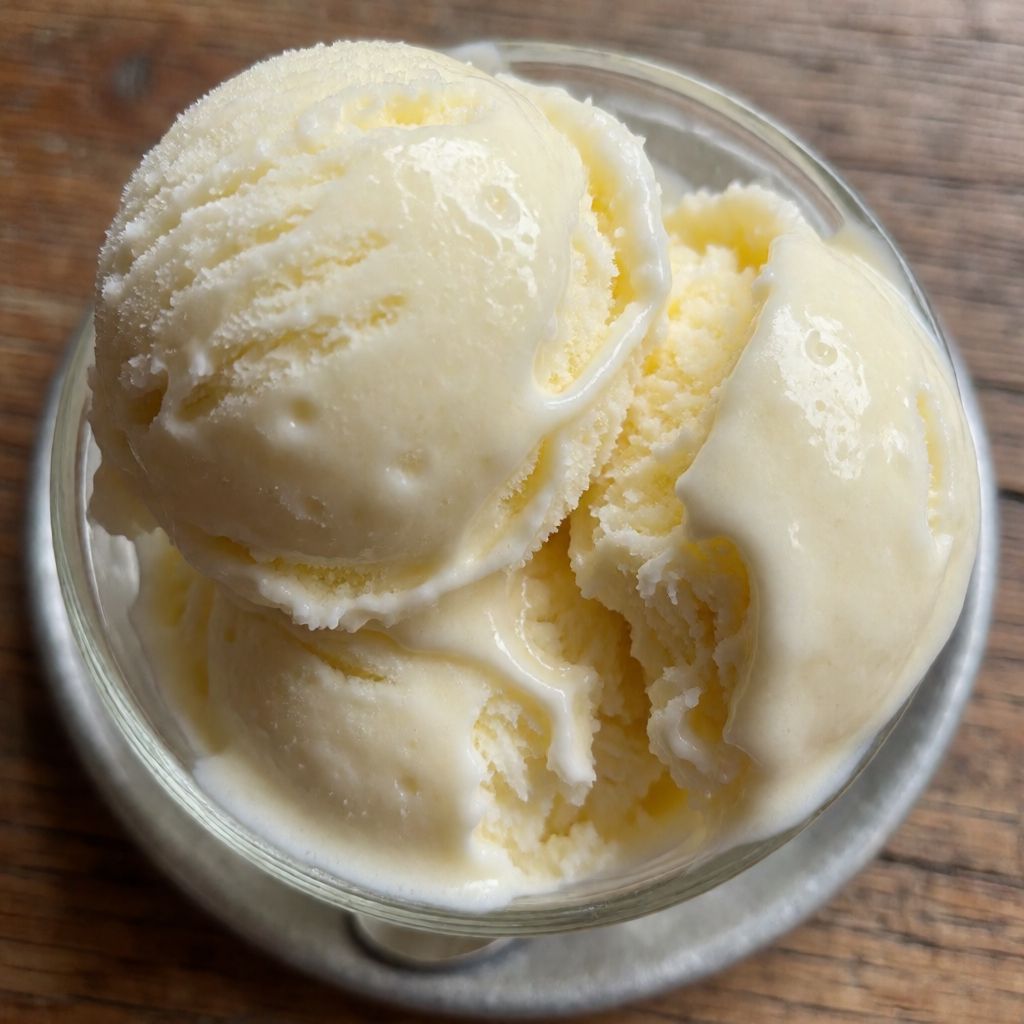
 AI photo
No-churn Lemon Gelato (No Ice Cream Maker, No Eggs)
A simple no-churn lemon gelato made without an ice cream maker or eggs.
Labels are worked out automatically from the ingredients and can be wrong. Check the packaging if it matters to you.
Ingredients
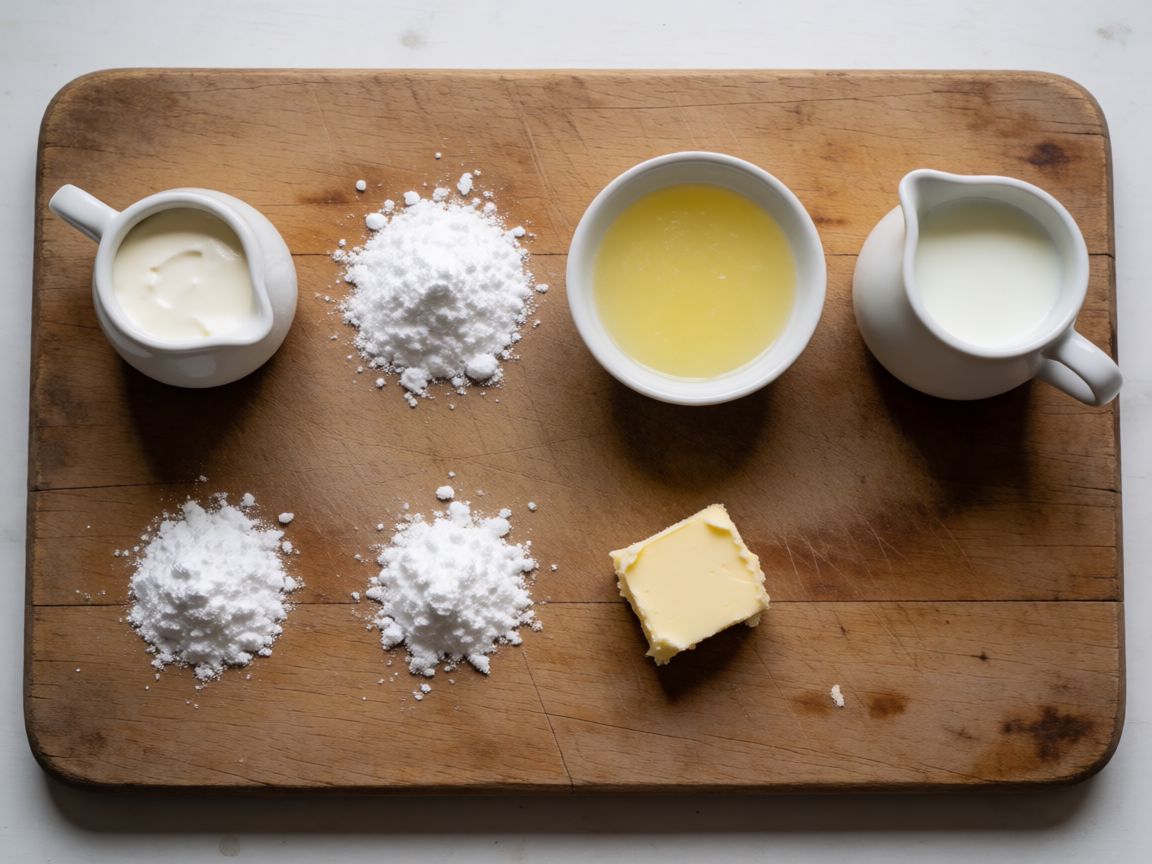
- 250 ml Double cream
- 40 g Icing sugar
- 60 g Lemon juice
- 90 ml Milk
- 90 g Icing sugar
- 15 g Butter




Steps
Melt the butter in the milk over low heat, stirring constantly.
Add the icing sugar and cook, whisking, until the mixture thickens slightly.
Pour the condensed milk mixture into a bowl and let it cool completely.
Whip the cream with the icing sugar.
Add the cooled condensed milk mixture and mix with an electric mixer.
Pour in the lemon juice and mix well.
Pour everything into a glass container and place in the freezer.
420 min
This is gelato by trickery. Real gelato gets its density from churning — a paddle beating air into the mix while it freezes, so the ice crystals stay small and the texture stays silky instead of going into a solid brick. You don't have a churn, so the whisk does the work before the freezer does, not during it. Whip air into cream, fold in something fatty and sweet, and freeze it still. The fat and sugar slow ice crystal growth enough that you get something close to scoopable, even without the machine doing laps.
What decides whether this works is two separate things pretending to be one step. First, you make a stand-in for condensed milk — butter melted into milk, sugar whisked in, cooked until it thickens slightly. This isn't caramelising anything, it's reducing: driving off a bit of water so the mix carries more sugar and fat per spoonful. More sugar in a frozen dessert means a lower freezing point and softer texture — that's the actual mechanism, not a magic ingredient. Some say you need actual tinned condensed milk for this kind of recipe — no, because what you're after is fat plus sugar plus a little body, and you can build that from milk, butter and sugar in ten minutes on your own hob.
The freezer is the real kazan here, and it's an honest one — it won't lie to you the way a churn might. No churn means no constant agitation, so every bit of lightness has to be built in advance and then simply held, not created in the freezer itself. That's why the seven-hour freeze (round it to overnight, your freezer door gets opened for other things) is listed last and isn't a step you can rush with a colder setting. Patience is the one ingredient this recipe doesn't put in the list but absolutely requires — cold doesn't fix a badly aerated mix, it just locks in whatever state you handed it.
Double cream is the engine. You want cream with enough fat to hold air when whipped and still carry flavour when frozen — something around 48% fat, which is what "double cream" means in a UK fridge. Lower-fat creams whip thinner and freeze harder, because there's less fat to interrupt ice crystal formation; single cream won't give you a scoopable result here, it'll give you a flavoured ice cube. If you're substituting, the rule is fat content, not brand: any cream that holds a stiff peak on its own will do.
Icing sugar appears twice for two different jobs. In the cream, it sweetens without the grittiness caster sugar can leave in a cold dessert — icing sugar dissolves faster and finer, so there's no sandy texture once frozen. In the milk mixture, the larger 90g is doing double duty: sweetening, yes, but also lowering the freezing point of that part of the mix, which is what keeps the whole gelato from setting rock-hard. Butter, melted into the milk, adds fat where milk alone is too lean — milk's fat content is too low to give you that short, dense condensed-milk texture, so butter tops it up cheaply. This is the same economic logic behind most "mock" ingredients in home cooking: tinned condensed milk is convenient but not magic, and butter plus milk plus sugar gets you close enough for a fraction of the fuss.
Lemon juice is flavour and acid both, and freshly squeezed matters more here than in a cooked dish, because nothing is simmering long enough to mellow out the flat, slightly metallic taste bottled juice can have. Some believe you need bottled juice for consistency — no, because this isn't a recipe relying on precise acidity for a chemical reaction, it's relying on taste, and fresh wins on taste every time. If your lemons are weak, add by taste rather than trusting the 60g on faith; lemons vary more than any other ingredient on this list.
For your kitchen: a wide shallow glass dish freezes the mix faster and more evenly than a tall narrow one, because more surface sits close to the cold air — the deeper your mix, the longer the middle takes to catch up, and the longer everything else sits at a texture-killing semi-thaw. No lid needed if you've got cling film pressed onto the surface; it stops the top forming a dry, crystalline skin, which is the frozen-dessert version of a crust you didn't want. And a tip from plain experience rather than any book: take it out of the freezer five or ten minutes before serving. Straight from seven hours in a British freezer, it will be harder than you expect, and a short rest on the counter brings it back to something you can actually scoop rather than chip at.