
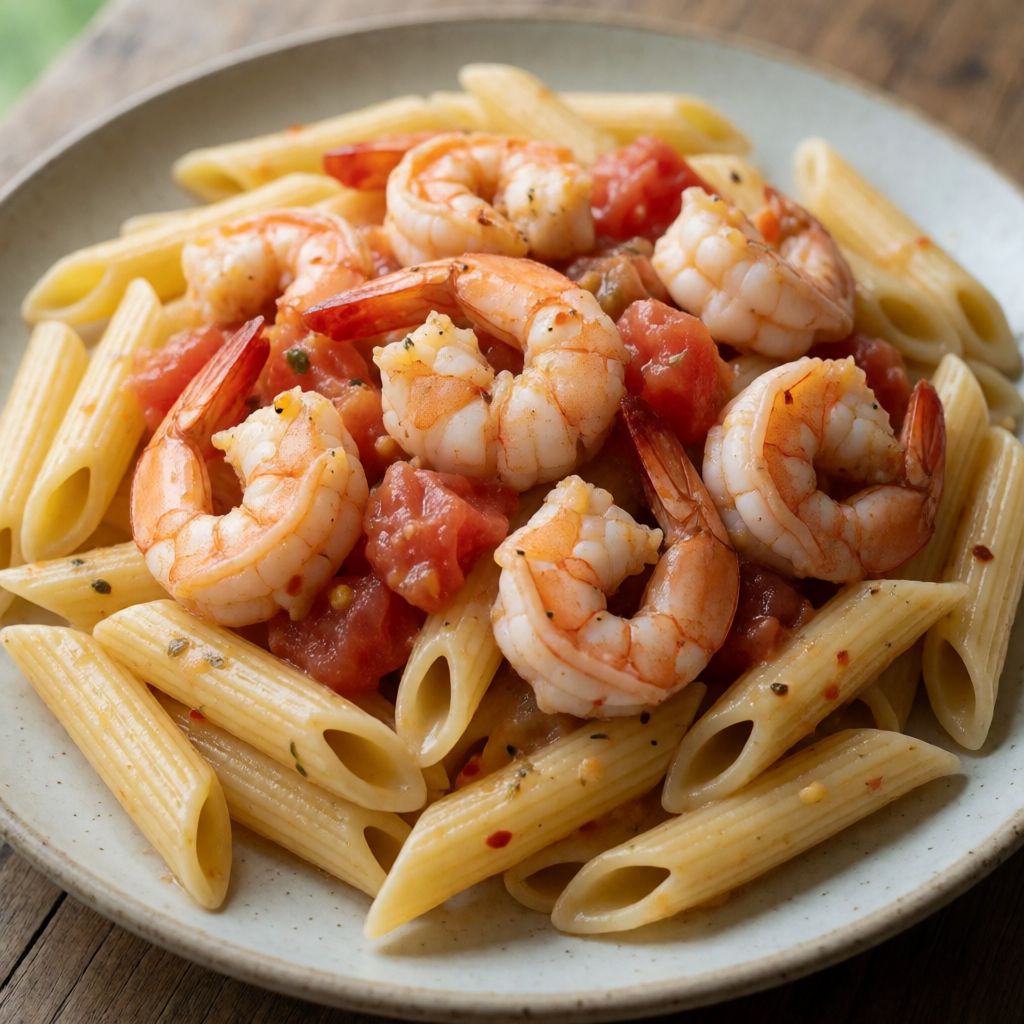
 AI photo
Penne with Langoustines
A simple pasta dish with langoustines, white wine, tomatoes and chilli.
Labels are worked out automatically from the ingredients and can be wrong. Check the packaging if it matters to you.
Ingredients
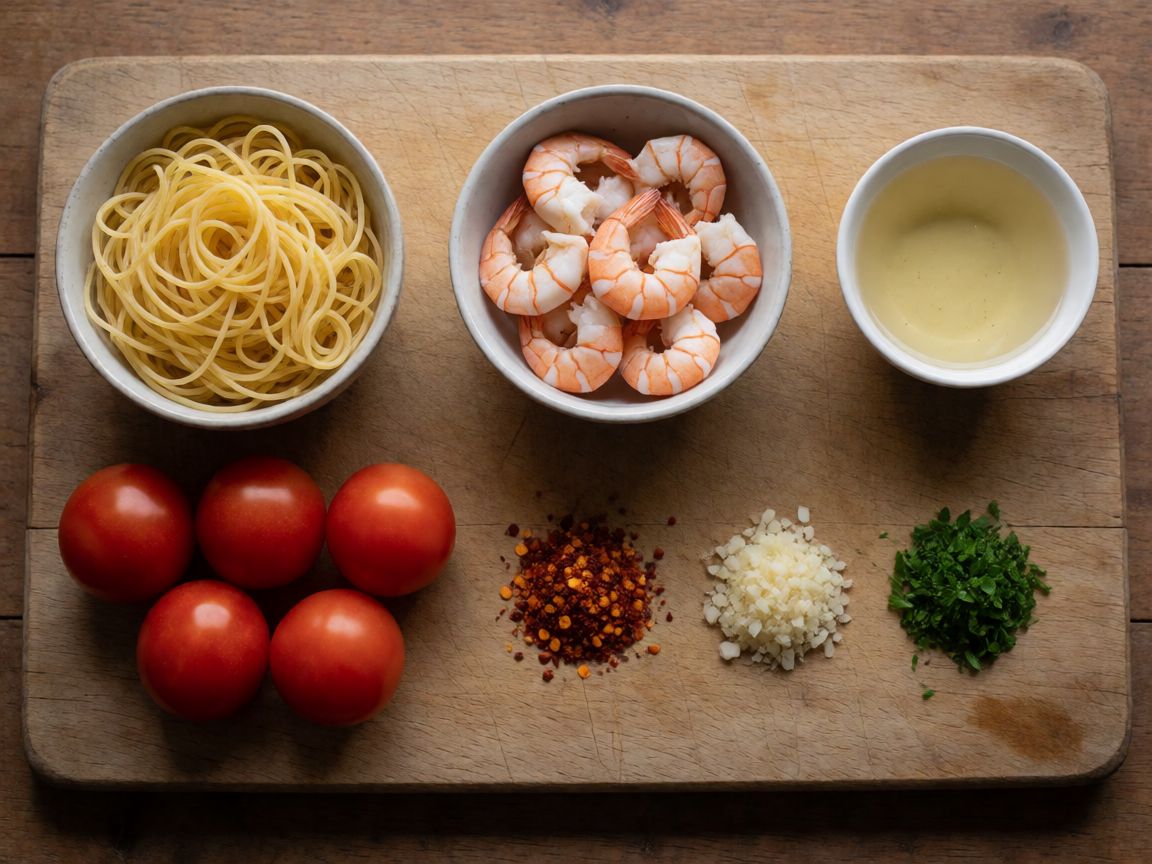
- 350 g Penne
- 800 g Langoustines
- 250 ml White wine
- 5 pcs Tomatoes
- Olive oil to taste
- Chilli flakes to taste
- Garlic to taste
- Parsley to taste
- Salt to taste







Steps
Finely chop the garlic and parsley for the base.
Heat the oil in a pan and sauté the garlic and parsley with the chilli flakes.
Add the cleaned langoustines, halved lengthways, pour in the white wine and let it evaporate.
Add the chopped tomatoes and season with salt.
Cook for a few minutes, stirring as little as possible so the langoustines keep their shape.
Cook the penne until al dente, drain and transfer to the sauce, warming through together for a few minutes.
Serve sprinkled with chopped parsley.
This is a sauce built on three minutes, not three hours. Langoustines don't tolerate a slow braise — their flesh is mostly water held together by thin protein, and heat past a short window squeezes that water out and leaves you chewing rubber. So everything here happens fast: garlic softens, wine burns off, tomato breaks down just enough to become sauce, and the langoustines go in and out before they have time to toughen. Patience here means the opposite of what you'd expect — it's the patience to pull the pan off before you're tempted to "cook it a bit more to be safe".
What decides whether this works is restraint with the spoon. Stir a prawn-family shellfish too much in a hot pan and the shell-side proteins seize, curl, and the halves lose their shape — you get sauce with shellfish confetti in it instead of langoustines sitting proudly in sauce. Stirring "as little as possible" isn't fussiness, it's the only thing standing between a dish that looks like what it is and a mess that tastes fine but looks apologetic.
The wine isn't a flavour so much as a tool: it deglazes whatever stuck to the pan after the garlic and chilli, and the alcohol has to actually leave — "let it evaporate" means wait until the sharp, raw smell is gone and what's left smells like reduced wine, not open wine. Skip that and the sauce carries a boozy harshness that no amount of salt fixes.
Langoustines — in a UK kitchen, look for them at a proper fishmonger or the fresh fish counter, sometimes labelled Dublin Bay prawns or scampi (the whole animal, not the breadcrumbed version in the freezer aisle). Fresh is better but frozen raw langoustine tails work fine if you thaw them properly and pat them dry — wet shellfish steams instead of searing, and that's how you lose the little bit of caramelised edge you want. If they're genuinely unavailable or the price makes your eyes water, raw king prawns or tiger prawns do an honest job; they won't have quite the sweetness, but the mechanism — brief heat, shape preserved — is identical. Some say frozen seafood is automatically inferior — no, because freezing at sea often locks in freshness better than a long drive to a shop; the enemy is slow thawing and overcooking, not the freezer.
Tomatoes: five ordinary tomatoes, chopped, are there to collapse into juice and pulp with a little body, not to become a thick sauce. If British tomatoes are pale and watery out of season, a tin of good plain chopped tomatoes (drained a little) gives you more reliable flavour than a sad fresh one — this isn't a betrayal of the dish, it's just picking the better ingredient on the day.
White wine: anything dry and drinkable, nothing sweet. You're not looking for a "good" bottle, you're looking for one with enough acidity to cut through the oil and shellfish fat. If you don't cook with alcohol, a splash of fish stock with a spoon of lemon juice gets you most of the acidity and the deglazing effect, though not the particular aroma wine leaves behind.
Garlic and chilli flakes are the base layer, and they go in before anything wet so the oil can actually carry their flavour into the rest of the dish — oil dissolves the aromatic compounds that water can't touch. Olive oil "to taste" really means: any oil with no smell of its own strong enough to fight the shellfish — a light olive oil or a neutral vegetable oil both work; a heavily peppery extra virgin will argue with the garlic instead of supporting it.
Penne itself is mostly a vehicle — its ridges and tube catch the thin tomato-wine liquid in a way a smooth flat noodle wouldn't. Al dente here isn't a slogan, it's mechanical: the pasta finishes cooking a little more once it hits the hot sauce, so if it's fully soft in the pot, it's overcooked by the time it reaches the plate. Drain it a touch early, let the sauce finish the job.
On a domestic hob, your pan is doing the work a kazan or a wide paellera would do elsewhere — give the langoustines room to sit in a single layer rather than piling them up, or the ones underneath steam while the ones on top barely warm through. If your widest pan is still crowded, work in two batches rather than one crowded one; it costs you two minutes and saves you rubbery shellfish.