
 AI photo
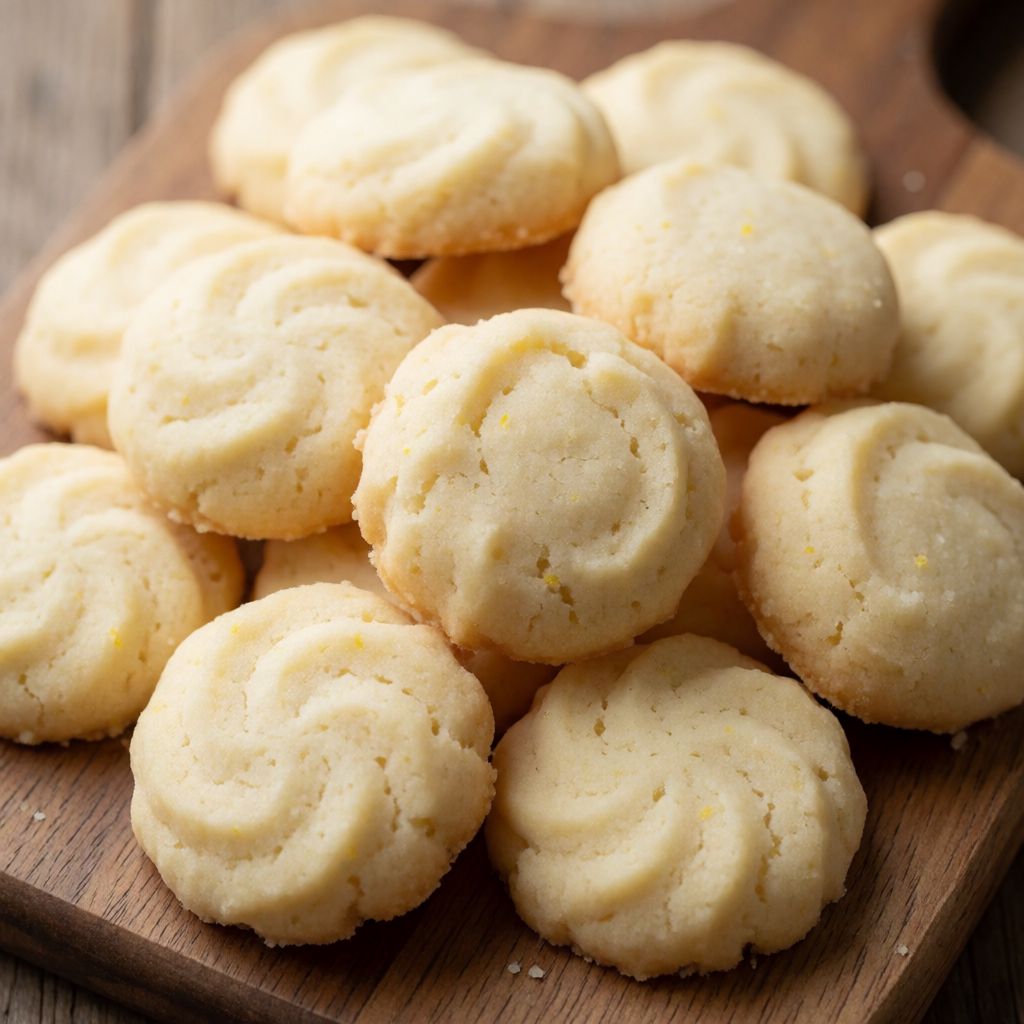
Eggless Shortbread Biscuits
Simple eggless shortbread biscuits, buttery and crisp, perfect with tea.
Labels are worked out automatically from the ingredients and can be wrong. Check the packaging if it matters to you.
Ingredients
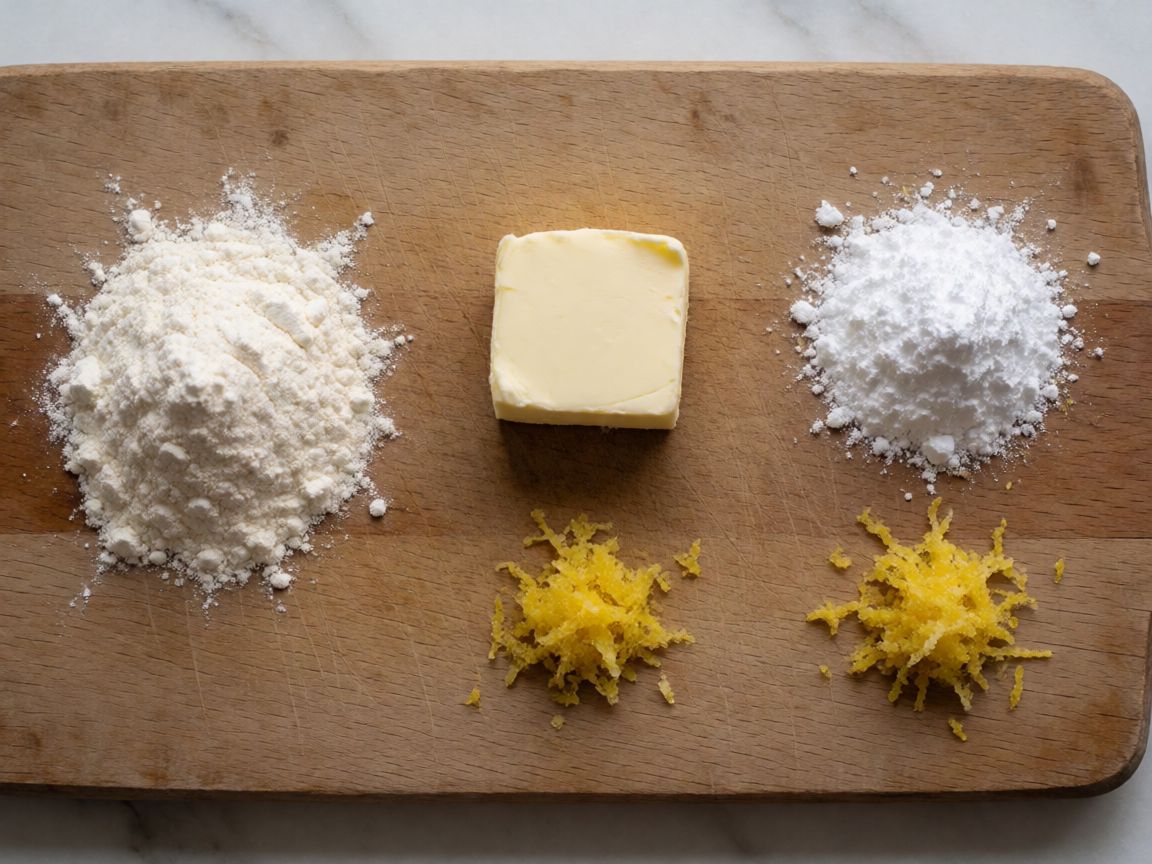
- 375 g Plain flour
- 225 g Butter
- 110 g Icing sugar
- 1 pcs Lemon zest
- 1 pinch Salt




Steps
Put the butter in a bowl together with the icing sugar and lemon zest, and beat with a wooden spoon until soft and fluffy.
Add the flour and a pinch of salt and knead into a dough. Turn out onto a lightly floured surface and continue kneading by hand.
Shape into a ball, wrap the dough in cling film and leave to rest in the fridge.
30 minRoll out the dough between two sheets of baking paper to a thickness of 5-7 mm and cut out biscuits with a 5 cm round cutter.
Knead the dough scraps together again, roll out and cut out more biscuits.
Place the biscuits on a baking tray lined with baking paper and bake in an oven preheated to 180°C.
15 minTake the biscuits out of the oven, let them cool and serve.
Shortbread is really just a ratio dressed up as a biscuit: three parts flour, two parts fat, one part sugar, no egg, no liquid. That absence of egg is the whole point — egg brings water and protein, water makes gluten, gluten makes chew. Take it away and you get the opposite of bread: short, as in short gluten strands, as in it snaps rather than stretches. This recipe just does the sum slightly differently — 375 g flour, 225 g butter, 110 g sugar — but the logic is the same old Scottish household arithmetic, worked out at a time when butter was precious and eggs went into things that needed to rise.
What decides whether it works is temperature of the butter, not time in the oven. You beat cold-but-workable butter with icing sugar until it's "soft and fluffy" — that's not decoration, that's you trapping air and coating sugar crystals in fat so they don't turn gritty later. Icing sugar dissolves into the fat almost invisibly; caster sugar would leave little crunchy flecks, which some people like and call "proper," but it's a different biscuit, not a lesser recipe gone wrong.
Some say you should cream butter and sugar until pale and doubled, the way you would for a cake. No — for shortbread you want it soft and combined, not whipped to ribbons. Overbeat it and you pump in too much air; too much air plus low gluten means the biscuit puffs and then collapses into something crumbly and hollow instead of dense and sandy. You're aiming for a texture, not a volume.
Flour here is just flour, nothing fancy — plain, not self-raising, because you don't want baking powder sneaking lift into a biscuit whose whole character is flatness and density. If you only have self-raising in the cupboard, it'll still work, just puffier and less "short." Butter should be real butter, unsalted if you can, because margarine carries water that butter doesn't, and that water is exactly what you spent the whole method avoiding. "Any fat with no water in it and a mild taste" is the actual criterion — butter happens to be the one with a flavour worth having, which is why nobody really substitutes it here unless they have to.
Icing sugar does two jobs: sweetness, obviously, but also smoothness. It's cornflour-dusted and fine enough to melt into the butter rather than sitting as grit. If all you've got is caster sugar, blitz it in a processor for a few seconds and you're most of the way there — or just accept a slightly sandier bite, which is not a failure, just a different biscuit tradition (some bakeries proudly use semolina or rice flour blended in for exactly that crunch).
Lemon zest is there for brightness against a dough that's otherwise just fat, flour and sugar — no egg, no vanilla, nothing else carrying flavour. Use the zest only, not the juice: juice is water and acid, and acid can nudge at what little structure the flour's gluten has. If you don't like citrus, a few scrapes of nutmeg or a split vanilla pod's worth of seeds does the same job of "give the fat something to say."
Salt in a pinch isn't there to make it taste salty — it's there because sugar alone tastes flat and one-note; a pinch of salt wakes up sweetness the way it does in caramel. Skip it and the biscuit tastes slightly duller, not wrong.
On a domestic hob — or rather, a domestic oven, since this is all baking — 180°C is hot enough to set the biscuit's structure and let the edges just start toward gold before the centre dries out. "15 min" is the floor, not the target: look for the edges turning the colour of pale honey, not the clock. Ovens in ordinary flats run hot or cold by 10–15 degrees compared to the dial, and a fan oven cooks faster than a conventional one, so the first batch is your calibration — watch it, don't trust the timer blindly.
Rolling between two sheets of baking paper instead of flouring the worktop solves a real problem: shortbread dough is short on gluten, which means it's fragile and tears if you try to peel it off a floured surface, and every bit of extra flour worked in at this stage toughens it slightly. Paper lets you flip, peel, and move the dough with zero added flour and zero drama — useful in a kitchen where you've got a worktop the size of a tea tray.
As for serving eight: shortbread isn't a quantity you portion exactly, it's a tin you keep topped up — with tea, with milk in it, on a Sunday afternoon between the roast and whatever comes after. Patience is genuinely an ingredient twice over here: once while the dough chills, and once while you let the baked biscuits cool fully on the tray before touching them, because warm shortbread is a fat-and-sugar paste that hasn't decided to be solid yet, and it'll fall apart in your hand if you rush it.