
 AI photo
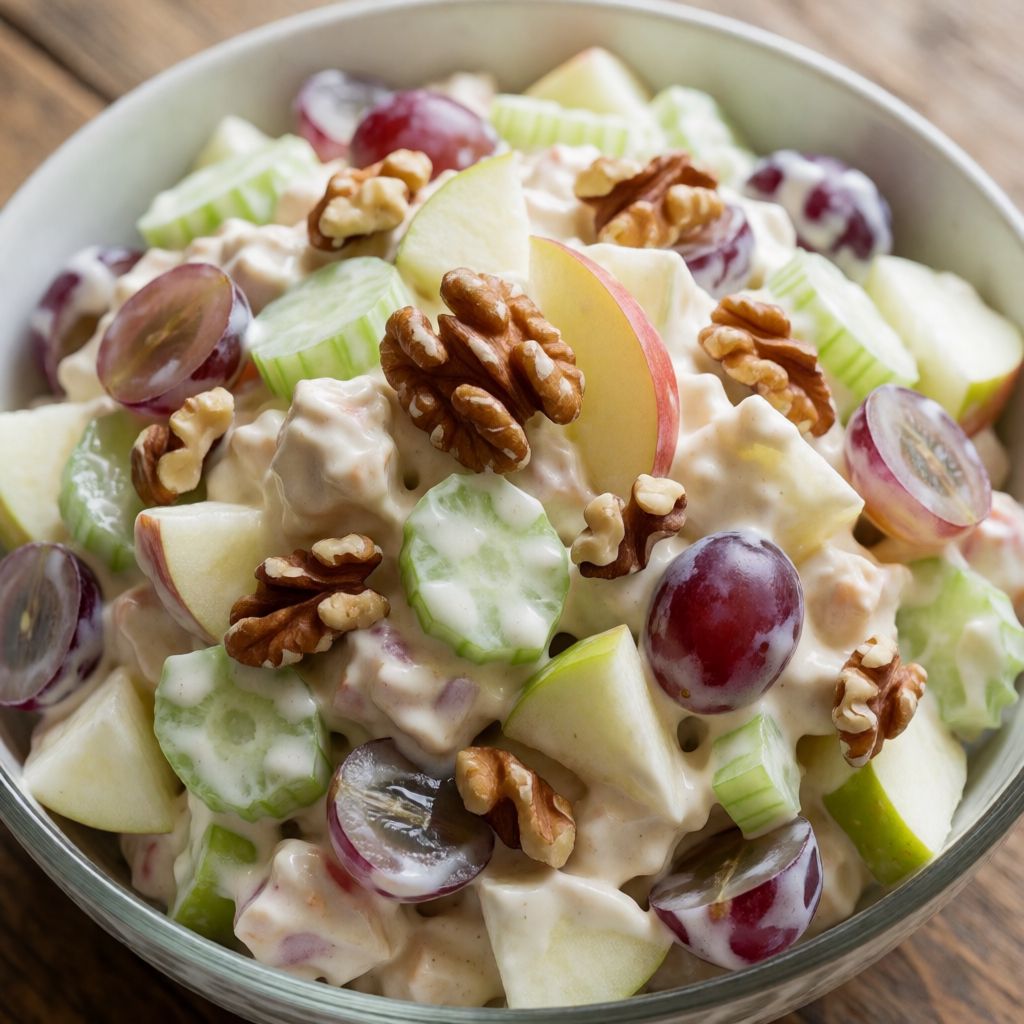
Waldorf Salad
A crisp, creamy classic salad with walnuts, apple, celery and grapes in a light dressing.
Labels are worked out automatically from the ingredients and can be wrong. Check the packaging if it matters to you.
Ingredients
- 75 g Walnuts
- 3 pcs Celery thinly sliced
- 2 pcs Apple cut into small cubes
- 150 g Grapes halved
- 100 ml Crème fraîche
- 50 ml Double cream whipped
- 1 tsp Caster sugar
- 1 tsp Apple cider vinegar
- Salt to taste
- Black pepper freshly ground, to taste










Steps
Pour boiling water over the walnuts, then pat them dry. The boiling water removes bitterness from the skins.
Set aside a few walnut halves and some celery leaves for garnish.
Mix the walnuts, apples, celery and grapes in a bowl.
Make the dressing and season it with sugar, salt, pepper and lemon juice or vinegar to taste.
Toss the salad with the dressing.
A Waldorf salad is really an argument about texture dressed up as a fruit salad. You've got crunch (walnut, celery), give (apple), and burst (grape), all held together in something creamy enough to coat but not drown them. Get the ratio of crunch to cream wrong and you've made coleslaw with pretensions. Get it right and every forkful changes its mind about what it is.
What decides whether it works isn't the apple or the grape — those are forgiving. It's the walnut skin and the dressing's acidity. Raw walnut skin carries a tannic, slightly bitter edge that most people register as "walnuts taste a bit off" without knowing why. And a dressing with no sharpness in it just sits on the palate as fat. Fix those two things and the rest assembles itself.
This is a hotel dish, not a farmhouse one — invented at the Waldorf-Astoria in New York in the 1890s, for people who wanted something that looked composed, not peasant food reheated. That's why it's built in layers (prepare components, dress at the end) rather than cooked down into one thing. No stove involved, which is its own kind of skill: nothing here forgives you, because nothing here is disguised by heat.
Start with the walnuts, because that's where people usually lose a point without noticing. Pour just-boiled water over them and leave them a minute, then dry them properly with a tea towel or paper napkins — don't just tip off the water. The heat loosens the thin papery skin's grip and leaches out the tannins that live in it, the same compound that makes an unripe banana skin pucker your mouth. Some say walnuts don't need this, that it's fussing over nothing — no, because untreated walnut skin is where that faint bitter, slightly metallic aftertaste comes from, the one people blame on "just how walnuts are." They're not wrong that walnuts can taste like that. They're wrong that it's unavoidable.
Celery: thin slices, and thin here is doing real work — too thick and it reads as a vegetable interrupting a fruit salad, too thin and it vanishes and you lose the crunch that's half the point of the dish. A UK stick of celery, outer stalks, gives you both bite and a faint grassy bitterness that cuts the cream — don't skip it for the pale inner heart, which is milder but does less. No celery in the house? Fennel bulb, sliced the same way, gives you a different flavour but the same job: crunch plus a note the cream needs to push against.
Apple: cut into small cubes, and the apple you want is one that holds its shape and has acid of its own — a Granny Smith or a Cox, not something soft and sweet like a Gala that'll go mealy and disappear into the dressing within the hour. You're not cooking it, so there's no fixing a mushy apple later; choose at the shop, not in the bowl. If you're worried about browning while you prep everything else, a squeeze of the same lemon juice you might use in the dressing does double duty.
Grapes, halved not whole — a whole grape in a mouthful of crunchy things is a strange wet surprise, and halving it also lets the dressing actually touch the flesh instead of sliding off the skin. Seedless, obviously, unless you enjoy archaeology at the dinner table.
The dressing is crème fraîche loosened by whipped double cream, and this combination exists for a reason: crème fraîche alone is thick and slightly sour but doesn't have much lift, double cream whipped on its own is rich but flat-tasting and will sit heavy. Together you get body and a bit of air. Then — and this is the step people skip and regret — sugar, salt, pepper, and acid (lemon juice or the cider vinegar) all go in and get tasted, not measured blind. A teaspoon is a starting point, not a verdict. The acid is what stops the whole dish being "cream with stuff in it"; taste it before you add the acid and you'll understand immediately why it's there. If you've no cider vinegar, any vinegar with a mild, not sharp, character does the same job — avoid balsamic, it'll fight the apple instead of lifting it.
Dress the salad last, right before it goes to the table, and only toss it enough to coat — not stir it like you're making mash. The whole dish is a bet that crunch survives contact with cream for about as long as a meal takes; dress it an hour early and the celery goes limp and the walnuts go soft, and you've made something sadder than what you started with. This is where patience works backwards from how it usually does in cooking — here the patience is in doing everything else first, prepping, chilling, tasting the dressing twice, so that the one irreversible step happens last and fast.
Four people, as a starter or a side to something plain like cold roast chicken the next day — it's rich enough that you don't want much of it, and it has no business trying to be the main event.